
Why Jewelry Storage Is a Legal and Legacy Decision
For estate planners, organizing and protecting tangible personal property—especially high-value jewelry—is as important as asset titling and tax optimization. Yet safekeeping is often treated as an afterthought, when in reality, a proper jewelry safe is a foundational tool for estate planning, wealth transfer, and insurance compliance.
Whether you’re advising high-net-worth individuals, multi-generational families, or corporate trustees, incorporating a jewelry safe strategy into your estate plan provides measurable benefits: reduced risk, clear asset documentation, and a smoother transition of heirlooms or valuables.
This guide outlines how estate planners can effectively integrate secure jewelry safes into long-term planning, and what features best support both fiduciary duty and family legacy.


Why Jewelry Safes Matter in Estate Planning
1. Asset Protection Beyond the Bank
While liquid assets are typically secured in financial institutions, tangible property like jewelry remains physically present—and vulnerable. Without proper storage:
- Items can be lost, stolen, or damaged
- It’s harder to track ownership and provenance
- Disputes among heirs or executors are more likely
A jewelry safe offers controlled access, fire and theft protection, and organization—critical in both life and death.
2. Clarity for Executors and Beneficiaries
- Avoid “he said, she said” disputes during probate
- Identify appraised vs. sentimental items
- Separate everyday-use pieces from legacy heirlooms
- Serve as a secure document hub (wills, appraisals, insurance)
The more organized the collection, the smoother the estate process.
3. Supports Insurance & Appraisal Requirements
- Photographic inventories
- Centralized storage for high-value collections
- UL-rated safes for items exceeding certain thresholds
Including a jewelry safe as part of the estate plan reduces premiums and simplifies future claims.
Tailor Designed to Match Your Requirements
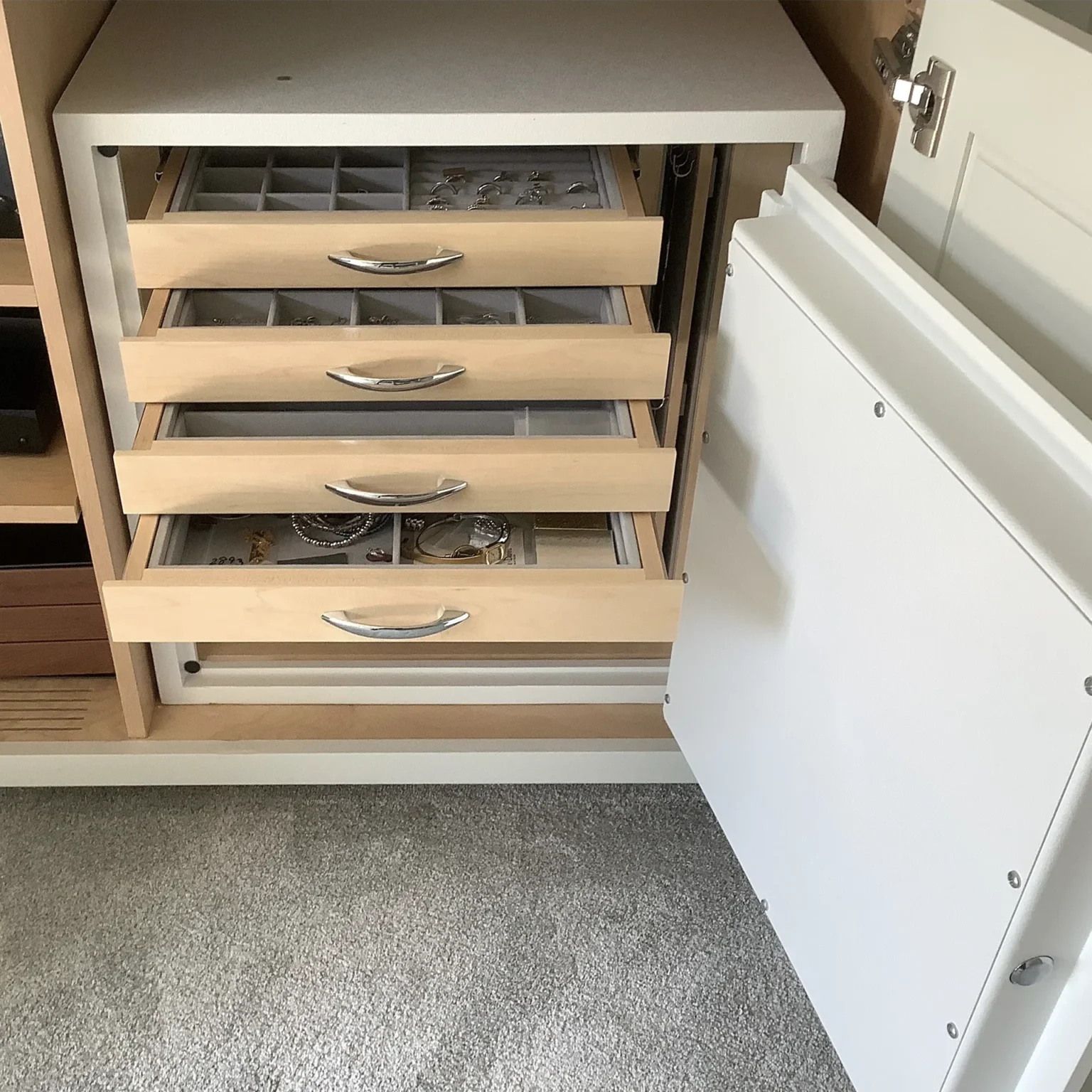
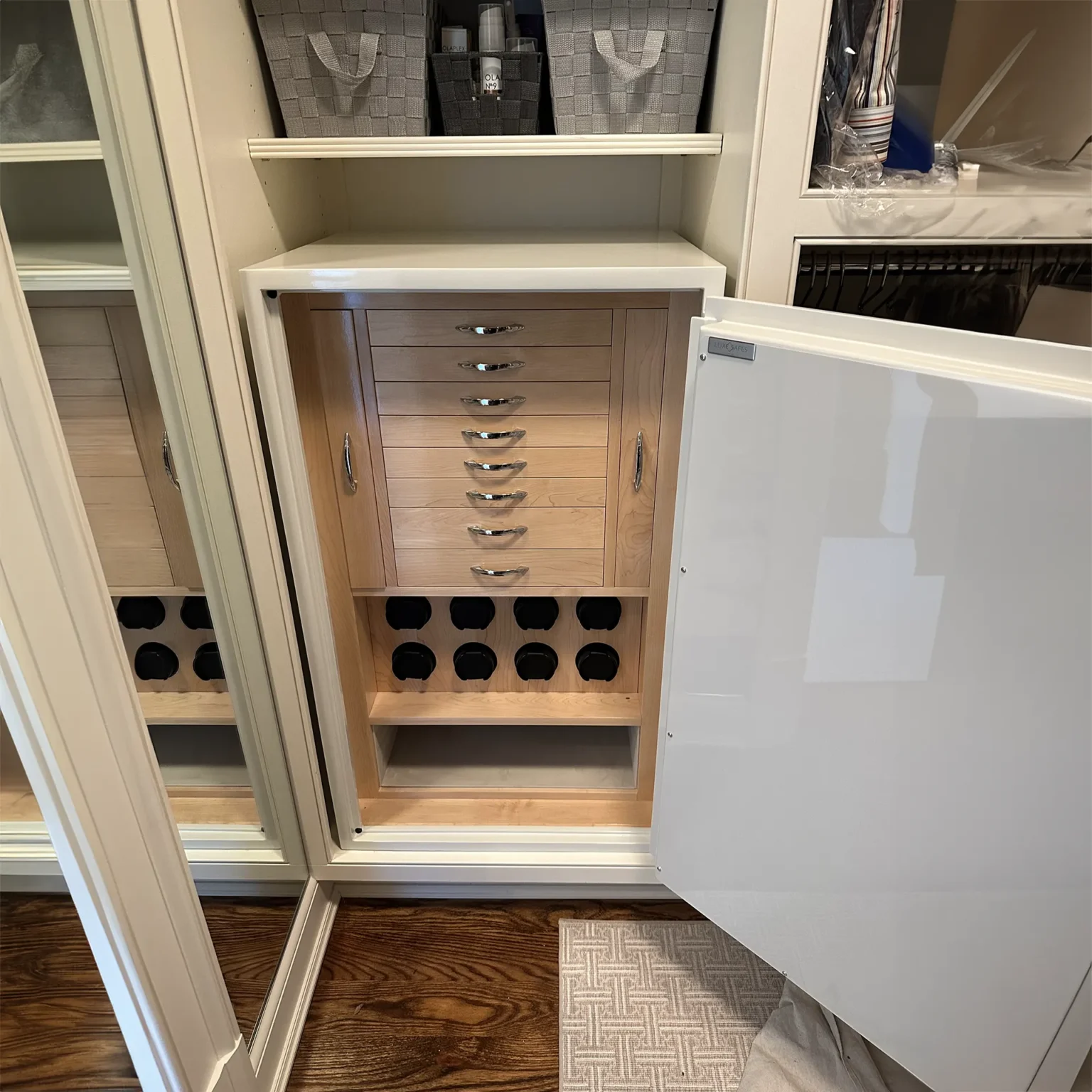
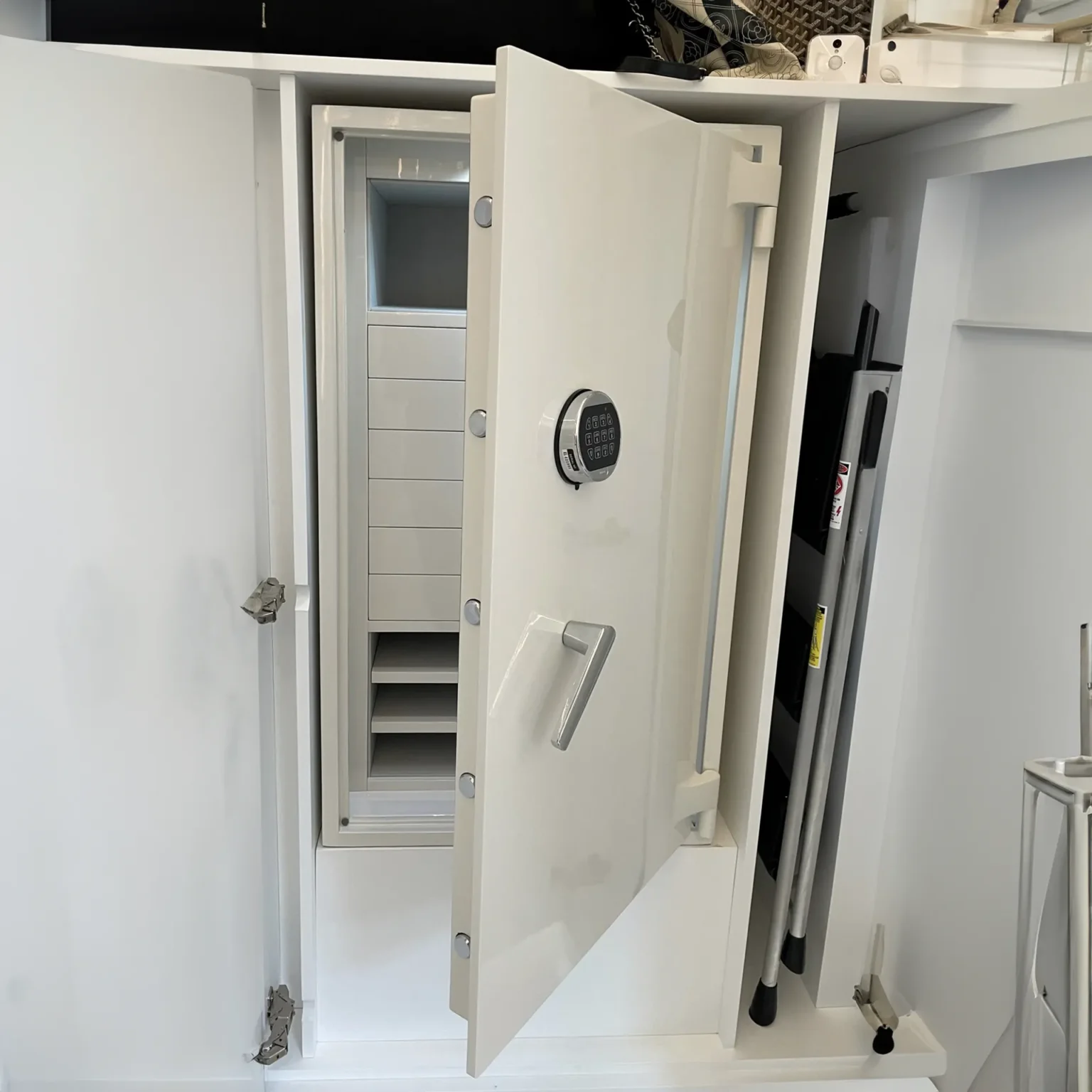
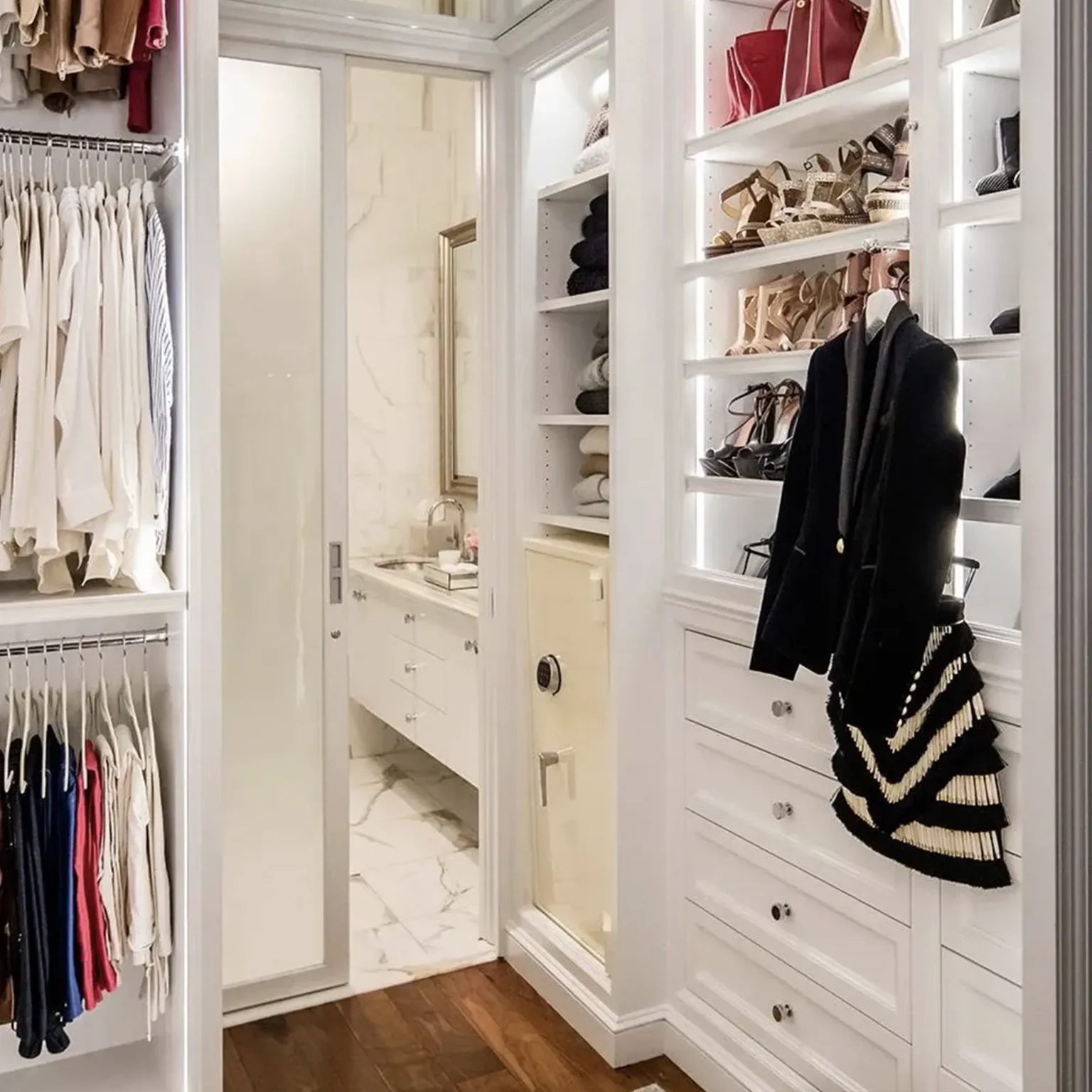
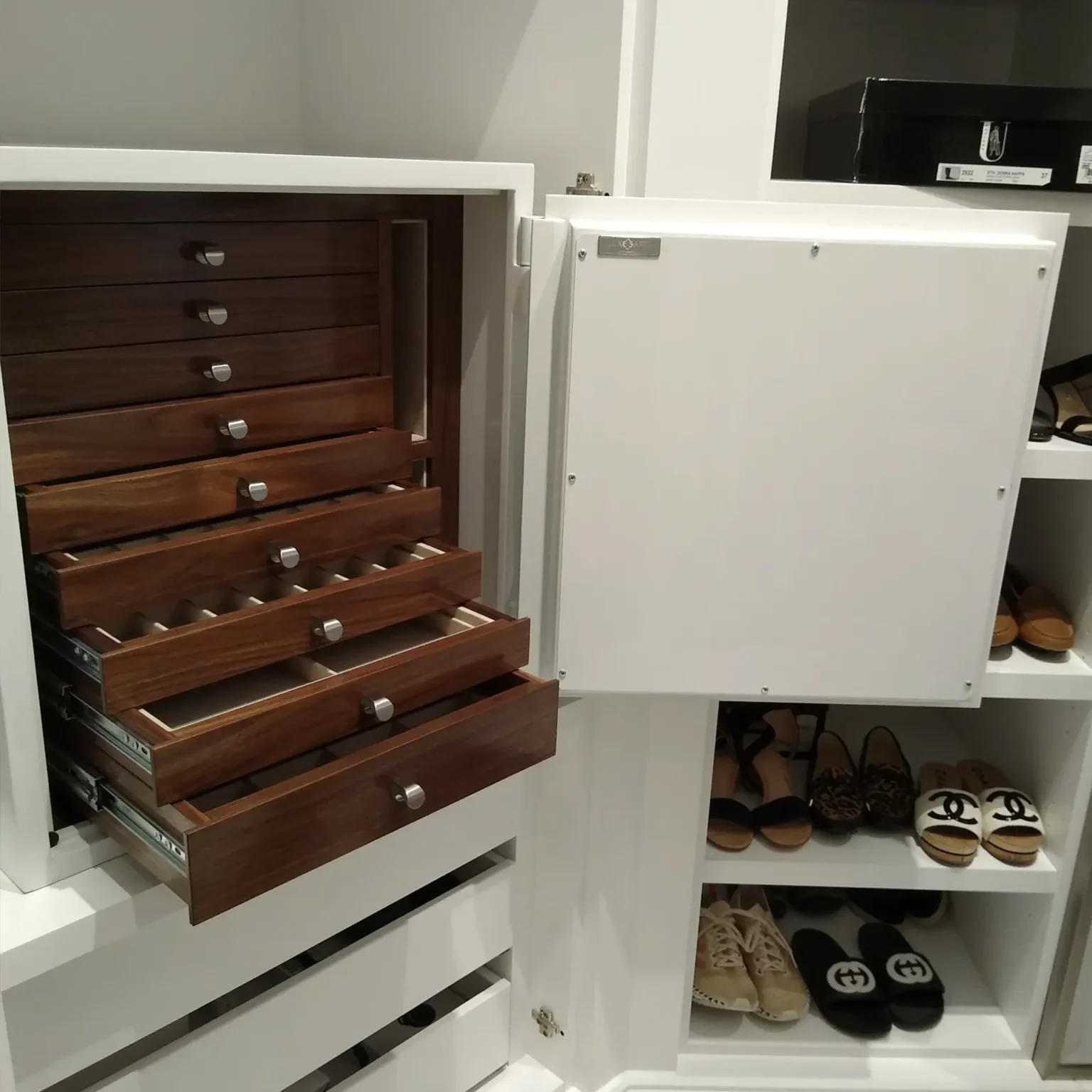
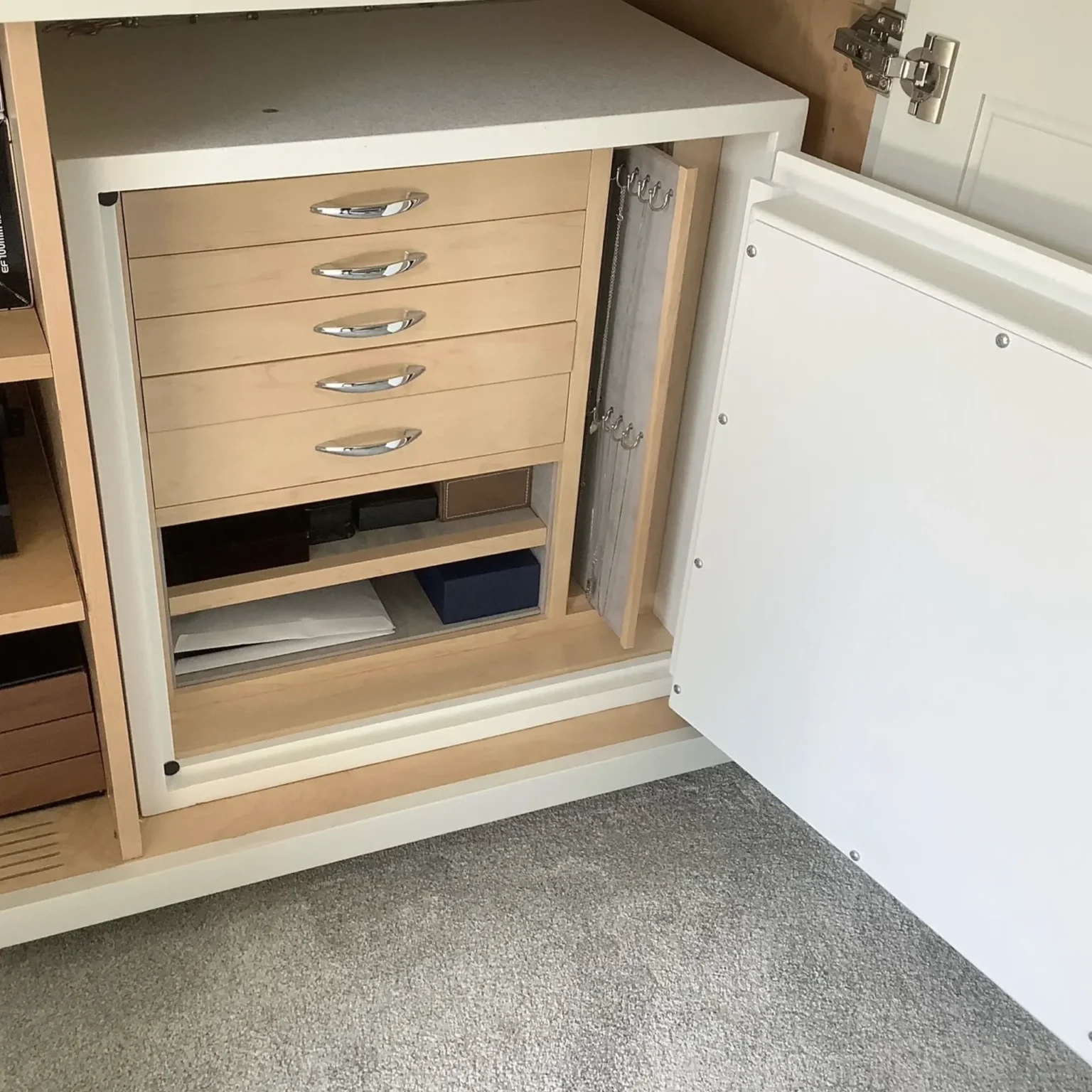
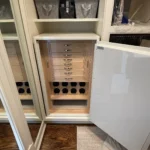
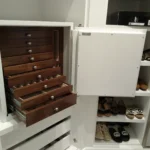
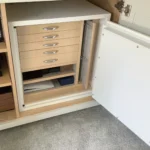
Fully Custom Jewelry Safes: Any size. Any color. Any interior. Configure drawers for rings, watches, necklaces, and more. Designed to seamlessly fit your home’s style and space. From bold, high-gloss finishes to hidden-in-plain-sight installations, your jewelry safe will be one of a kind—crafted by our expert team to reflect your taste and meet your specific security goals.
get a quoteWhat to Look For in a Safe for Estate Clients
1. Fire & Burglary Ratings Appropriate to Collection Value
Recommend UL-rated protection as a baseline:
- UL RSC for general valuables
- TL-15 or TL-30 for large or high-value collections
- 1–2 hour fire rating at Class 350°F minimum
These ratings not only protect the items, they satisfy insurer and fiduciary requirements.
2. Internal Organization for Inventory Control
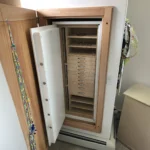
- Multiple drawers for separating pieces by heir, appraisal, or frequency of use
- Lined compartments to preserve condition
- Optional lockable interior drawers for restricted access
- Space to include paperwork or flash drives containing wills, inventory lists, and valuations
3. Access Control for Multiple Stakeholders
- PIN access
- Optional dual-entry systems (e.g., advisor + client)
- Audit trails or alerts in high-security environments
- Changeable credentials when estate management shifts hands
Use Cases for Estate Planners
Gifting During Lifetime
- Store gifted items securely until ready for distribution
- Document transfers clearly (item + recipient + valuation)
- Avoid mixing gifted and un-gifted pieces in shared safes
Preparing for Probate
- Safeguard jewelry to prevent early access or disputes
- Offer executors a single location for inventoried assets
- Reduce administrative burden during high-emotion periods
Multi-Generational Trusts
- Standardize safes across primary and secondary residences
- Match drawer configurations for different family members
- Prevent co-mingling of legacy items with newer purchases
Where to Install Jewelry Safes in Client Homes
Recommend discreet yet accessible locations:
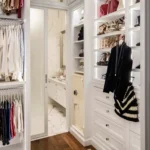
- Primary walk-in closets or dressing rooms
- Private home offices with limited foot traffic
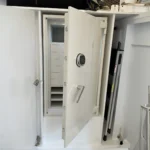
- Cabinetry with locking doors or false panels
- Climate-controlled basements or vault rooms for long-term storage
Every installation should be anchored and hidden where possible.
Integration Tips for Estate Professionals
Work with the Whole Advisory Team
- Interior designers (for safe placement and design continuity)
- Insurance providers (to confirm rating and documentation needs)
- Security integrators (to connect the safe to home alarm systems)
Encourage Clients to Inventory Early
- Digital spreadsheets or inventory apps
- High-resolution photo logs
- Annual review of contents for valuation updates
- Documentation of who gets what — stored in the safe
Include the Safe in the Estate Plan
- Mention its existence and location
- Clarify who has access during probate
- Note any contents that have been gifted prior to death
Trusted Safe Solutions for Estate Planning Clients
LuxeSafes Document + Jewelry Safe
- Fireproof, burglary-rated
- Multiple drawers + document storage
- Discreet exterior finish options for cabinetry
Custom Dual-Use Estate Safe
- Designed for long-term legacy storage
- Supports jewelry, documents, and appraisals
- Internal locking drawers per heir or beneficiary
- Optional removable trays for easy distribution
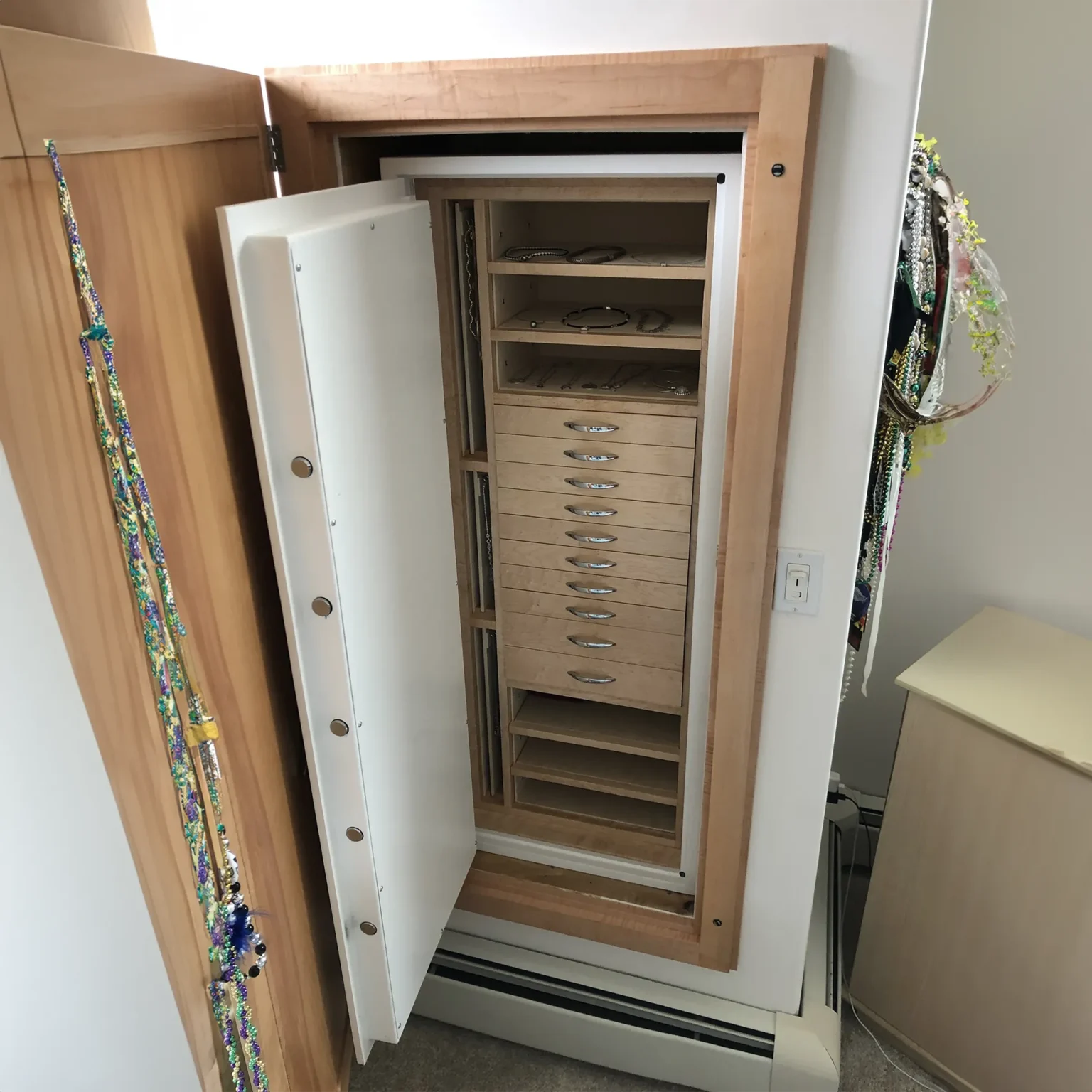
Wall-Mounted Units for Secondary Residences
- Slim, secure, and easy to access
- Keeps smaller collections or duplicates safe at vacation homes
- Designed to match woodwork or vanish behind cabinetry
FAQs
Should the estate planner have access to the safe?
Only with client consent. In some cases, access is granted jointly with the client or designated trustee. This should be documented in writing and reviewed periodically.
Is a safety deposit box better than a home safe?
For items that are accessed regularly or need to remain with the home (e.g. family jewelry, trust assets), a home safe is more practical. Safety deposit boxes are more restrictive and don’t offer 24/7 access.
Can safes be written into a will or trust?
Yes. It’s advisable to document the safe’s contents and who should receive them—either within the will, in a separate memorandum, or stored inside the safe with access instructions.