
Wall Mounted Jewelry Safe: Secure Your Valuables with Confidence
Why Wall-Mounted Safes Are a Smart Option for Jewelry
When space is limited—or discretion is a priority—a wall-mounted jewelry safe becomes one of the most efficient and effective options for residential protection. These safes are designed to fit between standard wall studs, offering secure storage that’s easy to access and even easier to conceal.
But not all wall safes are suitable for jewelry. Jewelry storage presents unique challenges: protecting against both theft and fire, organizing delicate items, and ensuring daily accessibility without drawing attention.
This guide breaks down what to look for in a wall-mounted jewelry safe, when they’re the right solution, and how to make sure you’re not compromising on security, usability, or long-term performance.
What Defines a Wall-Mounted Jewelry Safe?
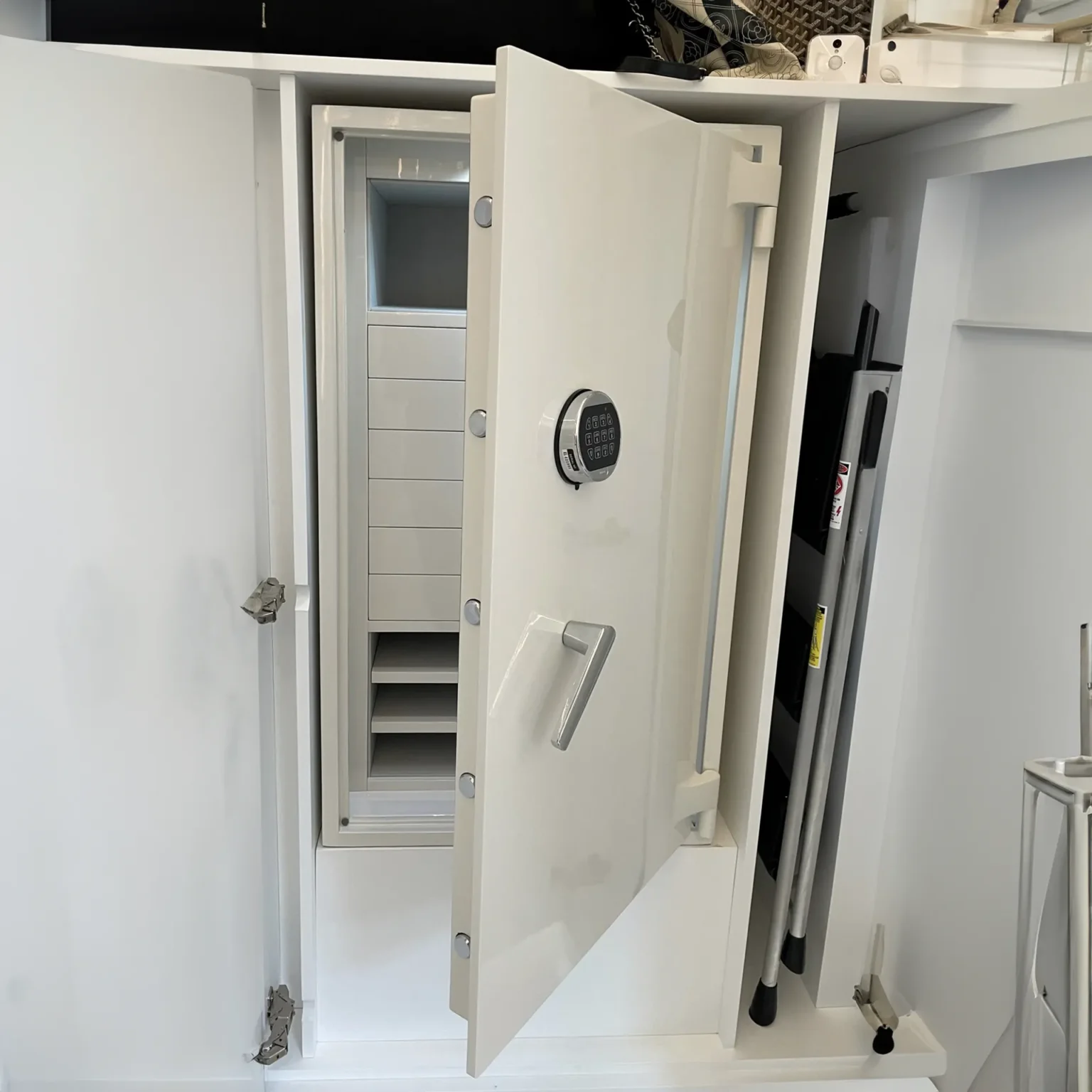
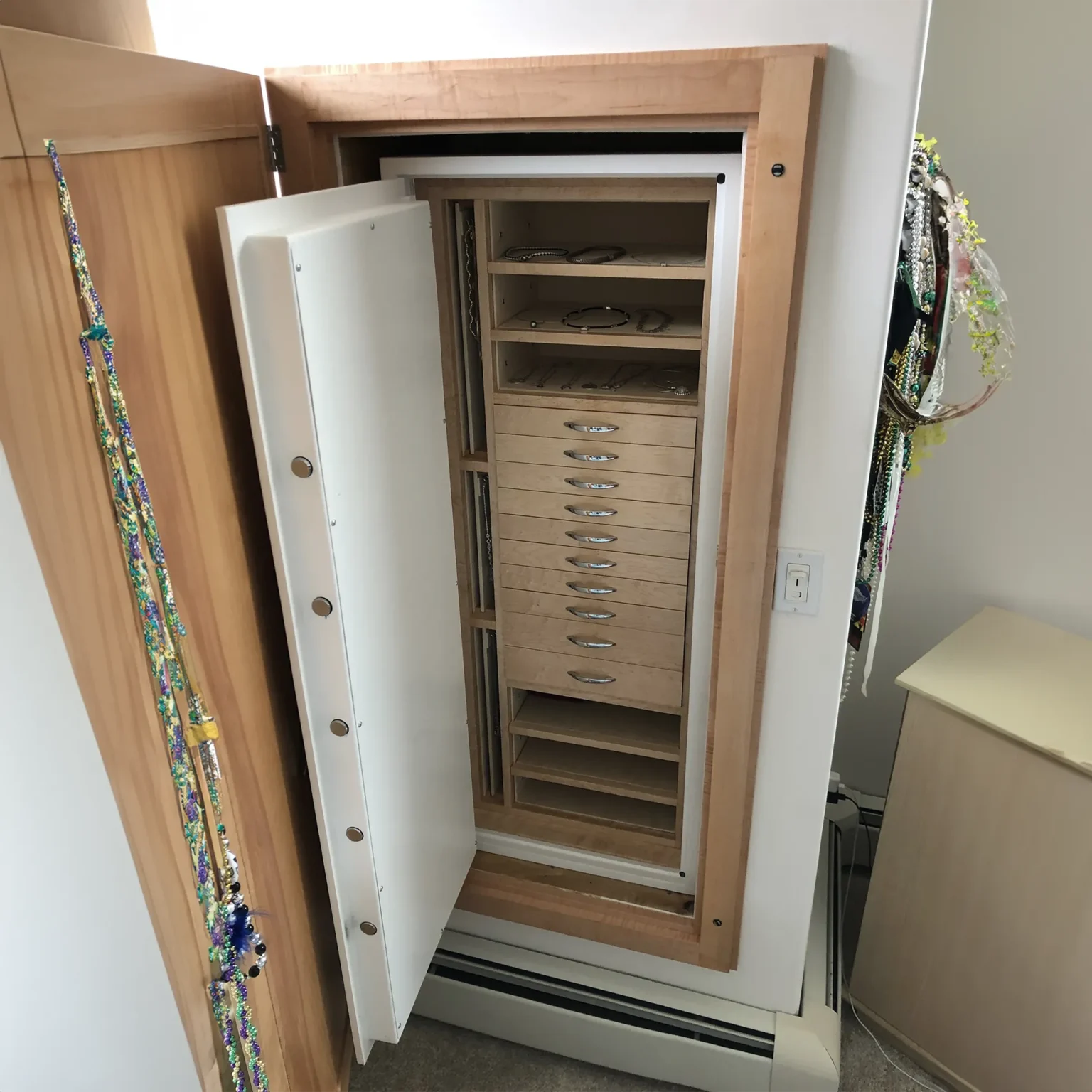
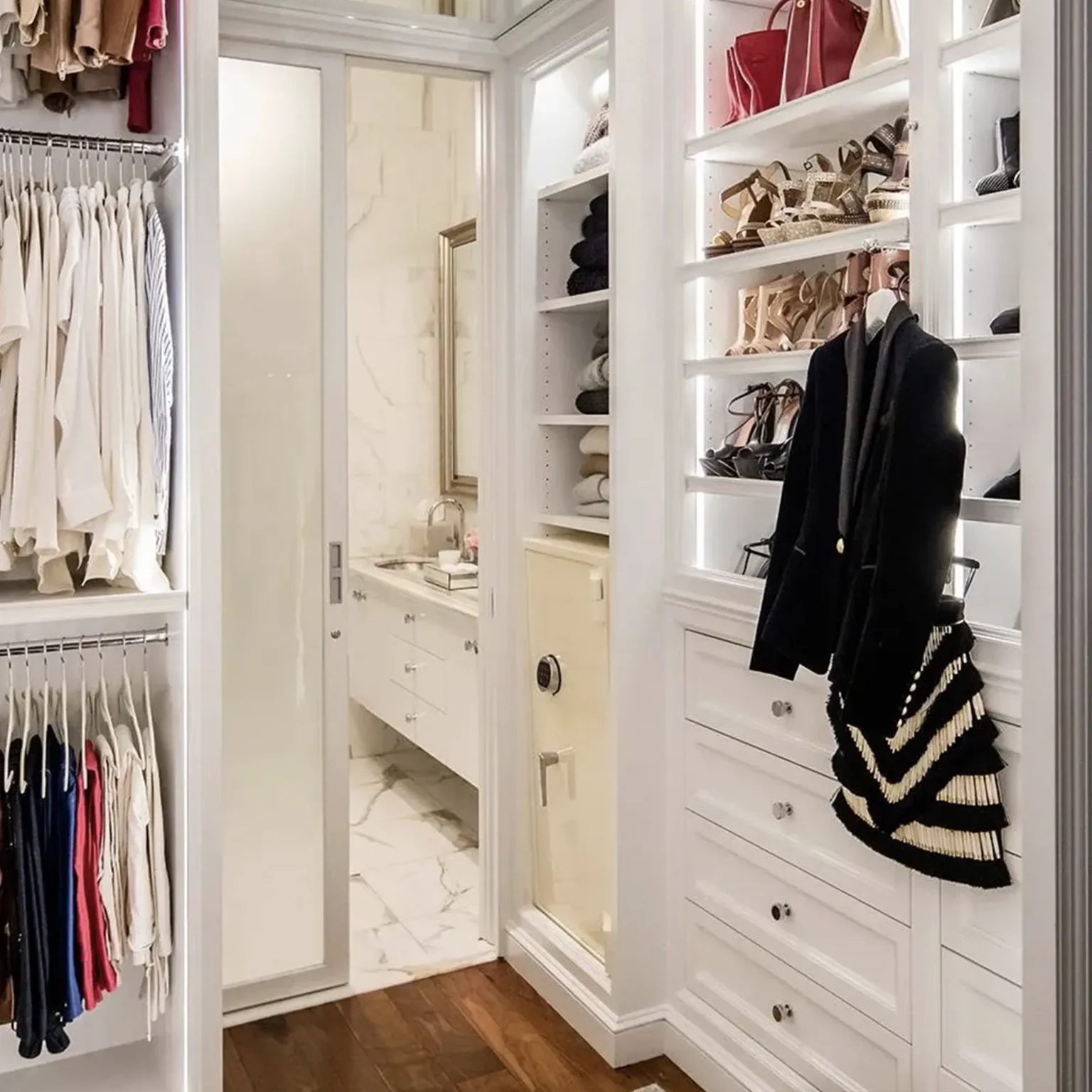
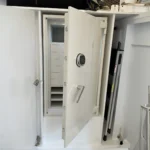
Wall-mounted safes are installed directly between the studs in your wall, typically recessed to sit flush or nearly flush with the drywall. They are often installed in:
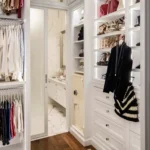
- Bedroom closets
- Dressing rooms or vanities
- Behind mirrors or artwork
- Inside cabinetry or shelving systems
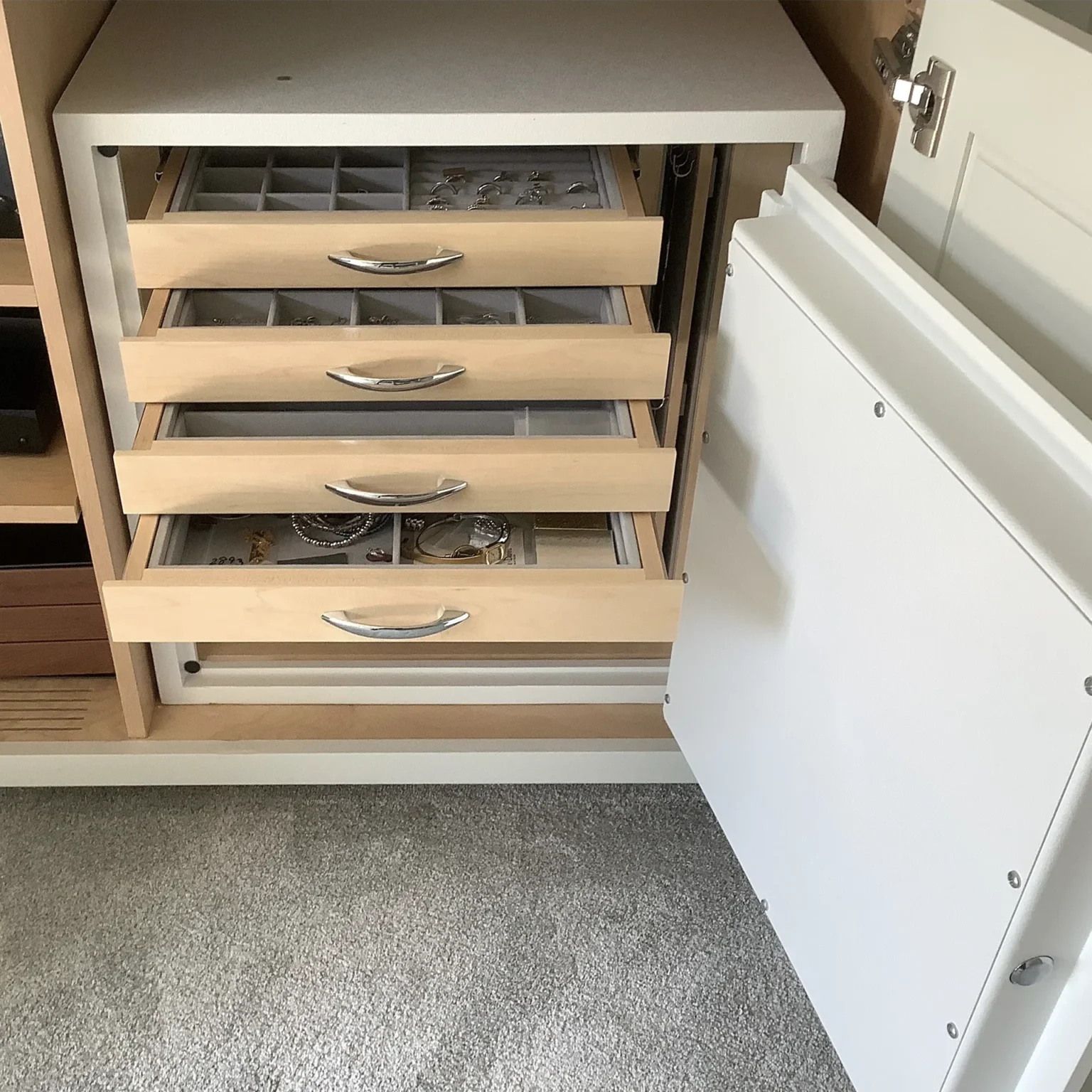
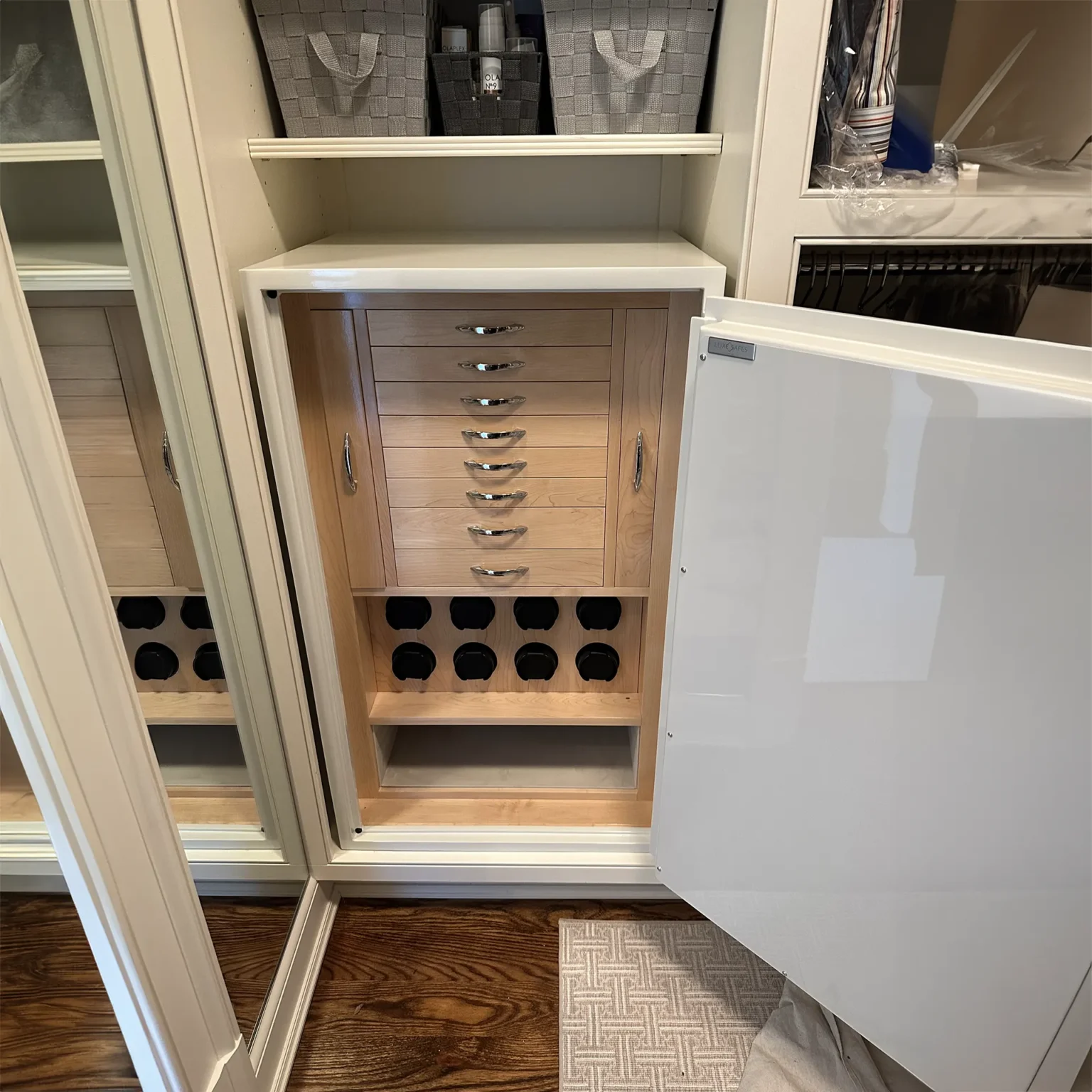
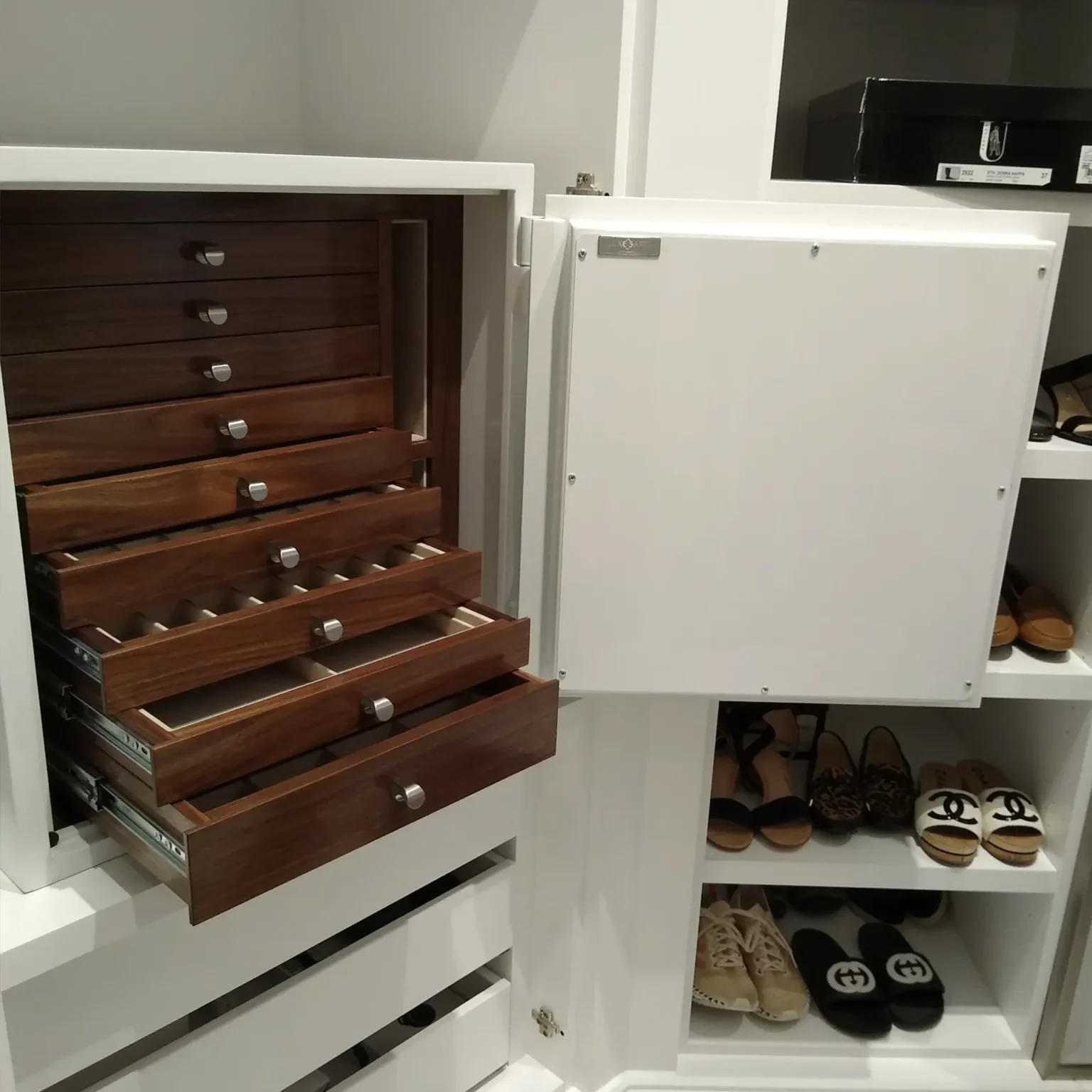
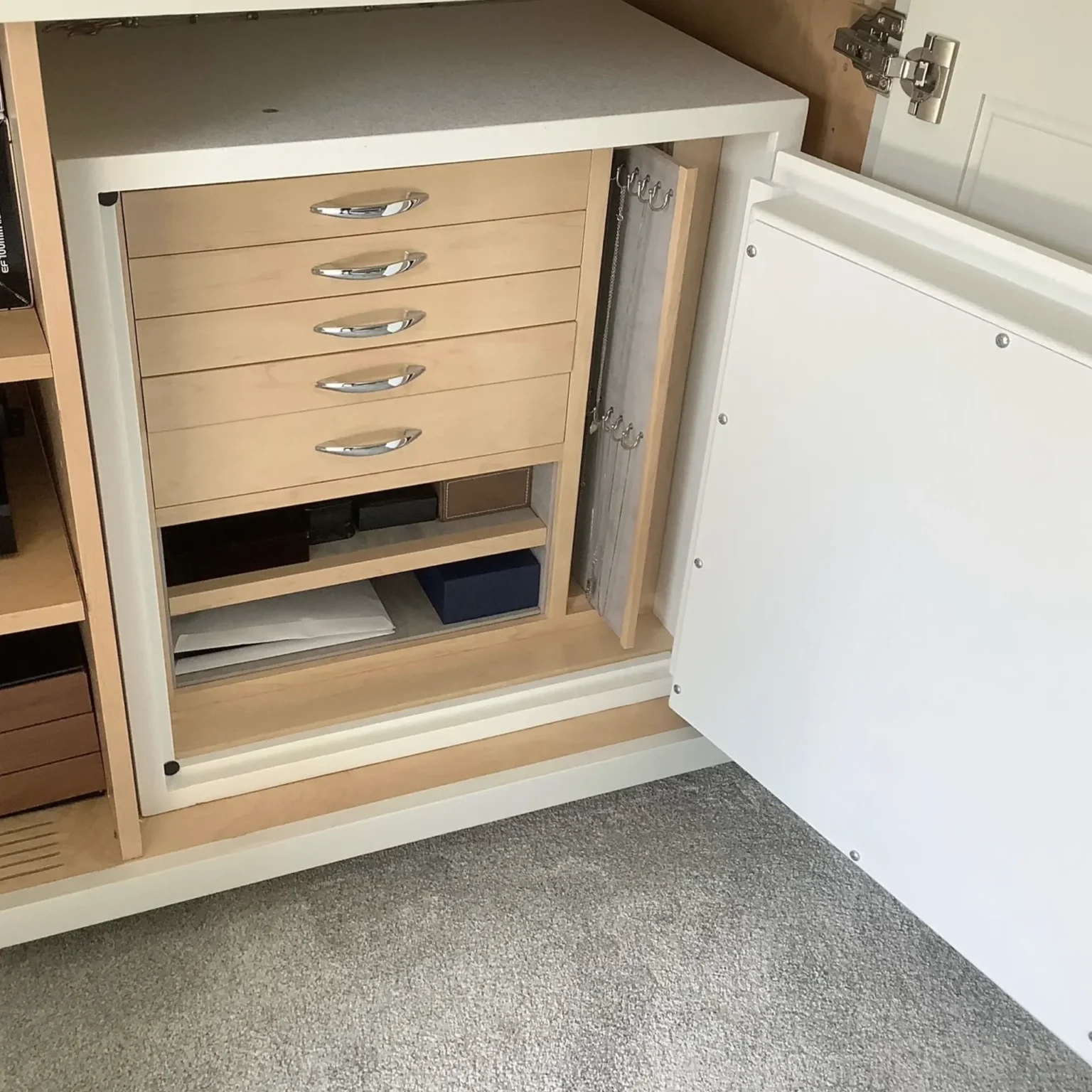
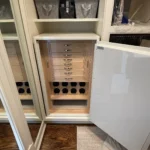
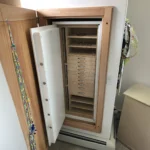
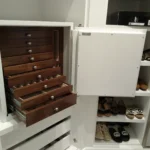
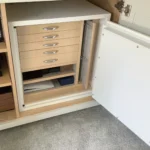
What makes a jewelry-specific wall safe different is the interior configuration. Instead of a single open shelf or document tray, these safes are designed with:
- Pull-out or drop-down drawers
- Velvet or felt-lined compartments
- Hooks for necklaces and chains
- Trays for rings, watches, and earrings
- Optional watch winders or document slots
The goal is to blend compact design with highly organized storage, while still offering legitimate protection.
When a Wall-Mounted Safe Is the Right Fit
A wall safe makes sense when:
- Floor space is limited or already accounted for
- You prefer a hidden safe that doesn’t occupy furniture or closet shelf space
- Your jewelry collection is moderate in size but high in value or sentiment
- You want fast, convenient access to daily-wear pieces
- You’re building or remodeling and can plan ahead for concealed installation
Wall safes are especially popular in urban residences, luxury condos, or primary bedrooms where square footage is at a premium.
Key Considerations When Choosing a Wall Jewelry Safe
1. Depth Constraints
Standard wall cavities are about 3.5–4 inches deep. While some safes are designed to fit within that depth, others may require deeper framing or partial wall modifications.
Tip: Measure carefully, and plan for the door’s swing clearance. Some wall safes have vertical drawers or sliding trays to minimize obstruction.
2. Lock Type
Wall safes often use:
- Electronic keypads for fast access
- Biometric locks (fingerprint recognition)
- Mechanical dials as a backup or alternative
Choose a lock that aligns with your preferred access method—but make sure it’s UL-listed and backed by quality components. Since wall safes are often hidden, the lock is a key point of reliability.
3. Fire and Burglary Ratings
Most entry-level wall safes are not fire-rated, and that’s a problem for jewelry protection. Look for:
- UL Class 350 1-hour fire protection (minimum)
- Anti-pry doors and internal locking bolts
- Solid steel body construction, ideally 10–12 gauge
Fire-rated wall safes exist, but they are heavier and typically more expensive. Still, for heirloom or investment-grade jewelry, this is an essential layer of protection.
4. Interior Configuration
Because of the narrow dimensions, the interior must be smartly organized. Look for:
- Pull-out drawers with soft lining
- Vertical necklace storage
- Dedicated compartments for rings and earrings
- Tiered organization systems for stacking or separating categories
Drawer rails should be high quality—ideally soft-close or ball bearing, especially if you plan to access the safe daily.
Tailor Designed to Match Your Requirements
Fully Custom Jewelry Safes: Any size. Any color. Any interior. Configure drawers for rings, watches, necklaces, and more. Designed to seamlessly fit your home’s style and space. From bold, high-gloss finishes to hidden-in-plain-sight installations, your jewelry safe will be one of a kind—crafted by our expert team to reflect your taste and meet your specific security goals.
get a quoteInstallation: What You Need to Know
Stud Spacing
Wall safes are typically designed to fit standard 16” on-center stud spacing. Custom framing may be required for wider or deeper safes.
Mounting and Reinforcement
The safe must be mounted into studs—not just drywall. Some high-security wall safes come with anchor systems or install brackets to reinforce the mount.
For maximum security:
- Use long, heavy-duty lag bolts into wall studs
- Avoid exterior-facing walls (temperature and humidity control)
- Conceal the safe behind a mirror, painting, or cabinet door when possible
If you’re not experienced with framing or electrical work, professional installation is highly recommended—especially if the safe is heavy or requires power for a biometric lock or internal lighting.
Advantages of Wall-Mounted Jewelry Safes
- Space Efficiency: Doesn’t occupy floor space
- Discretion: Easy to hide in plain sight
- Accessibility: Convenient access at eye level
- Integration: Can be installed during renovation or new construction
- Security: Fixed to the wall structure, not easily removed
For homeowners looking for everyday use with a layer of built-in protection, wall-mounted safes offer a smart and elegant solution.
Limitations to Consider
- Size: You won’t get the same storage capacity as a floor or cabinet safe
- Fire rating: Many wall safes lack strong insulation unless specifically designed for it
- Installation access: Retrofitting into an existing wall can be complex
- Weight limitations: Heavier safes may require structural reinforcement
In short: wall-mounted safes are excellent for smaller, high-use collections, but not ideal for storing dozens of pieces or bulkier items.
FAQs
- Can a wall-mounted safe be fireproof?
Yes, but not all are. Fire-rated wall safes are typically heavier and more expensive due to insulation requirements. Look for UL fire certification if this is a priority. - Will a wall safe fit in any wall?
Most are designed for standard 16” stud spacing, but depth and clearance must be confirmed. Shallow walls or walls with plumbing/electrical may not be suitable without modification. - Can I install it myself?
Possibly, if you’re experienced with framing and anchoring. However, professional installation is strongly recommended to ensure proper support, alignment, and concealment. - Is a wall-mounted safe secure enough for valuable jewelry?
Yes, when properly installed and constructed from reinforced materials. For high-value collections, choose a model with both burglary and fire protection.