
Merging Luxury Design with Uncompromising Security
Interior designers are often at the intersection of aesthetics and function—creating homes that are not only beautiful but intelligently built for how people live. When working with high-net-worth clients, one often-overlooked category deserves more attention in the design phase: where and how they store their valuables.
Jewelry safes, when considered early, can enhance a project’s value, streamline the layout of a dressing room or primary suite, and increase client trust in the total design experience. But not all safes are built with luxury interiors in mind.
This guide explores how interior designers can approach jewelry safe integration—from placement and aesthetic options to client-facing talking points—without compromising on elegance, discretion, or security.
Tailor Designed to Match Your Requirements
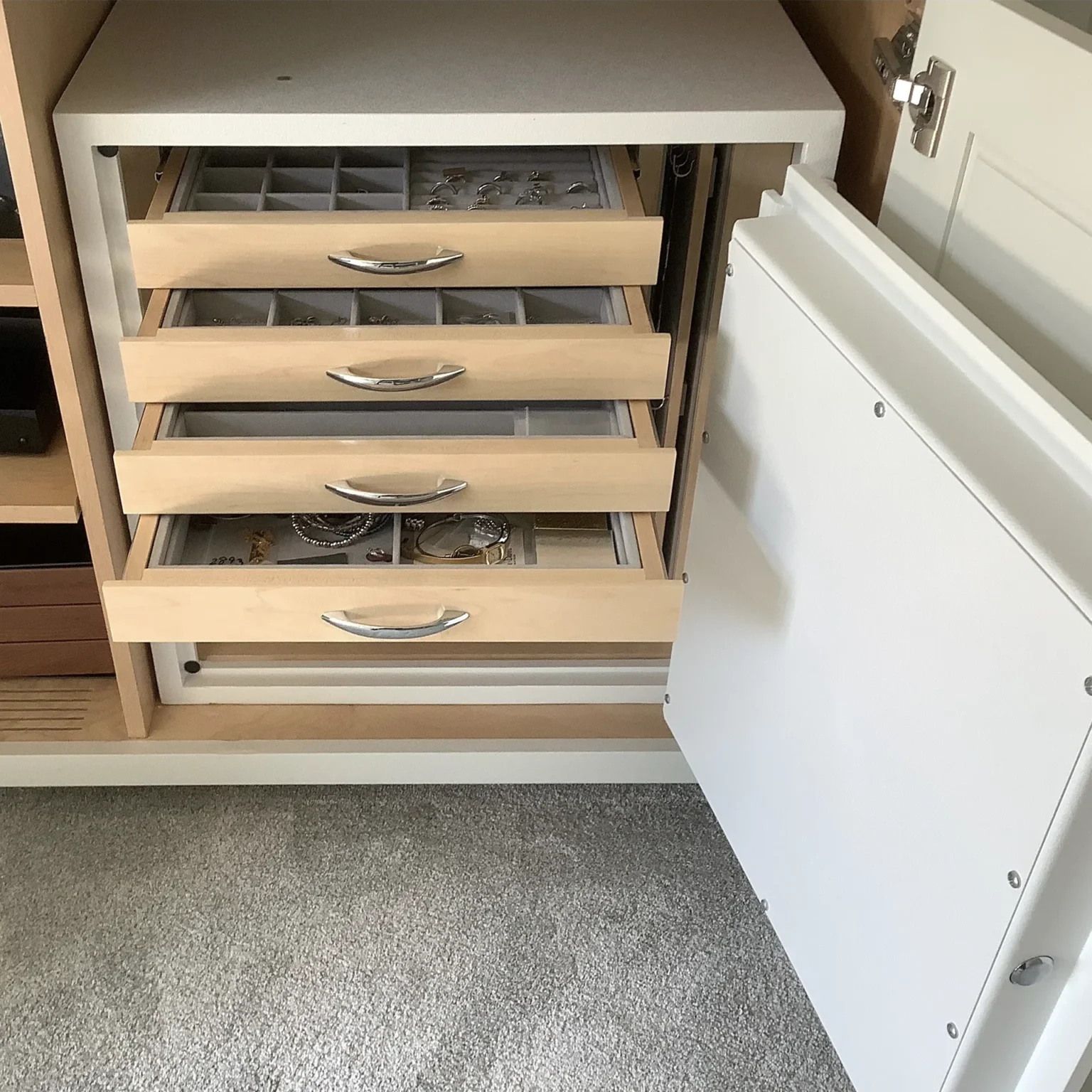
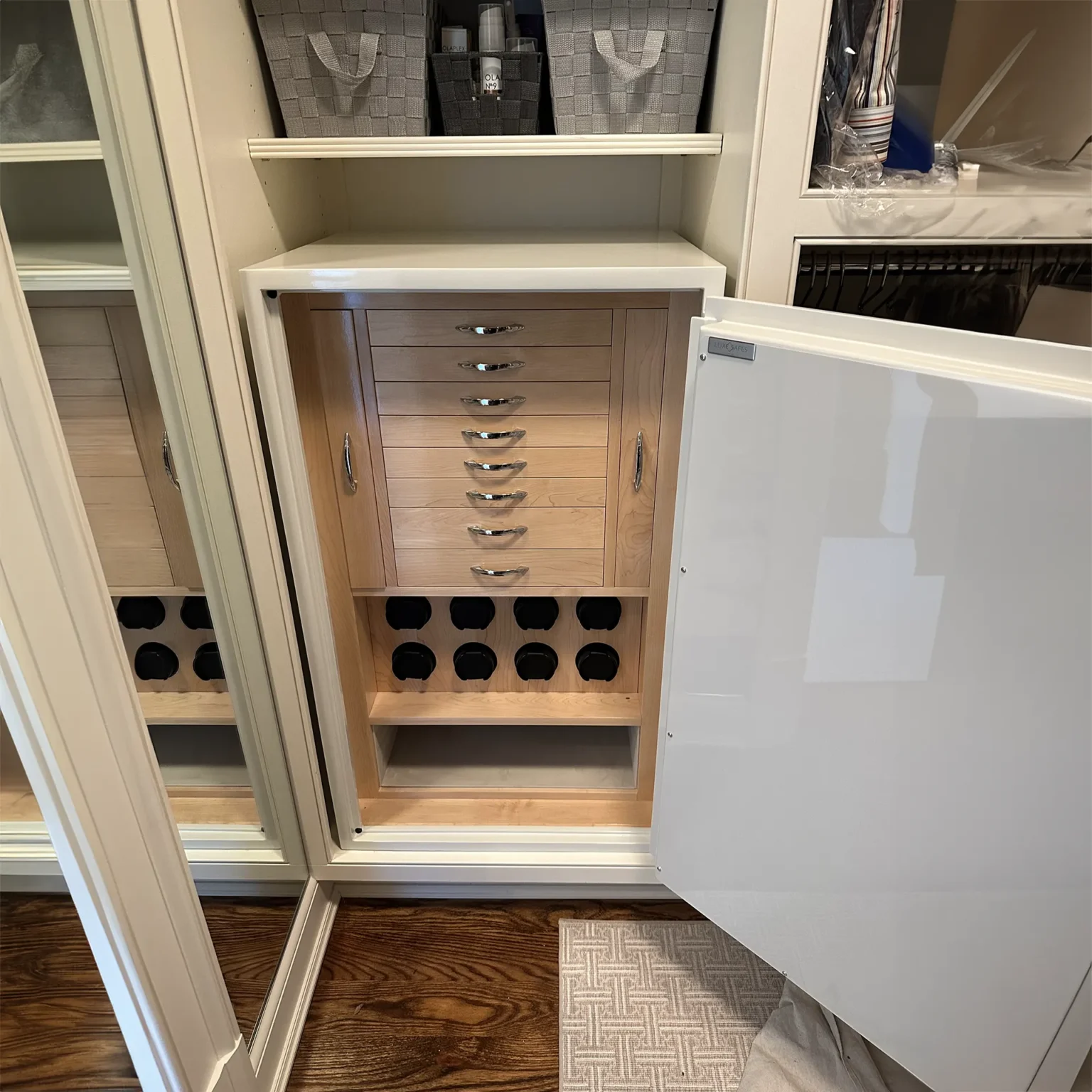
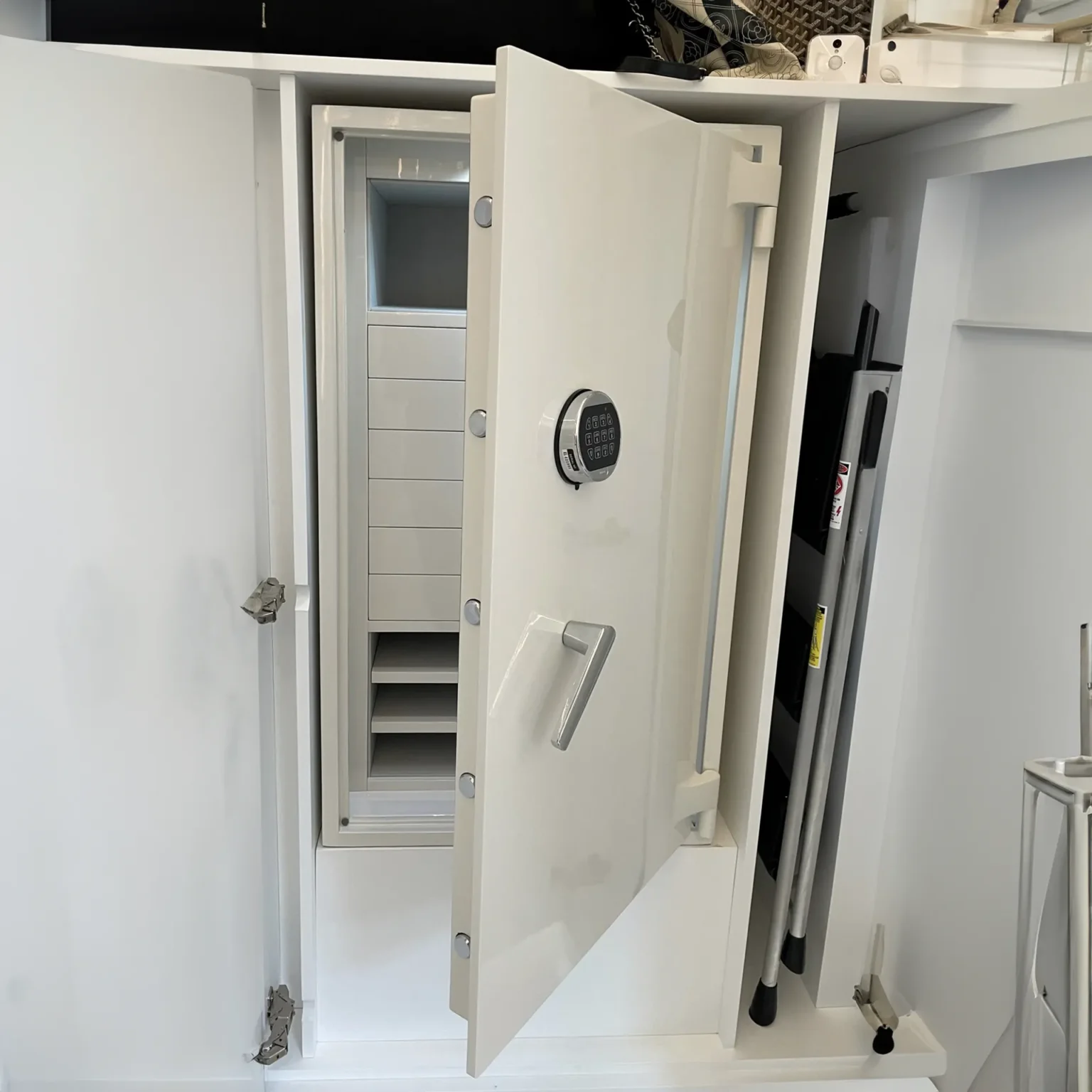
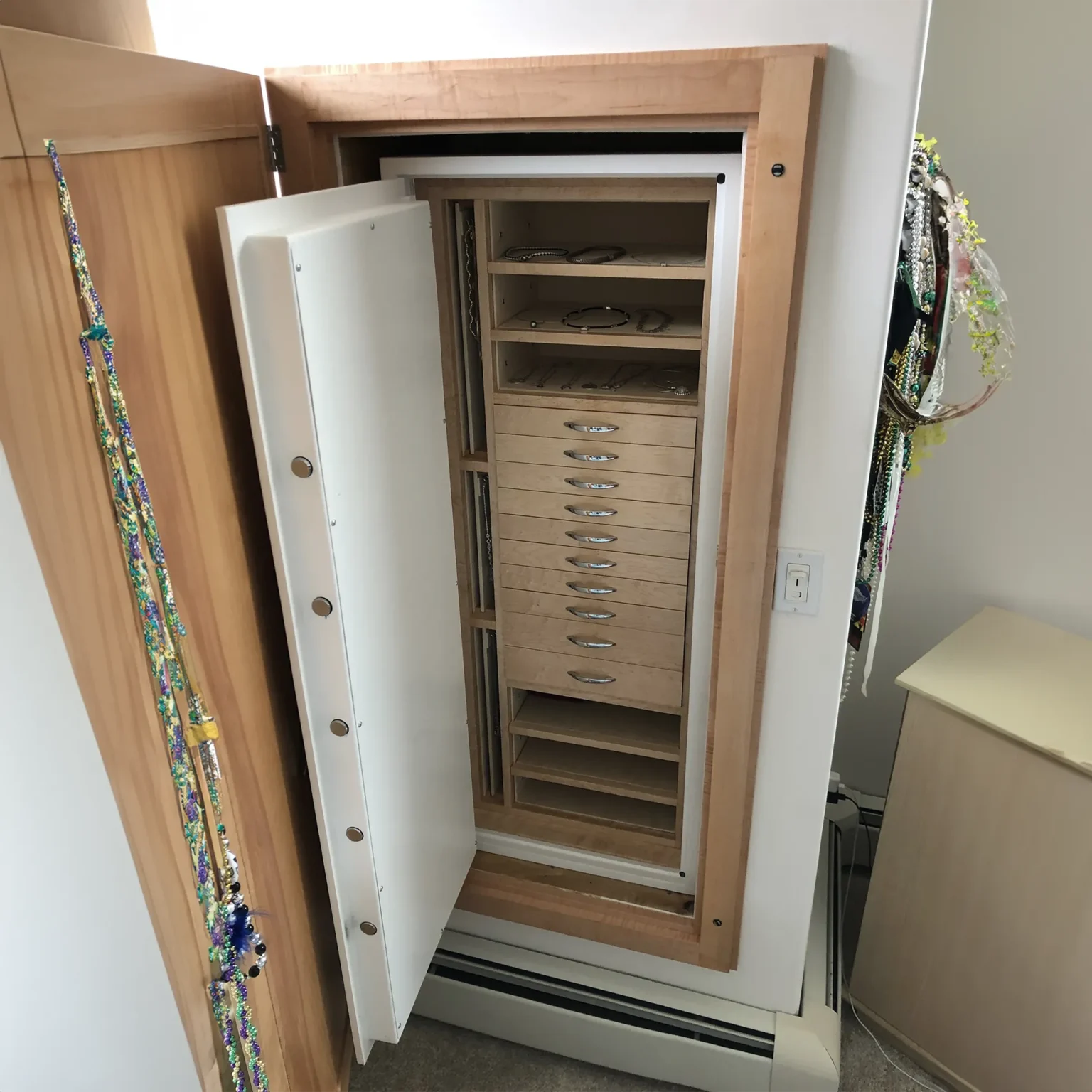
Fully Custom Jewelry Safes: Any size. Any color. Any interior. Configure drawers for rings, watches, necklaces, and more. Designed to seamlessly fit your home’s style and space. From bold, high-gloss finishes to hidden-in-plain-sight installations, your jewelry safe will be one of a kind—crafted by our expert team to reflect your taste and meet your specific security goals.
get a quoteWhy Designers Should Specify Safes Early in the Process
1. Placement Drives Performance
- Proper structural support for heavier models
- Thoughtful access height for daily use
- Seamless cabinet and drawer integration
- Hidden or featured visibility depending on the client’s preference
Waiting until install often means working around HVAC, plumbing, or built-ins—resulting in compromises that could’ve been avoided.
2. Designers Are the Gatekeepers of Aesthetic Continuity
Most off-the-shelf safes clash with high-end interiors. When designers lead the selection process, they can choose:
- Matching wood veneers or paint finishes
- Hardware that blends with the room’s design language
- Soft-close drawers and lighting for a polished, boutique-style feel
3. It’s a High-Touch, High-Trust Upgrade
For clients investing in walk-in closets, dressing suites, or custom millwork, a jewelry safe is not a stretch—it’s an expected finishing detail. Offering it as part of the design solution builds credibility and expands your scope of influence.
What Designers Should Look for in a Jewelry Safe
1. Built-In Aesthetic Options
- Exterior finishes that match millwork (matte black, white lacquer, walnut, brushed steel)
- Flush-panel or recessed front designs
- Hidden hinge doors or touch-latch hardware
- Clean, minimal faceplates (no brand embossing or oversized dials)
2. Custom Interior Configuration
- Modular drawer layouts (rings, watches, necklaces)
- Velvet or suede lining (color-matched to the design palette)
- Optional LED drawer lighting
- Integrated watch winders (for clients with timepiece collections)
3. Right-Size Form Factor
Avoid upselling bulky safes that dominate a space. Instead:
- Specify drawer-height units for island installations
- Choose vertical models for closet corners
- Consider wall-mounted or recessed safes for small square footage
The goal is to complement the space, not command it.
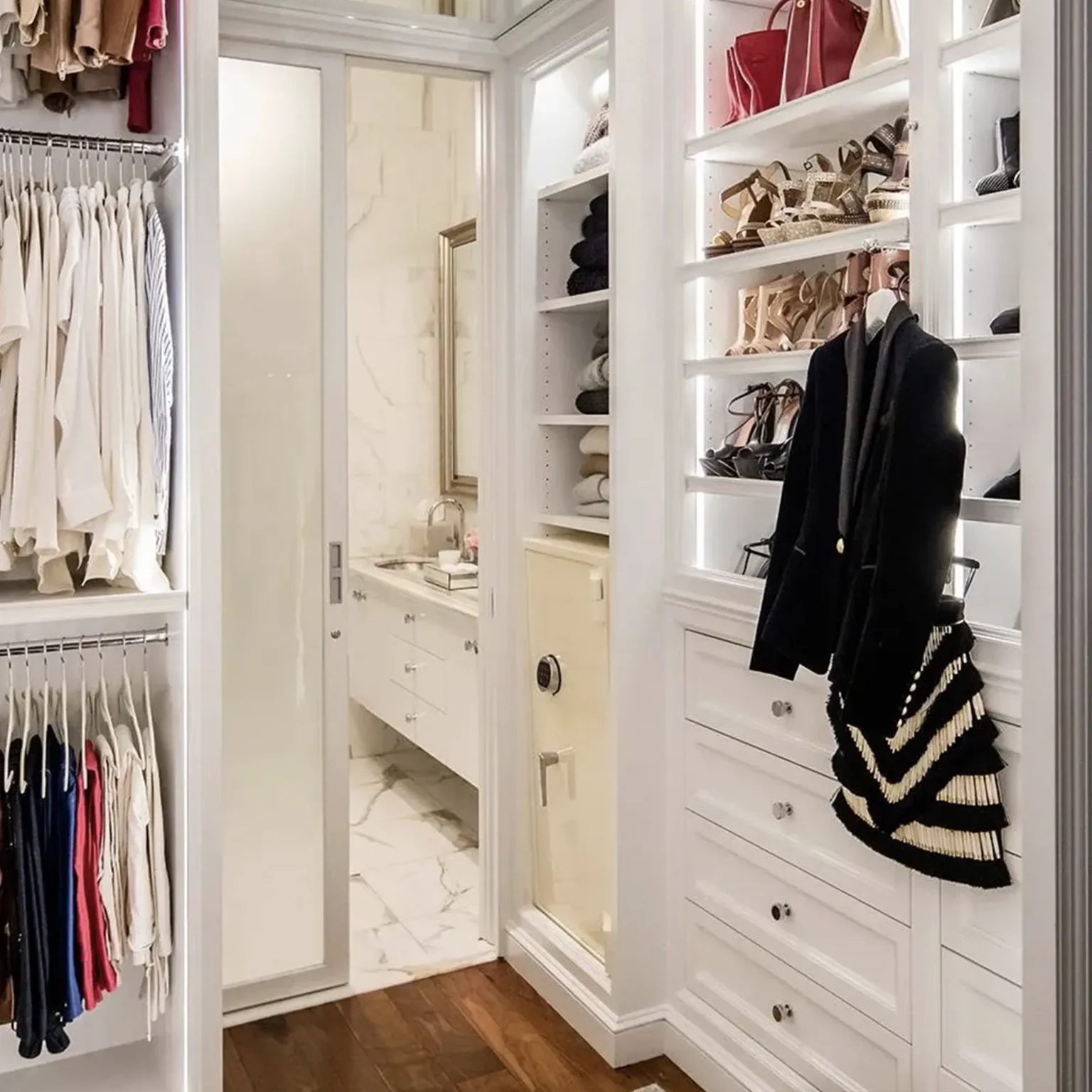
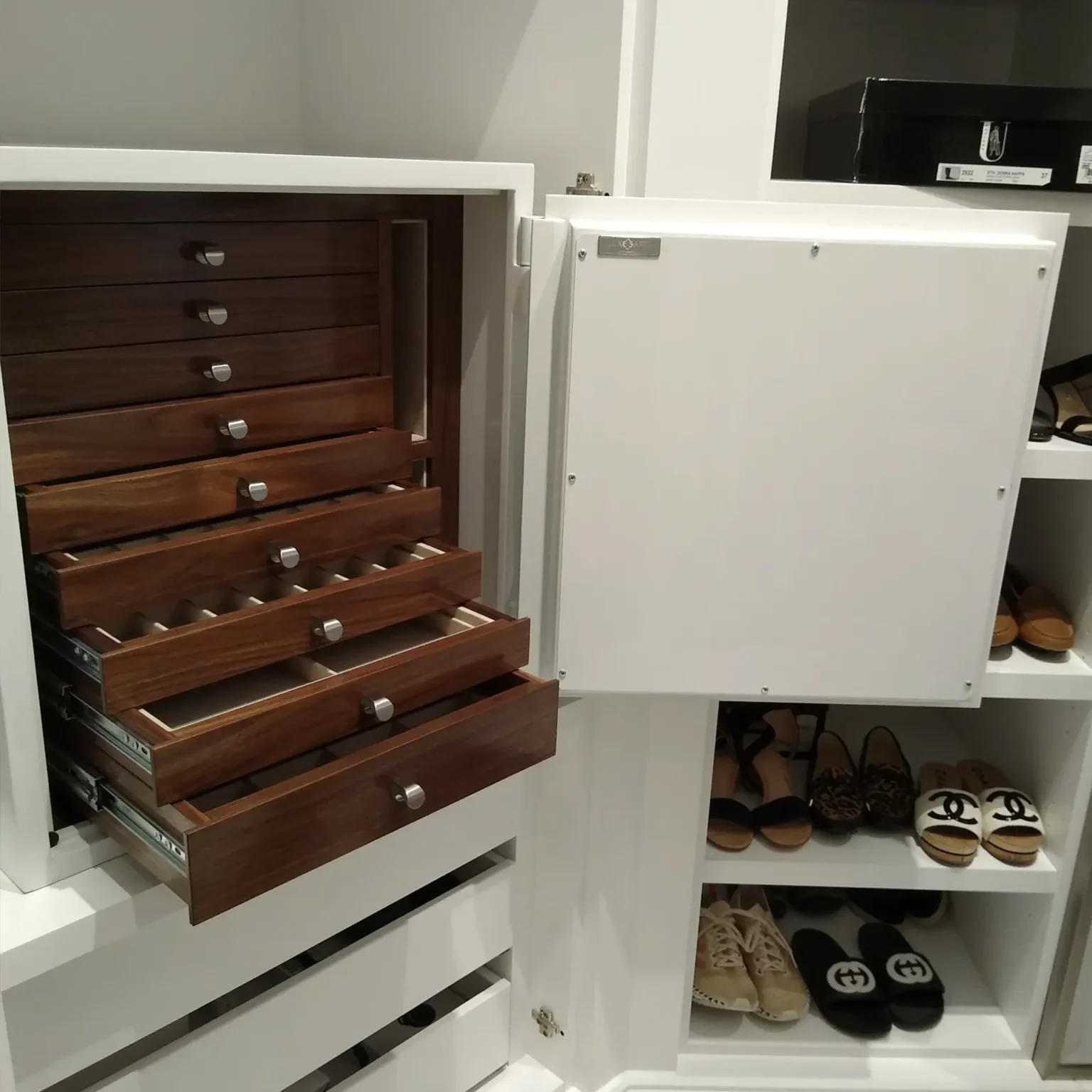
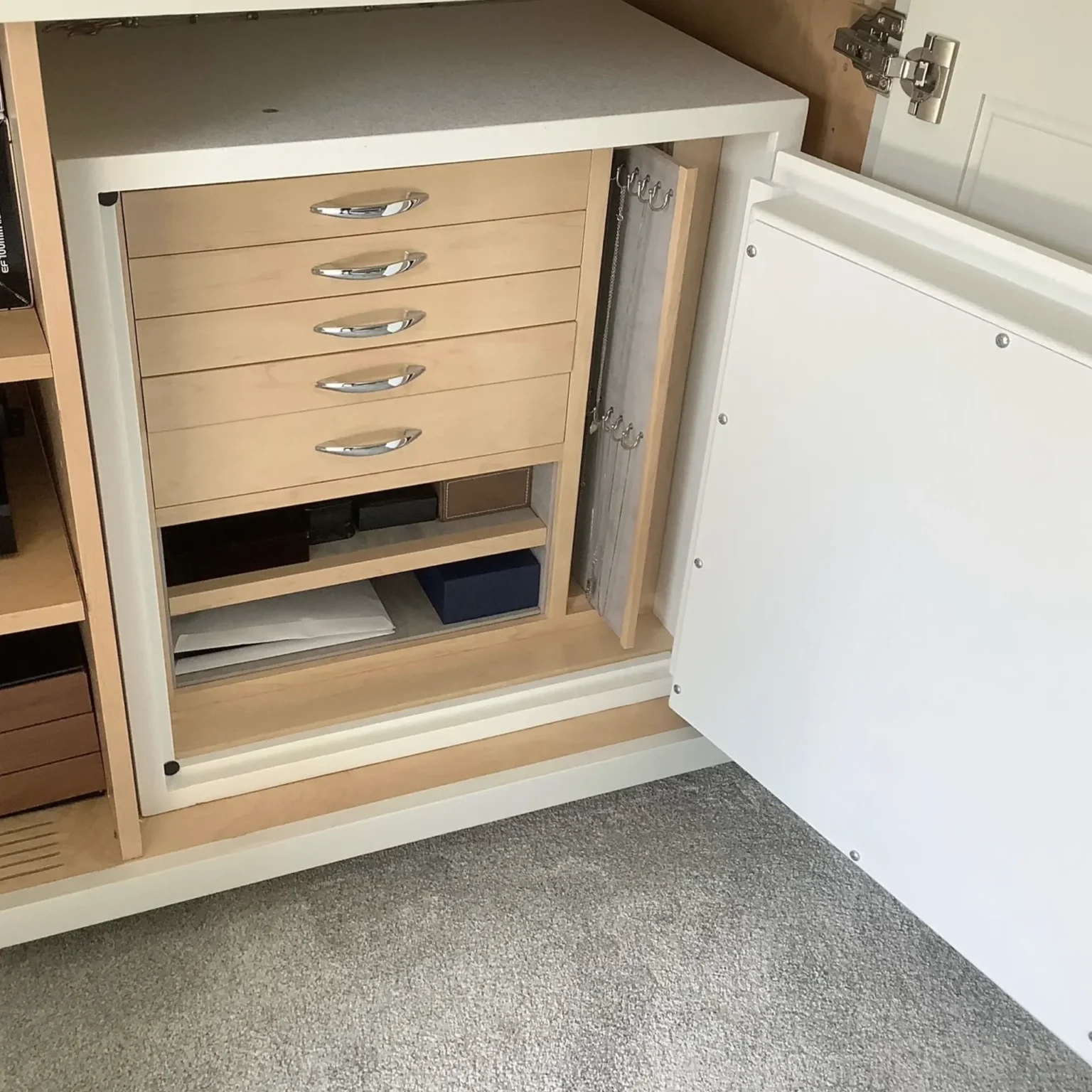
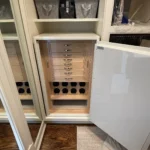
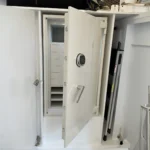
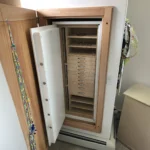
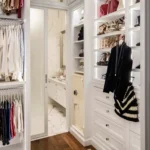
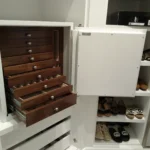
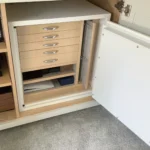
Placement Ideas: Seamless Integration into Design
| Location | Design Tip |
|---|---|
| Closet Island | Install drawer-style safe inside central island cabinetry |
| Tall Closet Cabinet | Hide behind pull-out panels or flush doors |
| Vanity or Dressing Room | Design into lower vanity drawers with concealed top-access |
| Wall Niche | Recess safe into wall and cover with custom millwork or art panel |
| Under Seating | Safe built into banquette or bench seating with lift-top access |
Work with cabinet makers early to ensure weight support and access angles are accounted for.
How to Talk About Safes with Clients
Designers are often hesitant to bring up safes, fearing it feels like an upsell. In truth, most luxury clients are relieved when the topic is handled with care. Here’s how to approach it:
Sample Talking Points:
- “Have you thought about how you’d like to store your jewelry when it’s not in use?”
- “Would a dedicated, discreet drawer for watches or heirlooms make your closet more functional?”
- “We can integrate a safe seamlessly into the cabinetry—no need for an eyesore or afterthought.”
By treating the safe as a design decision, not a security pitch, you make it easier for clients to say yes.
Why Designers Trust LuxeSafes
- Access to fully customizable models
- Collaboration on finishes, dimensions, and interior layout
- Support for working directly with cabinet makers and architects
- A partner who understands both the security and aesthetic stakes
LuxeSafes offers white-glove delivery, integration planning, and decades of experience working in high-end residential environments.


Common Designer Questions
Can safes be completely hidden in cabinetry?
Yes. With custom builds, safes can be flush-mounted, hidden behind false panels, or disguised as drawers. We work directly with millworkers to ensure seamless integration.
How much space do I need to allocate in the layout?
Most built-in jewelry safes range from 18″ to 36″ in height and 16″ to 24″ in width. We’ll help match the right model to your dimensions during the planning phase.
What if my client doesn’t want visible hardware?
Touch-latch, push-to-open, or concealed keypad models are all available. Exterior finishes can also be made to match surrounding cabinetry.