
When Protection Goes Beyond Possessions
For high net-worth individuals (HNWIs), jewelry isn’t just adornment—it’s often a mix of investment-grade assets, family heritage, and sentimental pieces. But with elevated lifestyle exposure comes elevated risk: of theft, loss, fire damage, or even liability.
A jewelry safe built for this tier of clientele must go beyond standard security. It must integrate seamlessly into luxury interiors, support complex collections, and align with privacy, lifestyle, and estate planning considerations.
This guide explores what HNWIs should consider when selecting a jewelry safe, from advanced features to discreet placement strategies, and why it’s often one of the smartest upgrades in a high-value residence.


Why Standard Safes Aren’t Enough for HNW Clients
1. Elevated Risk Profile
- Organized burglary
- Insider access breaches (staff, vendors, etc.)
- Public profile exposure via social media or press
As such, standard off-the-shelf safes fail to account for the sophistication of potential threats or the scale of what’s being protected.
2. Value Concentration
- Six- to seven-figure values
- Rare or irreplaceable heirlooms
- Assets that play a role in estate transfers or legal planning
This level of value requires fire, theft, environmental, and access control in a unified solution.
3. Incompatibility with Luxury Homes
- Clash with high-end interiors
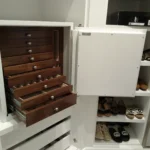
- Lack custom drawer configurations for watches, necklaces, or loose stones
- Don’t integrate with smart home or estate security systems
What to Look for in a Jewelry Safe for HNW Clients
1. True Burglary and Fire Ratings
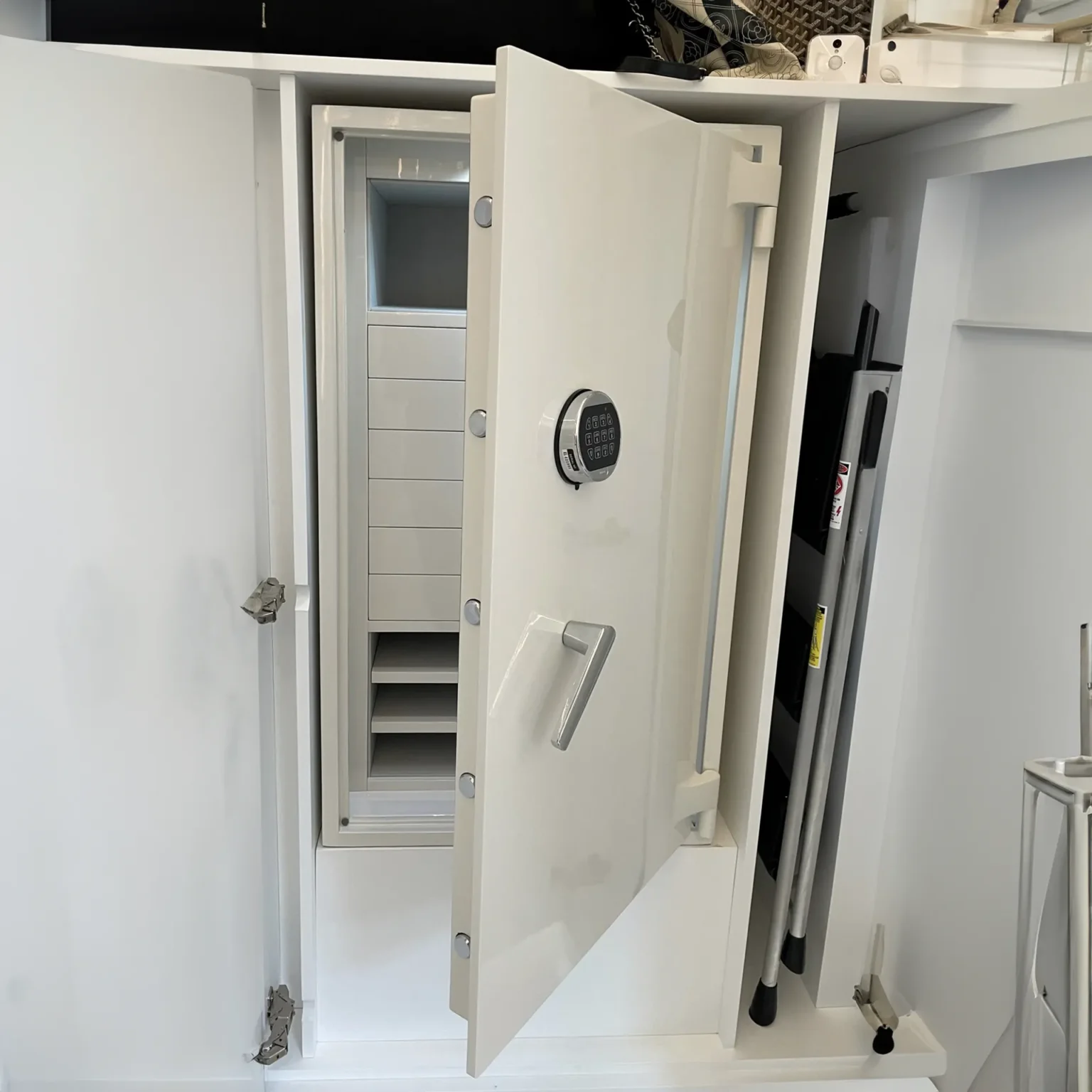
- TL-15 or TL-30 burglary rating (tool resistance for 15–30 minutes)
- 1–2 hour UL Class 350 fire rating
- Solid steel doors and body construction
- Relockers and hardplate protection to resist drilling or torching
This tier of safe moves beyond residential-grade into commercial security territory, adapted for home use.
2. Bespoke Interior Fit-Outs
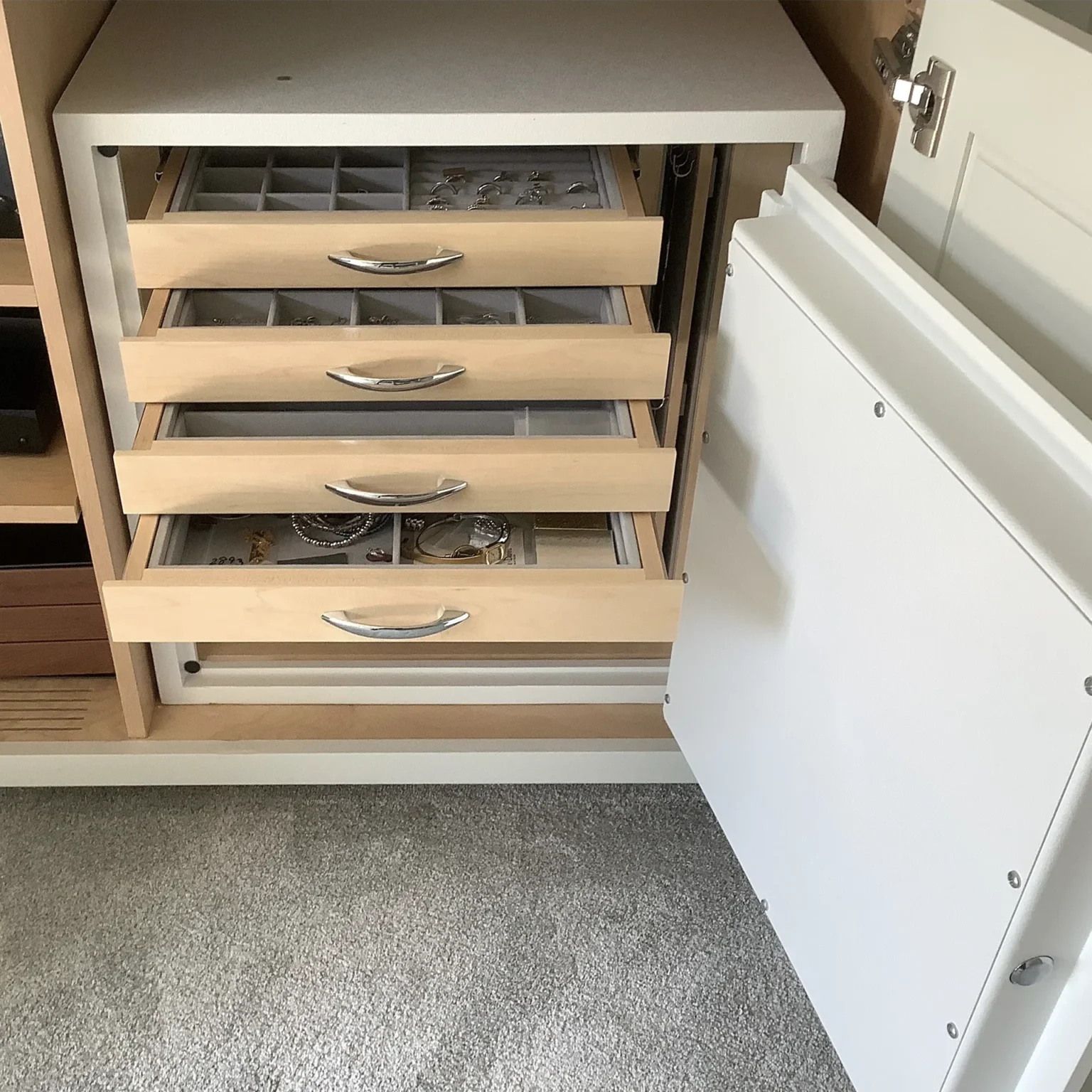
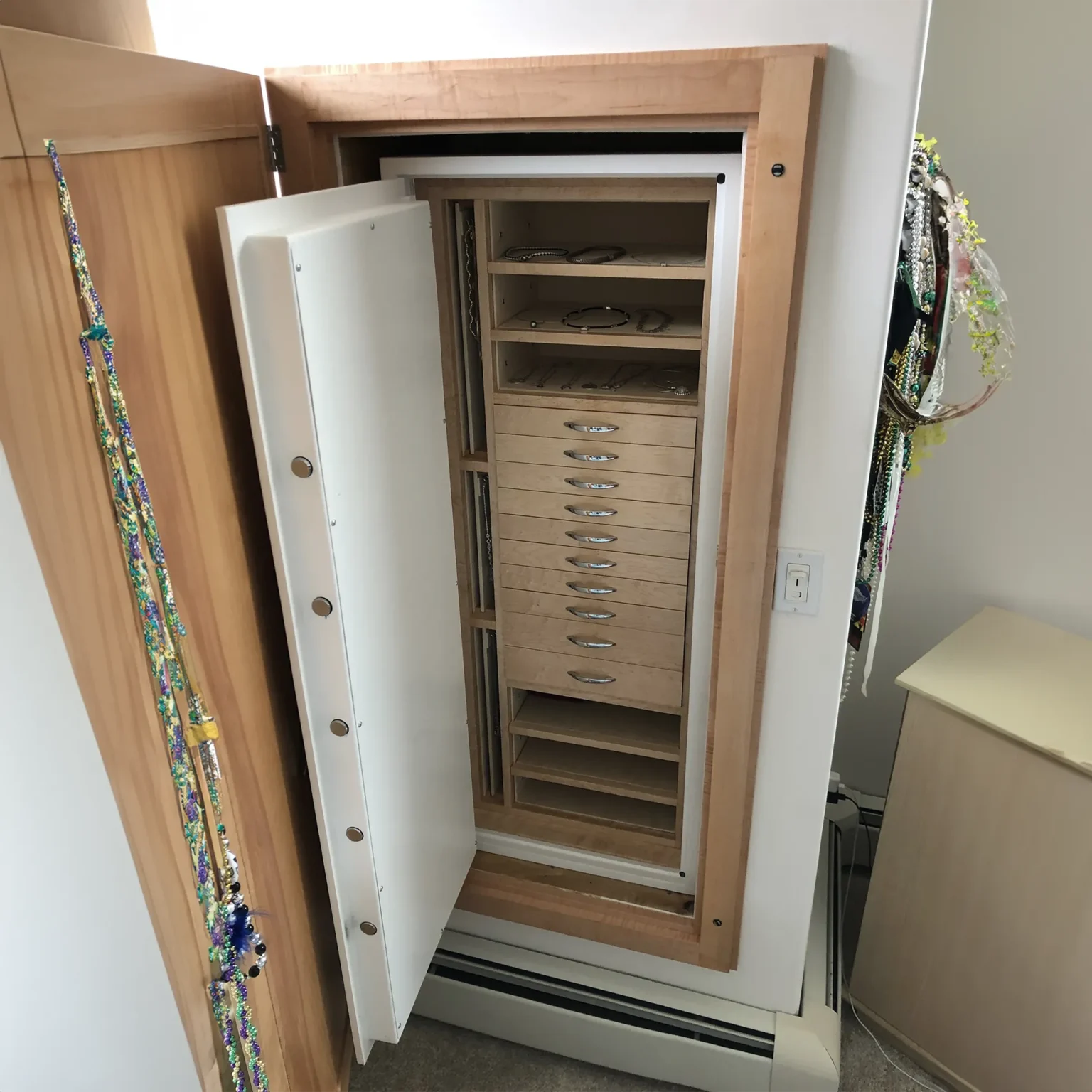
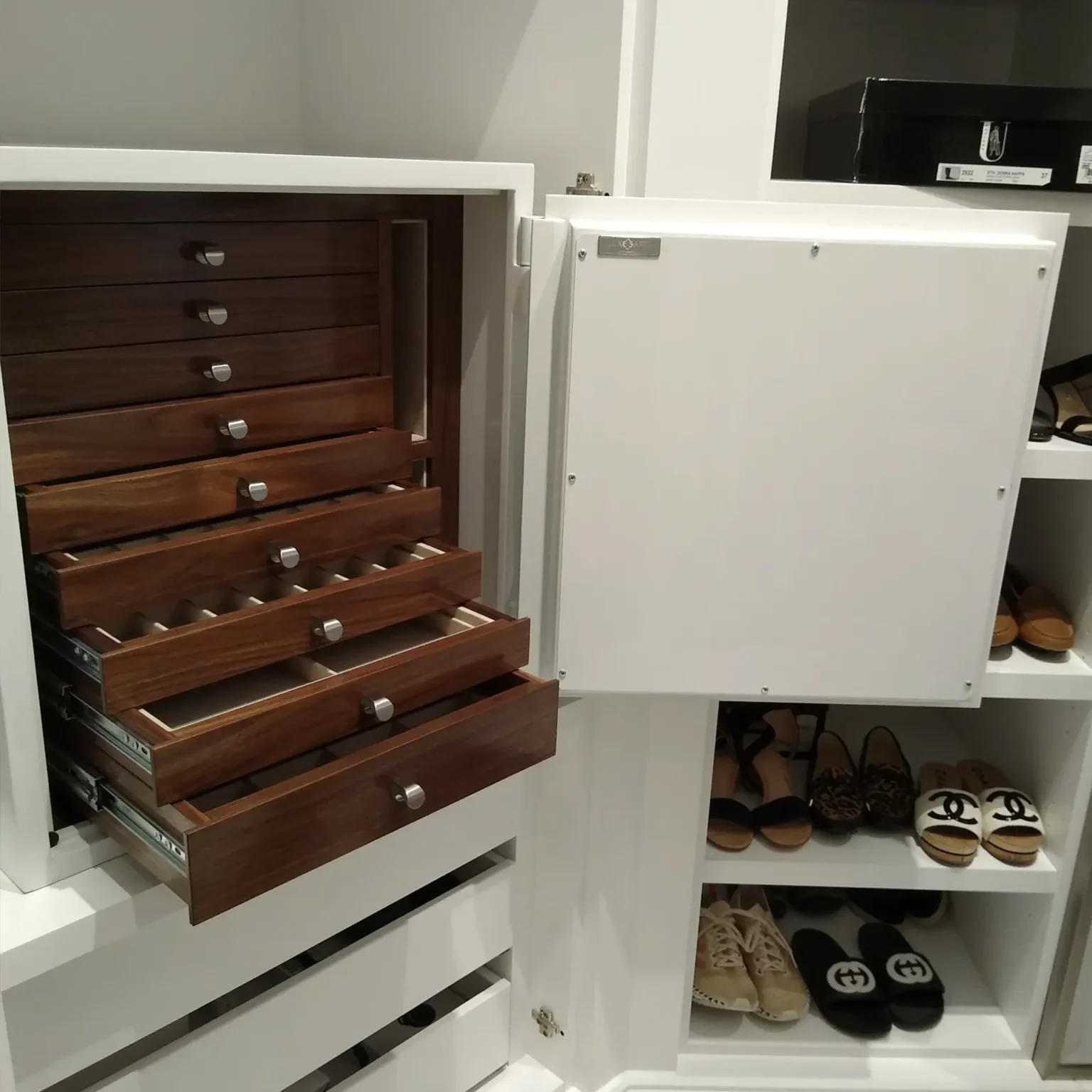
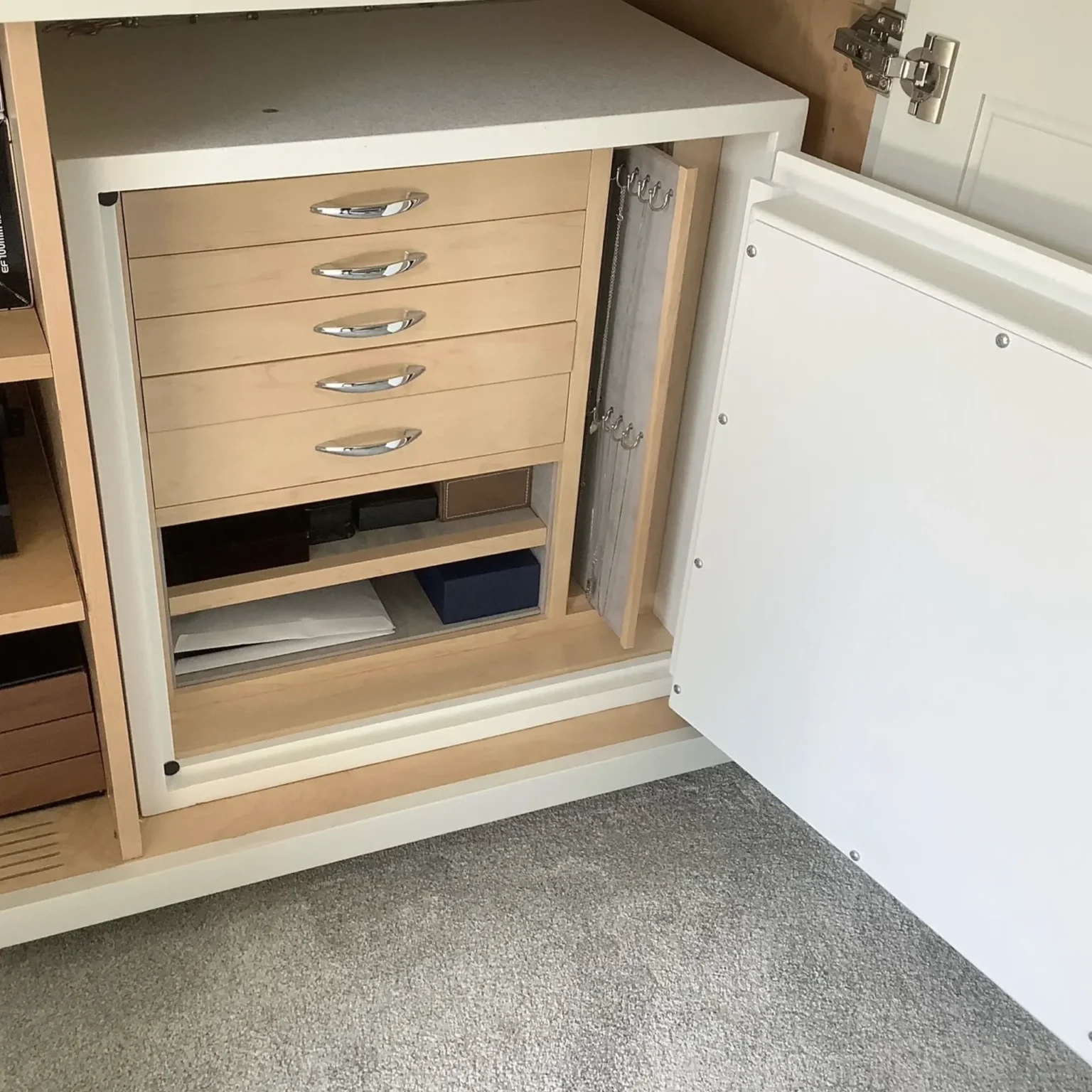
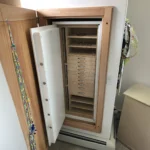
- Modular jewelry drawers (velvet or suede-lined)
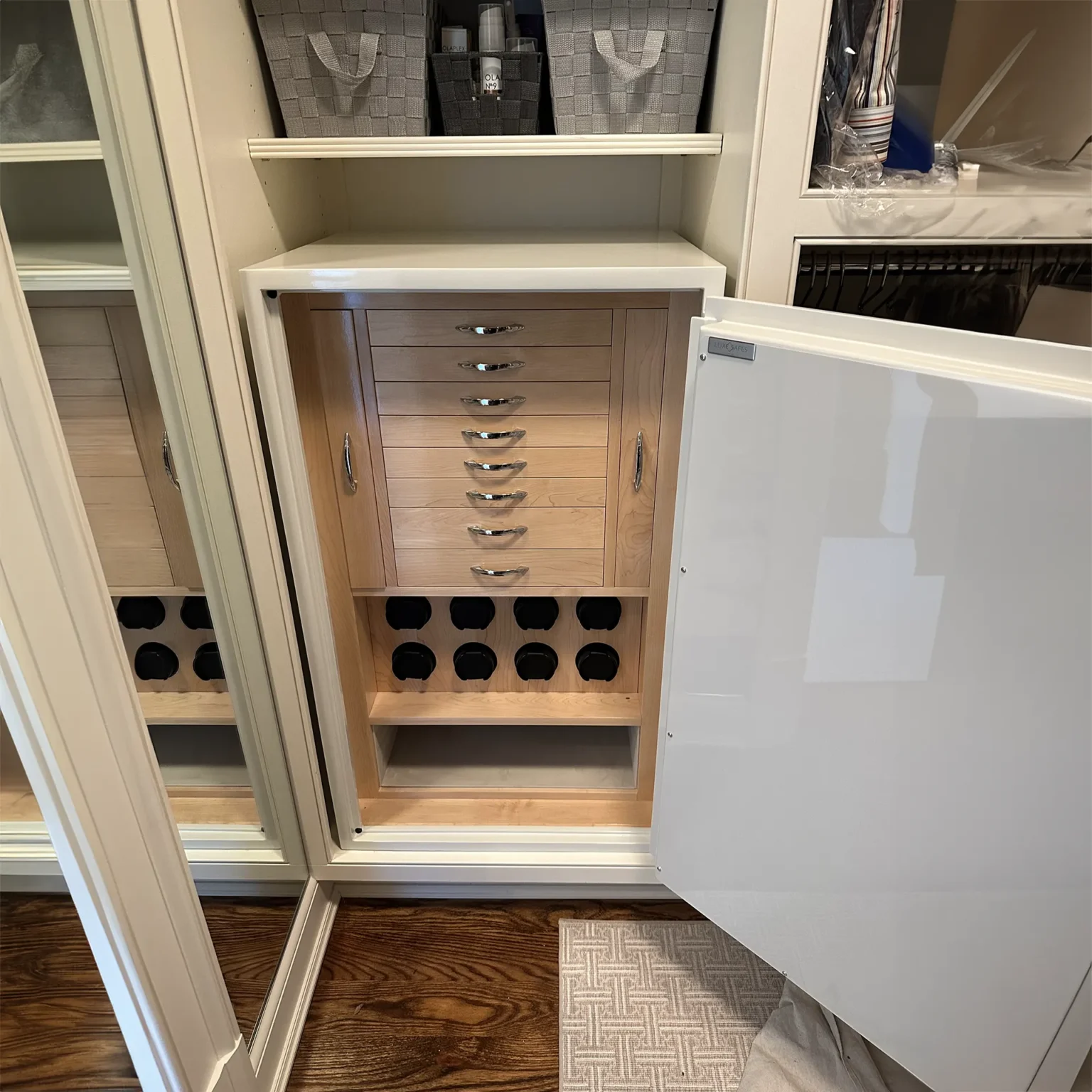
- Watch winders (programmable, quiet, individually mounted)
- LED lighting (for visibility in low-light spaces)
- Lockable inner compartments for tiered access control
- Space for appraised documents, certificates, or digital backups
For clients with multiple properties, the same layout can be replicated across homes to simplify usage.
3. Controlled Access and Audit Trails
- Keypad entry
- App-integrated tracking (for remote access logs)
- Time-delayed entry or dual-user requirement (for safes used by staff)
- Ability to assign PINs per user with customizable access levels
These features are critical in homes with staff, security personnel, or multi-generational access.
Tailor Designed to Match Your Requirements
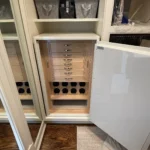
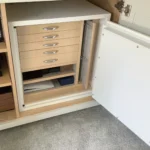
Fully Custom Jewelry Safes: Any size. Any color. Any interior. Configure drawers for rings, watches, necklaces, and more. Designed to seamlessly fit your home’s style and space. From bold, high-gloss finishes to hidden-in-plain-sight installations, your jewelry safe will be one of a kind—crafted by our expert team to reflect your taste and meet your specific security goals.
get a quoteWhere These Safes Belong in the Home
Primary Locations
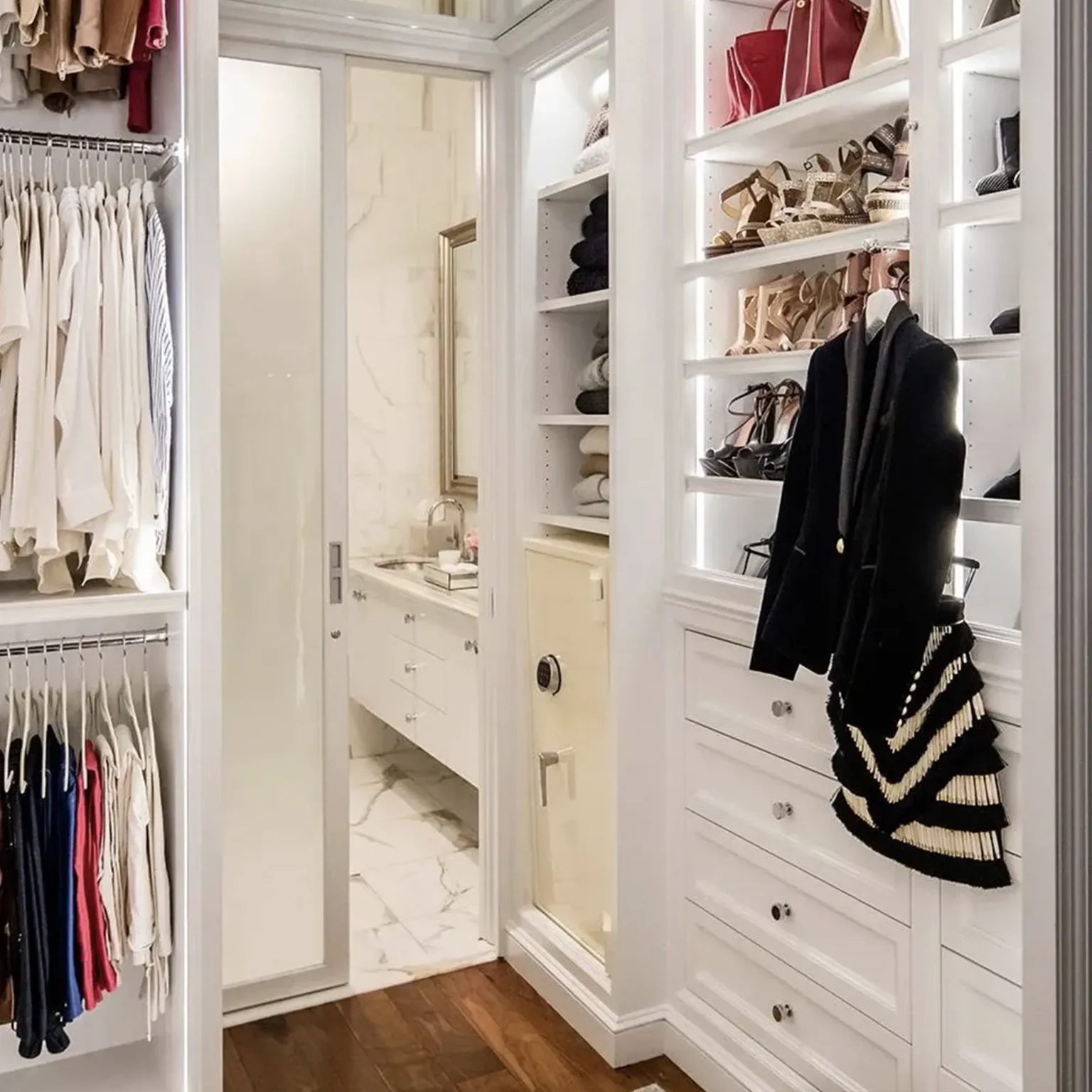
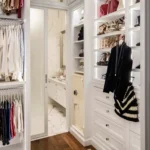
- Walk-in closets: Integrated into cabinetry or closet islands
- Master suites: Hidden behind millwork or within vanities
- Private dressing rooms: Designed as showpieces or discreet pull-outs
- Home offices or private studies: For safes doubling as document storage
Backup or Redundant Locations
- Panic rooms or secure rooms: Especially for collections of extreme value
- Underground vaults or climate-controlled basements: For legacy storage or multi-asset protection
All placements should include anchoring, tamper sensors, and controlled HVAC exposure.
The Role of Interior Designers, Estate Managers, and Security Consultants
Smart HNW clients bring in their entire household advisory team early in the safe-buying process. That may include:
- Interior designers to ensure aesthetic alignment
- Estate managers to handle inventory, logistics, and staff access
- Security firms to integrate the safe with cameras, alarms, and motion alerts
At this level, a safe is no longer a standalone product—it’s part of the residence’s infrastructure.
Recommended LuxeSafes Solutions for High Net-Worth Clients
Custom Vault-Tier Builds
- TL-30 rated, multi-layer steel construction
- Full custom cabinetry inside and out
- Dedicated compartments for watches, fine jewelry, and documents
- Optional silent alert if access is forced or unauthorized
Designer Series with Integrated Winders
- For clients with 10–40 timepieces
- Multi-drawer jewelry organization
- LED lighting and glass display (optional)
- Coordinated finish options: matte black, white lacquer, wood veneers
Multi-Home Standardization Packages
- Identical safe dimensions, layouts, and finishes across properties
- Simplifies usage, training, and documentation
- Ideal for families with seasonal residences or vacation properties
Documentation and Insurance Considerations
- Photographing and inventorying contents annually
- Keeping appraisals and receipts in a fire-rated document drawer
- Working with your insurance carrier to verify safe ratings meet coverage requirements
- Ensuring your safe’s installation is certified or documented to avoid claim denials
FAQs
What’s the difference between TL-15 and RSC ratings?
RSC (Residential Security Container) is a baseline test. TL-15 safes are tested against skilled attack with tools for at least 15 minutes—far more robust and appropriate for high-value collections.
Can a luxury safe be completely hidden?
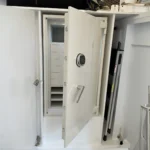
Yes. With custom cabinetry or millwork, even TL-rated safes can be integrated discreetly. LuxeSafes works with builders and interior designers to ensure seamless visual integration.
Do I need separate safes for jewelry and watches?
Not necessarily. Many clients combine both in one larger unit, using winders and drawers to create zones. For ultra-high-value collections, redundancy or separation may be advisable.