
High-Security Jewelry Safes: Secure Your Valuables with Confidence
What “High-Security” Really Means
It’s easy to assume all safes are secure. But when it comes to protecting jewelry collections with substantial financial or emotional value, not all safes offer the same level of protection.
“High-security” is more than just a marketing term—it’s a classification backed by third-party testing, engineering standards, and specific construction methods designed to resist forced entry, fire, and even sophisticated attack methods.
This guide will explain what qualifies a jewelry safe as “high-security,” what certifications and features to look for, and when investing in this level of protection is justified.
Why High-Security Safes Exist
Most safes sold at big-box stores are designed for low-level protection: a deterrent to casual theft, or basic resistance against fire. But they aren’t designed to withstand:
- Tools like crowbars, grinders, or cutting torches
- Knowledgeable intruders who know how to bypass entry-level locks
- Extended attacks without early detection
High-security safes exist for one simple reason: when the value of what you’re protecting outweighs the cost or complexity of the safe itself.
Key Certifications to Understand
One of the easiest ways to identify a high-security safe is to check its certifications. The most recognized organizations in the United States include:
- UL (Underwriters Laboratories)
- UL RSC (Residential Security Container): Entry-level, but still tested against basic attacks.
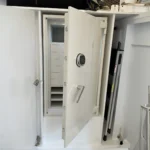
- UL TL-15: Resists entry using common mechanical and electrical tools for a minimum of 15 minutes.
- UL TL-30: Resists tool attacks for 30 minutes.
- TLTR Ratings: Adds resistance to torch attacks in addition to tool attacks.
- ETL and DOJ Ratings
Occasionally, safes are also tested for additional standards like drop tests or resistance to specific burglary tools. TL ratings remain the most reliable indicator of real-world, high-security performance.
What Construction Features Define a High-Security Jewelry Safe?
Steel Thickness
A basic safe may have 16–18 gauge steel. High-security safes typically use:
- 10-gauge steel minimum
- ½” or thicker steel doors
- Reinforced layers, sometimes including composite materials or fireboard
Locking Mechanisms
Advanced locking systems are a hallmark of high-security safes. Options include:
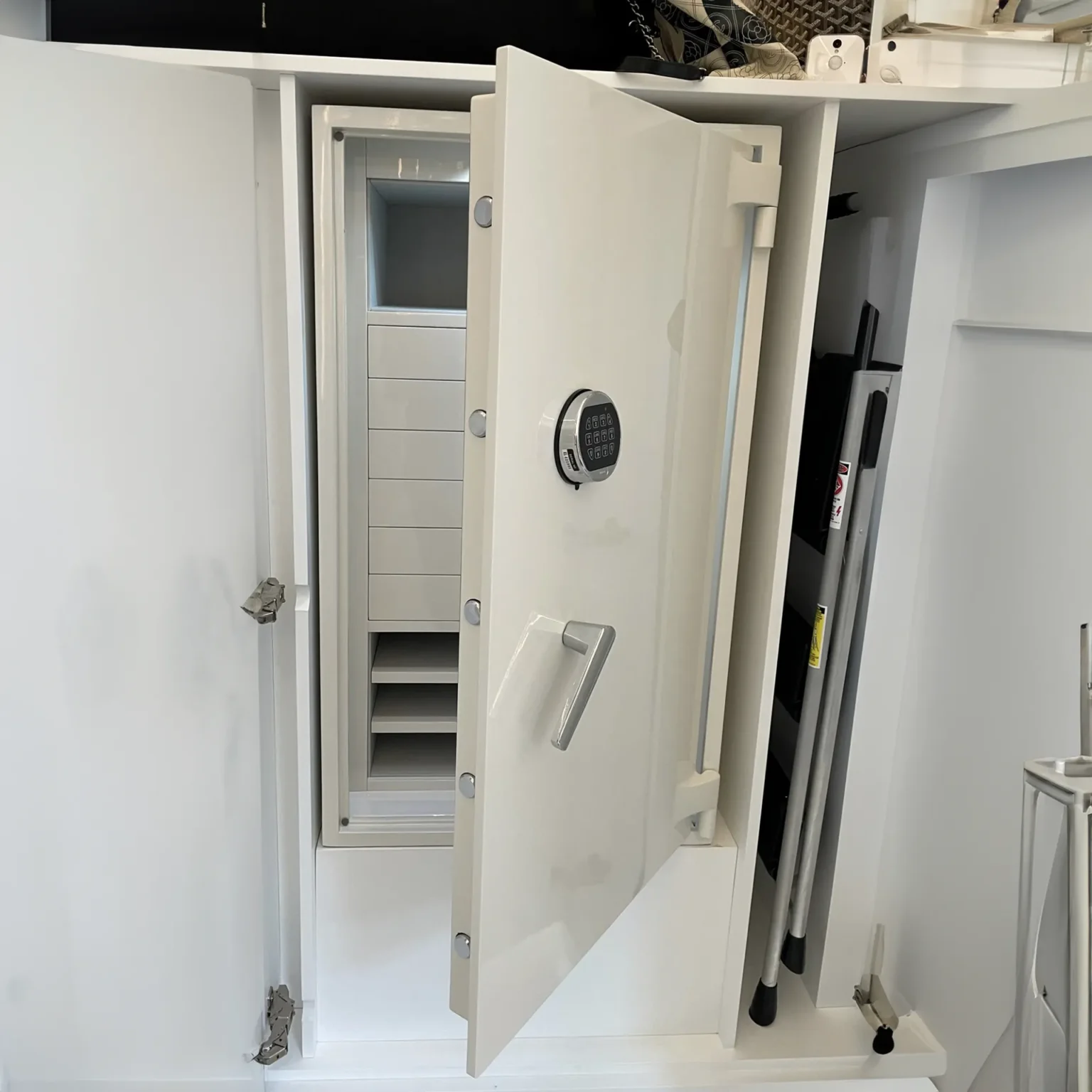
- High-security digital locks (UL-listed)
- Redundant mechanical dials
- Relocking devices that activate if tampered with
- Time-delay or dual-key systems for estate use or shared access
Relockers and Anti-Tamper Systems
- Movement of internal plates
- Drilling detection
- Lock removal detection
These systems make the safe harder to breach even if the primary lock is compromised.
Tailor Designed to Match Your Requirements
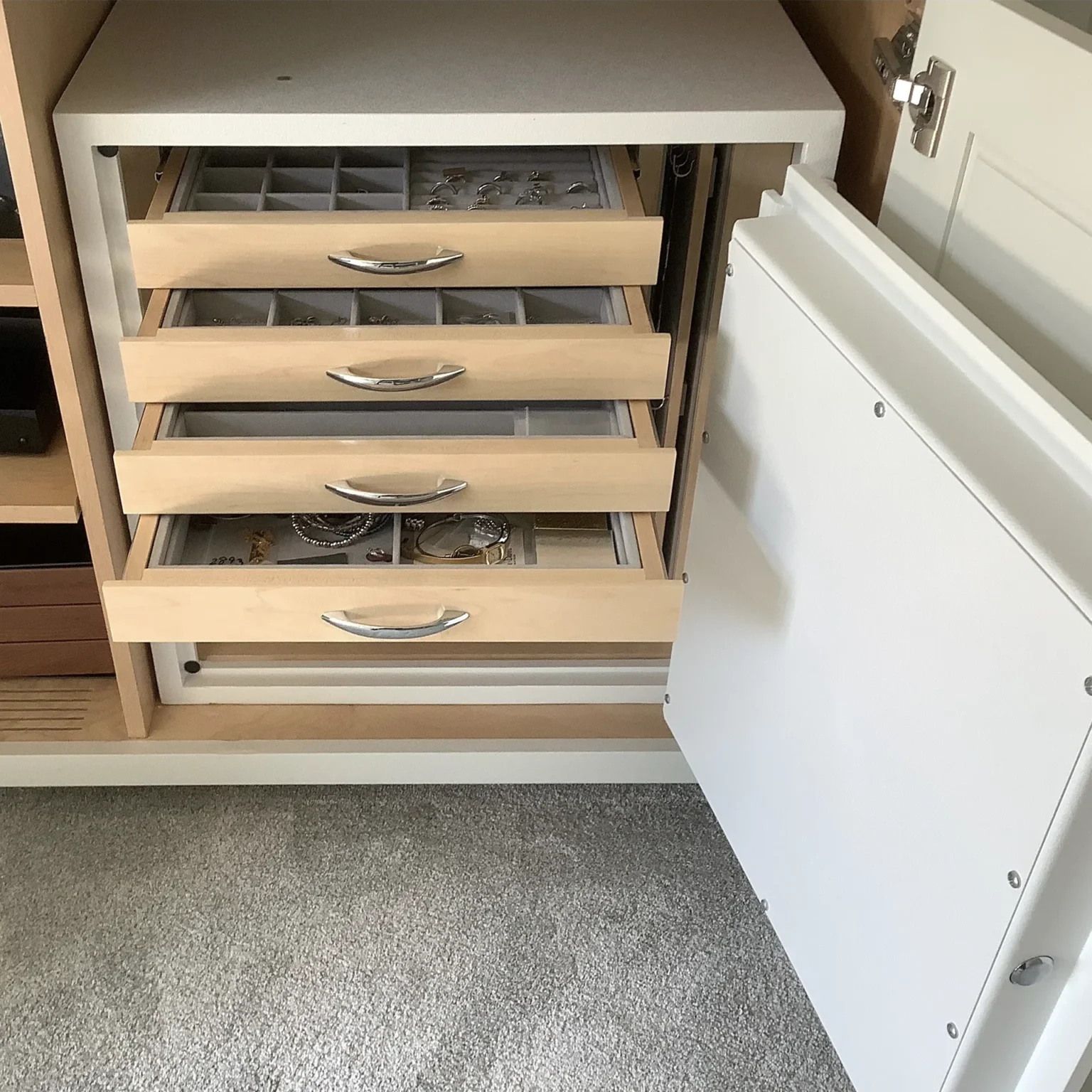
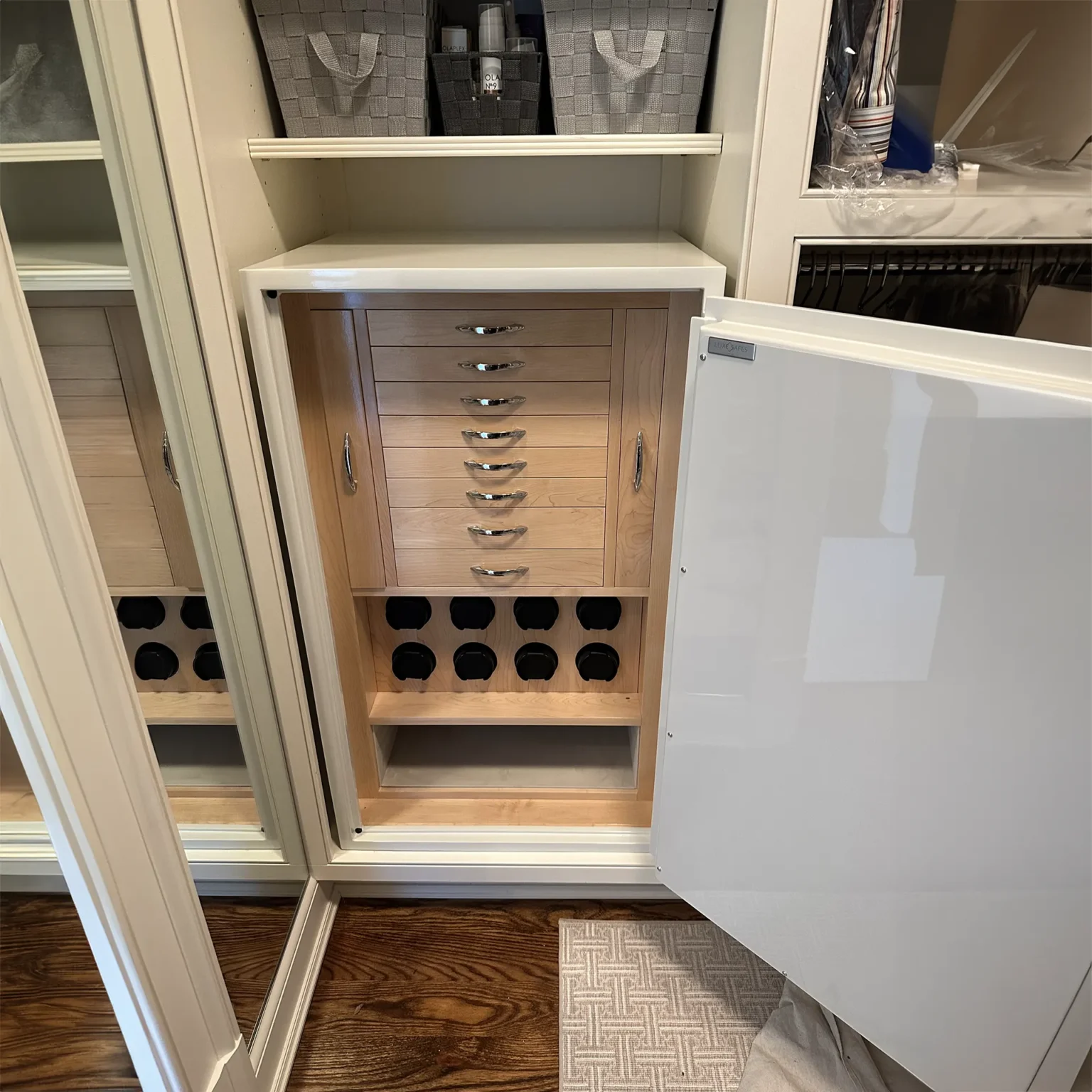
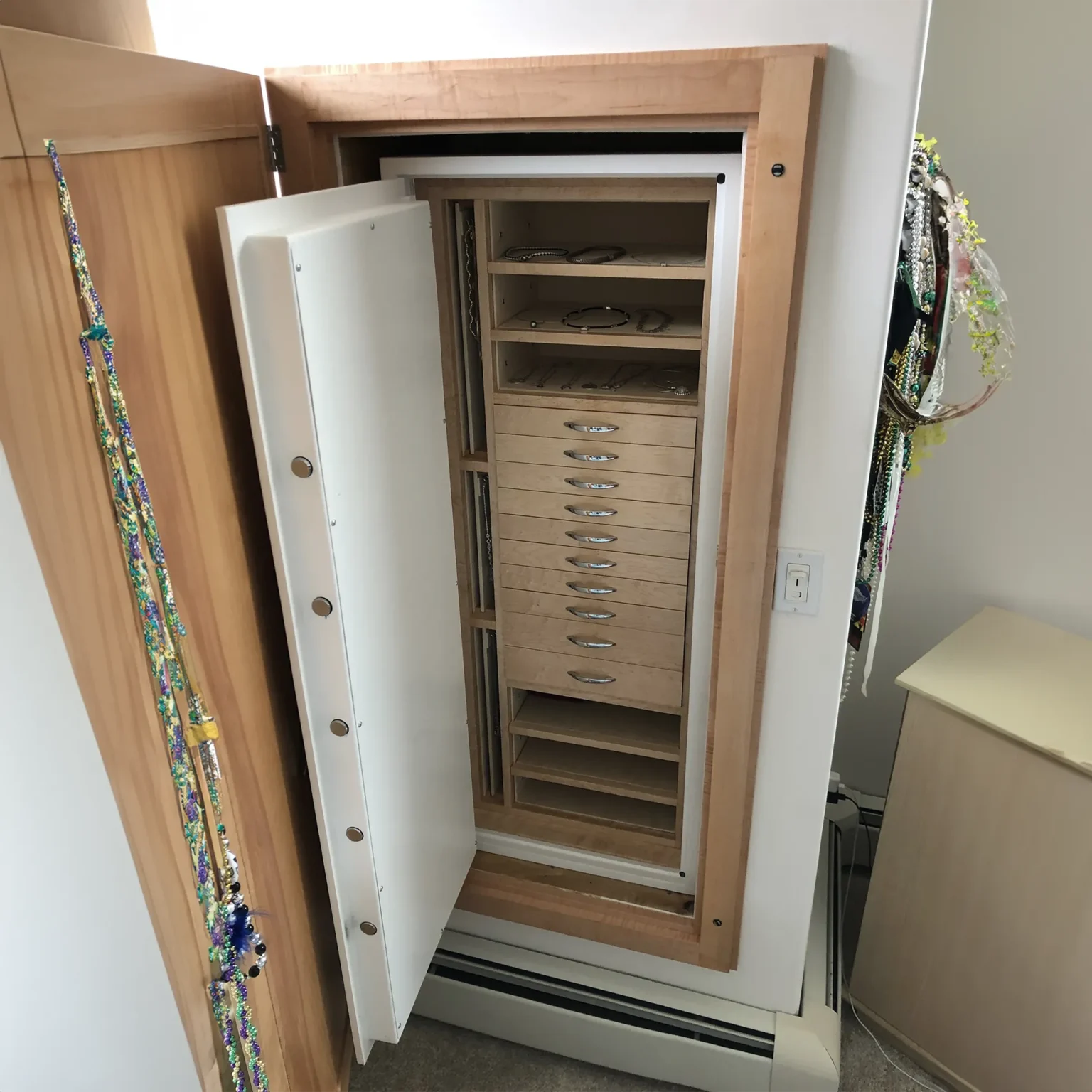
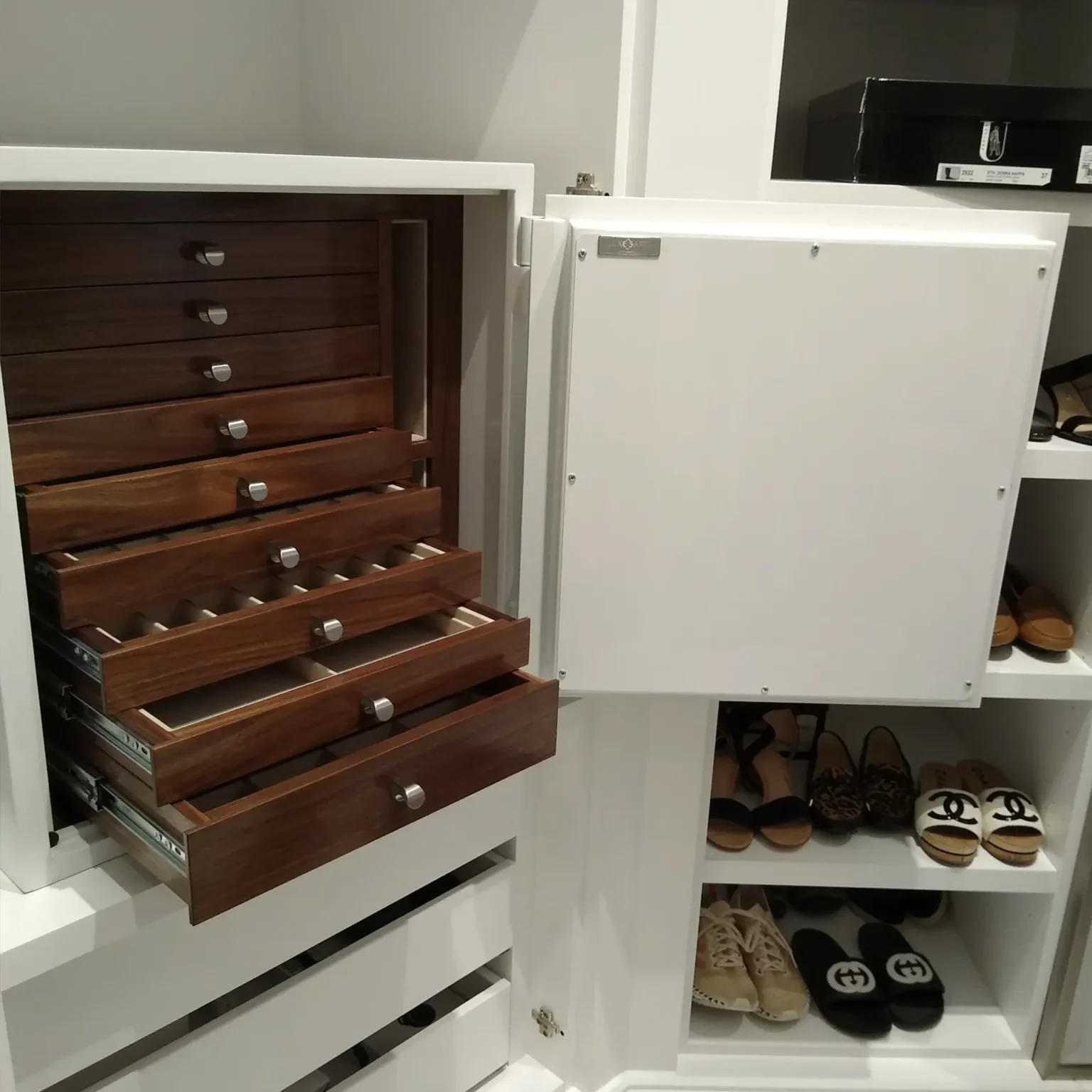
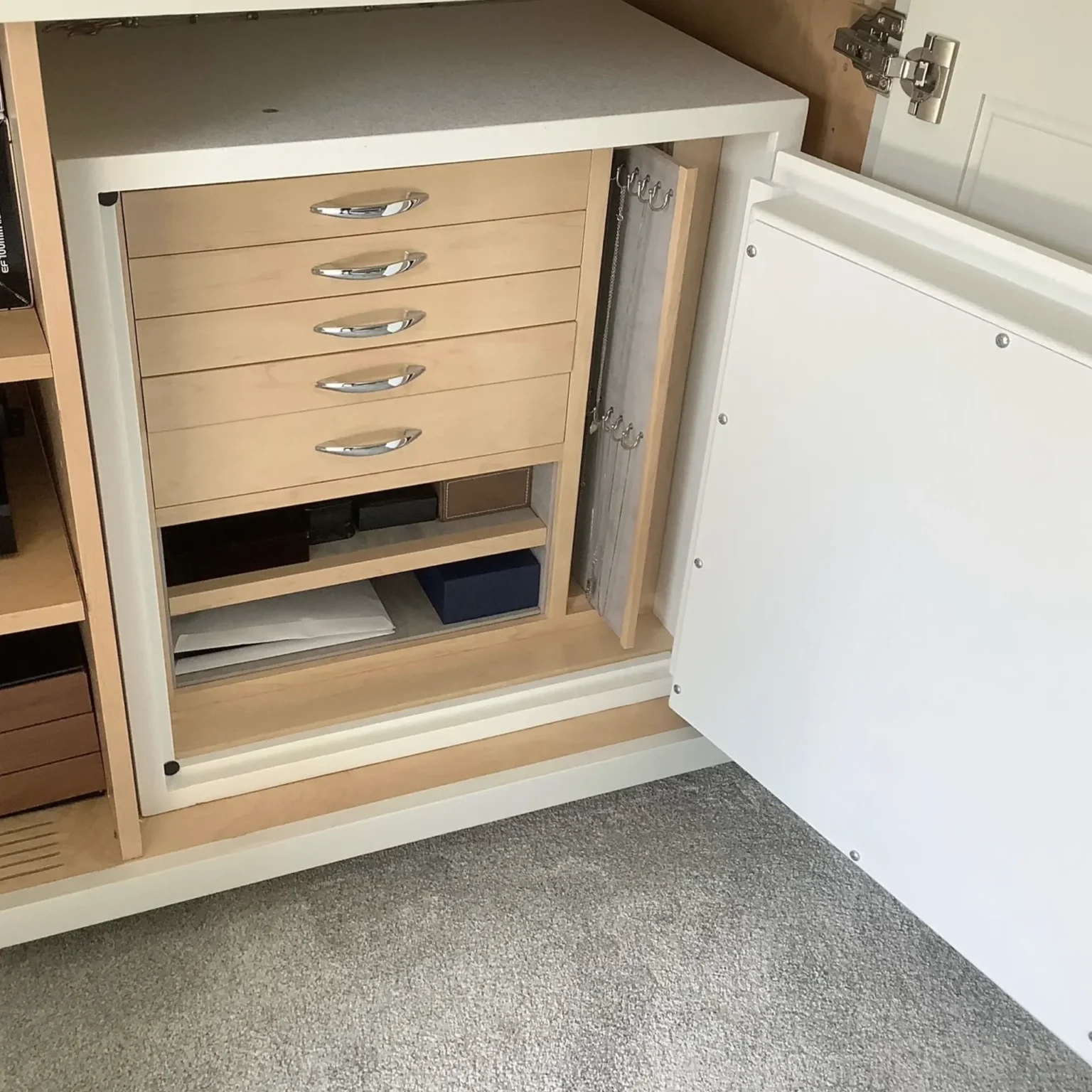
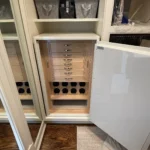
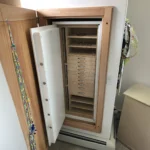
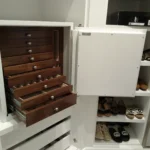
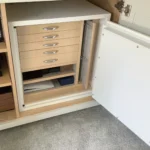
Fully Custom Jewelry Safes: Any size. Any color. Any interior. Configure drawers for rings, watches, necklaces, and more. Designed to seamlessly fit your home’s style and space. From bold, high-gloss finishes to hidden-in-plain-sight installations, your jewelry safe will be one of a kind—crafted by our expert team to reflect your taste and meet your specific security goals.
get a quoteFire Resistance in High-Security Models
- UL Class 350 1-hour or 2-hour fire ratings
- Layers of fireboard insulation inside the safe walls
- Smoke and moisture seals to preserve contents during a fire
If you’re storing both jewelry and documents (wills, appraisals, or estate planning papers), prioritize models with dual protection.
Placement and Installation Considerations
Anchor It Down
Even heavy safes can be moved if not anchored. Look for safes with pre-drilled anchor holes and install into concrete or structural flooring.
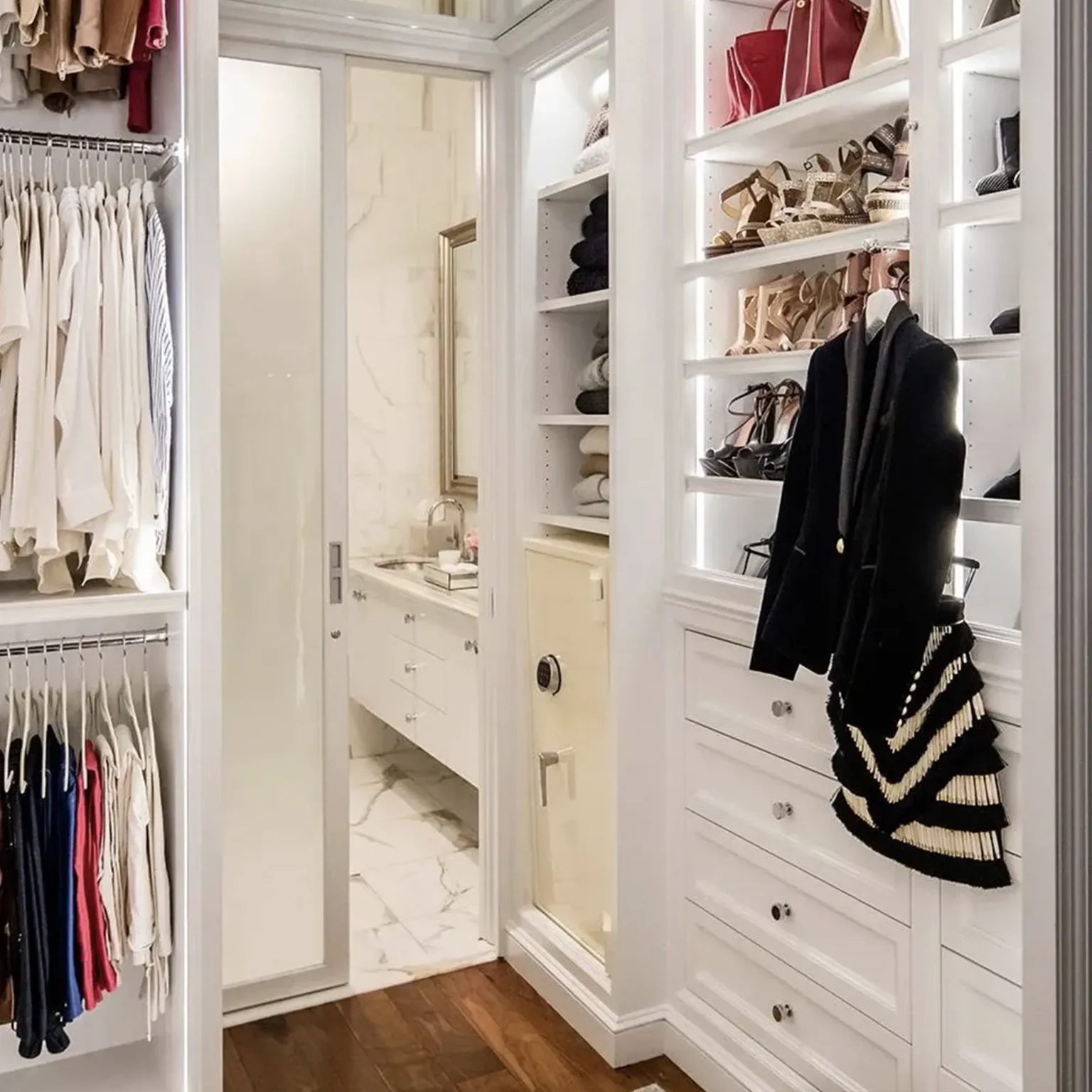
Choose a Discreet Location
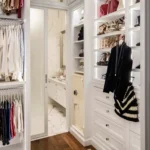
- Bedroom closets
- Built-in cabinetry
- Custom millwork in dressing rooms
- Behind false panels or inside furniture
If you’re investing in a TL-rated safe, placement should enhance—not compromise—its effectiveness.


When You Need a High-Security Jewelry Safe
- You own jewelry valued over six figures
- You have estate or heirloom collections you want to preserve long-term
- You’ve experienced a break-in or are in a higher-risk area
- You travel often and want peace of mind about what’s left at home
- You need to meet insurance requirements that specify TL-15 or higher
If the potential loss of your collection would be financially or emotionally devastating, then a high-security safe isn’t an upgrade—it’s a necessity.
Red Flags in “High-Security” Marketing Claims
- No mention of UL or TL certifications
- Thin steel construction (16 gauge or less)
- Non-descriptive terms like “solid steel” without specifying thickness
- No relocker or tamper detection mechanisms
- Decorative designs with little structural substance
A true high-security jewelry safe will disclose its testing data, certifications, and construction specs clearly.
Best Practices for Long-Term Use
- Test the lock periodically, and replace batteries (for digital) on a schedule
- Avoid storing high-moisture items without desiccants or climate controls
- Keep a written inventory of the items inside for insurance and estate planning
- Have the safe professionally installed and serviced to maintain integrity
With the right care, a properly built high-security safe will last decades—and will protect what matters for generations.
FAQs
- What does TL-15 or TL-30 actually mean?
These are burglary ratings from UL that indicate the safe can withstand tool attacks for at least 15 or 30 minutes, respectively. It doesn’t mean it only lasts that long—it means it lasted that long under strict testing with professional tools and techniques. - Can a high-security safe be customized?
Yes. Many manufacturers allow custom interiors, drawer layouts, and exterior finishes even on TL-rated models. You don’t have to sacrifice design to get protection. - Are high-security safes fireproof?
Many are. Look for dual-rated safes that offer both TL certification and UL Class 350 1-hour or 2-hour fire protection. Not all TL-rated safes are fire-rated—so verify before purchasing.