
Fireproof vs Waterproof Jewelry Safes: Secure Your Valuables with Confidence
What Are You Really Protecting Against?
When homeowners shop for jewelry safes, “fireproof” and “waterproof” are two features that show up on almost every product label. They sound similar. They both imply added protection. But they guard against very different threats, and not every safe offers both.
Understanding the difference—and when each feature is necessary—can help you choose the right safe for your collection, your environment, and your risk profile.
This guide breaks down the differences, overlaps, and trade-offs between fireproof and waterproof jewelry safes so you can make the best choice for how and where you store your valuables.


The Basics: Definitions and Purpose
Fireproof Safes
A fireproof safe is built to withstand extreme heat for a specified period. The purpose is to keep the interior temperature below the point where valuables are damaged, even as the external temperature reaches 1,700°F or more.
Most jewelry-safe buyers prioritize fireproofing because:
- Gold, silver, and gemstones are vulnerable to high heat
- Organic materials like pearls or opals can crack or combust
- Smoke and internal moisture can also damage fine jewelry
Waterproof Safes
A waterproof safe is built to resist water intrusion—typically during a flood, pipe burst, or while dousing a fire. These safes are sealed to prevent water from seeping in through gaps in the body, door, or lock mechanism.
While not every home has a high flood risk, water resistance becomes important if:
- Your safe is in a basement or ground-level room
- You live in a flood-prone region
- You’re concerned about sprinkler or firehose damage in the event of a fire
What UL and Other Certifications Actually Mean
Fire Ratings
Most reputable fireproof safes are tested and certified by UL (Underwriters Laboratories). The most common ratings for residential safes include:
- UL Class 350 1-Hour: Keeps the interior under 350°F for 60 minutes at external temps up to 1,700°F
- UL Class 350 2-Hour: Offers extended protection under the same conditions
Jewelry safes should always meet at least a UL Class 350 1-hour standard. Anything less may protect paper, but not delicate jewelry.
Water Resistance Ratings
Waterproof ratings are less standardized but often include:
- ETL Verified Waterproofing
- Manufacturer-tested depth and duration (e.g., “8 inches for 24 hours”)
Be cautious of vague language like “water-resistant.” True waterproof safes will specify how long and how deep they can stay submerged without internal compromise.
Tailor Designed to Match Your Requirements
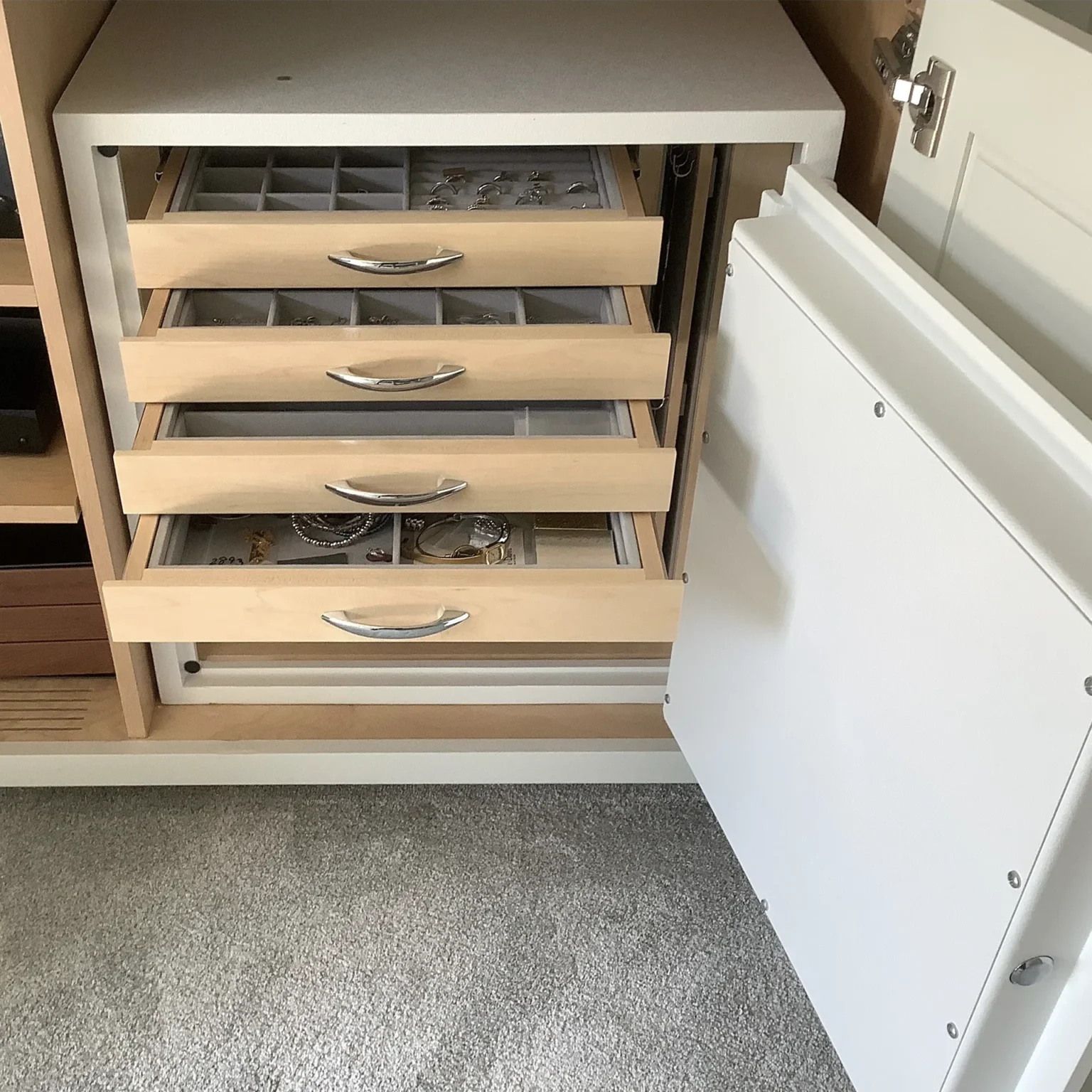
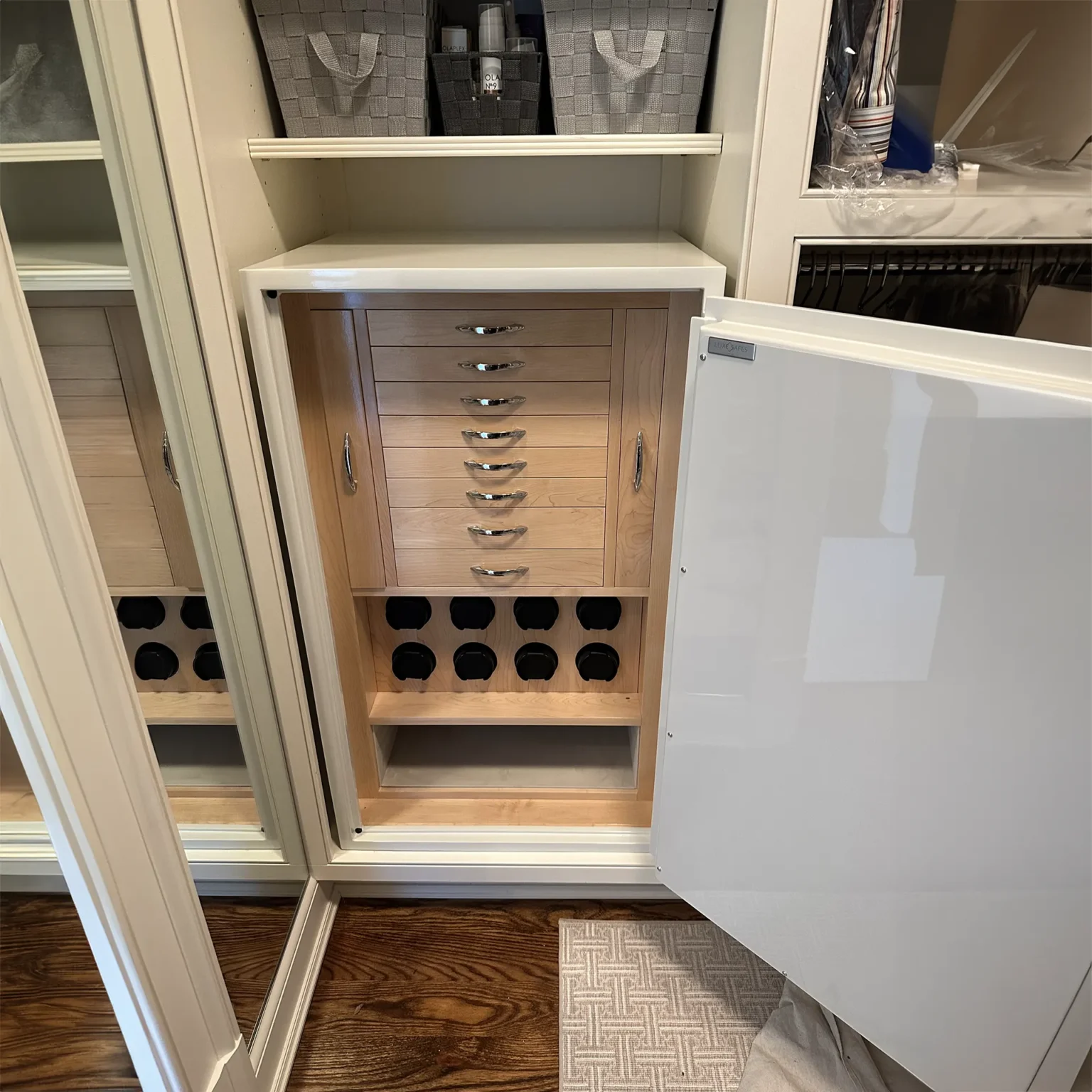
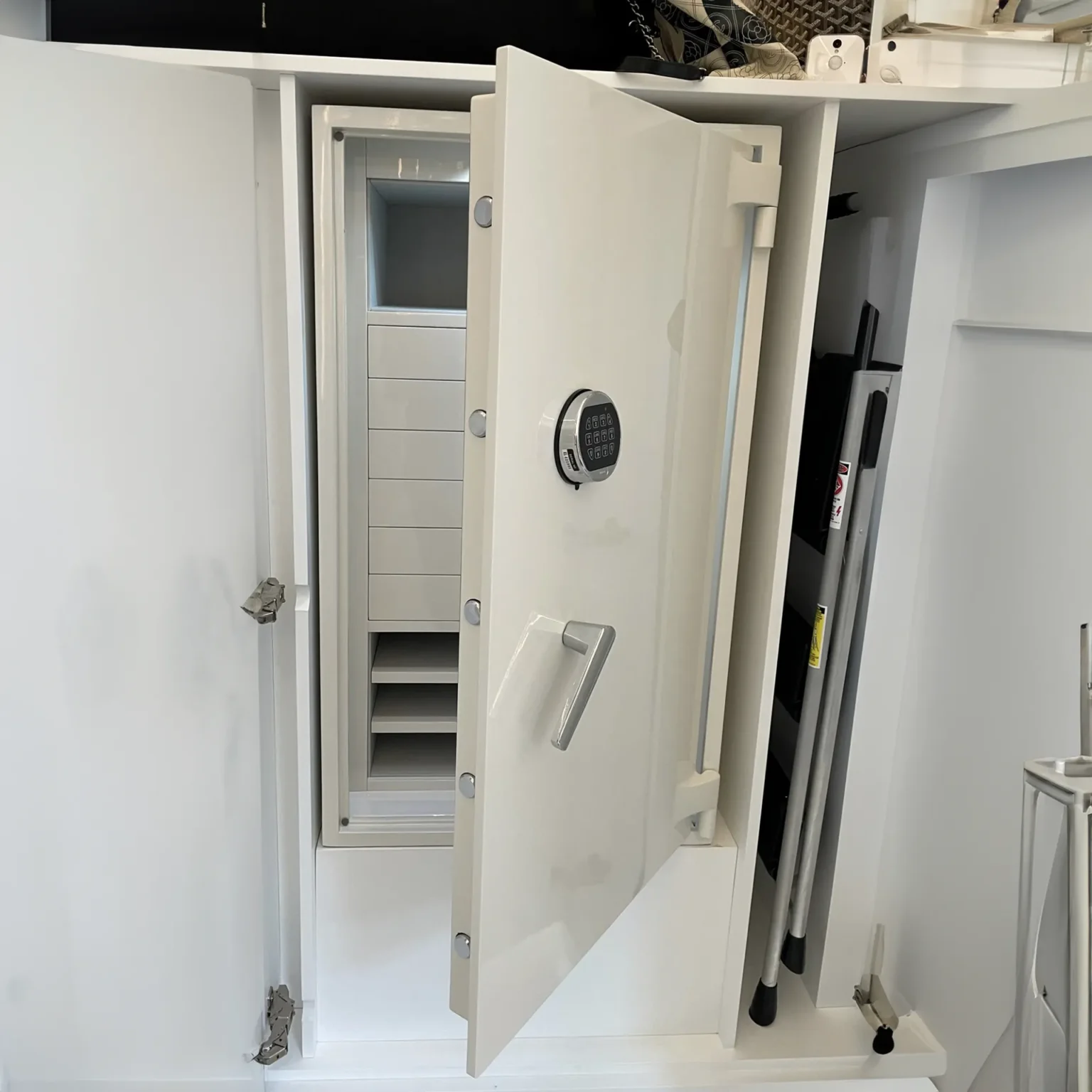
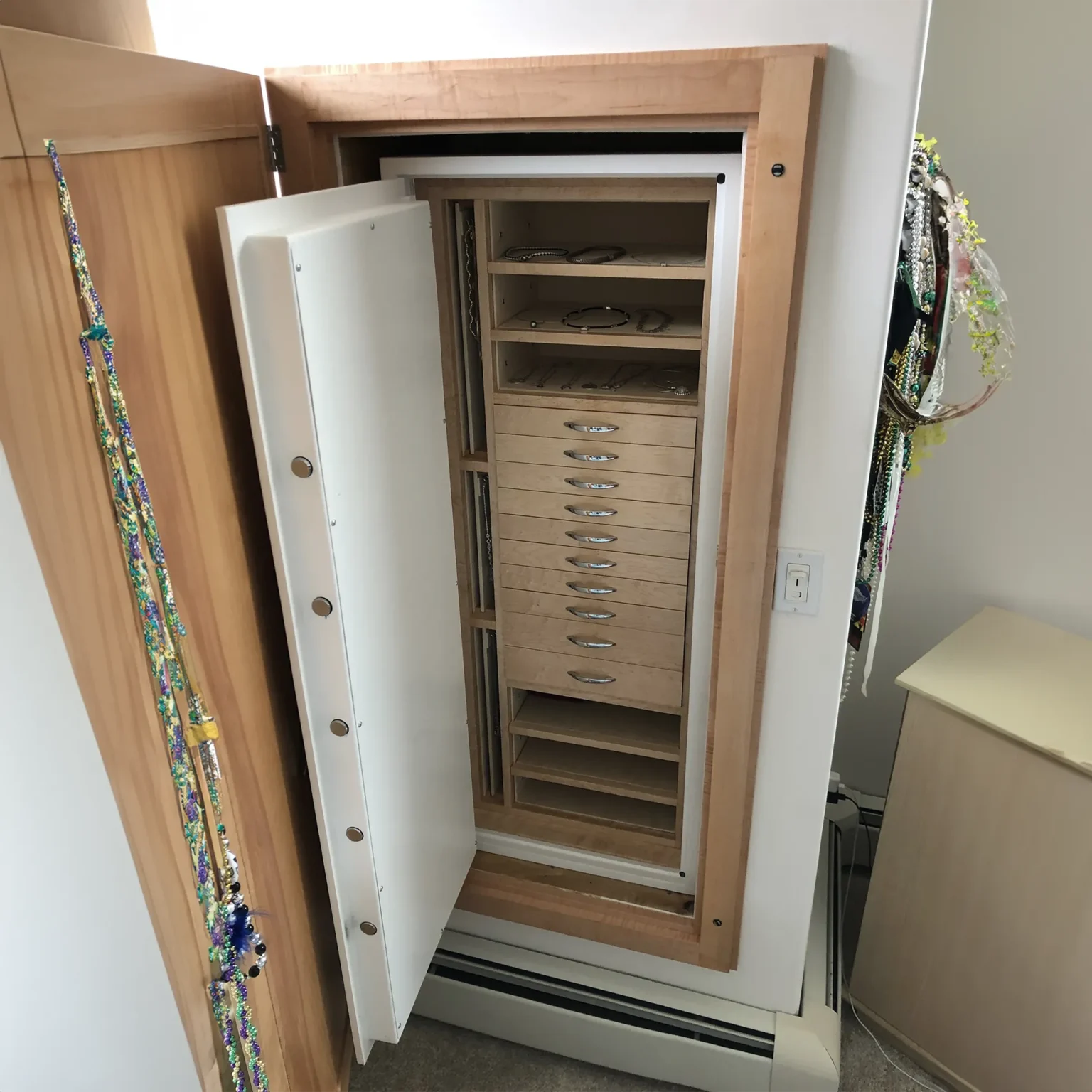
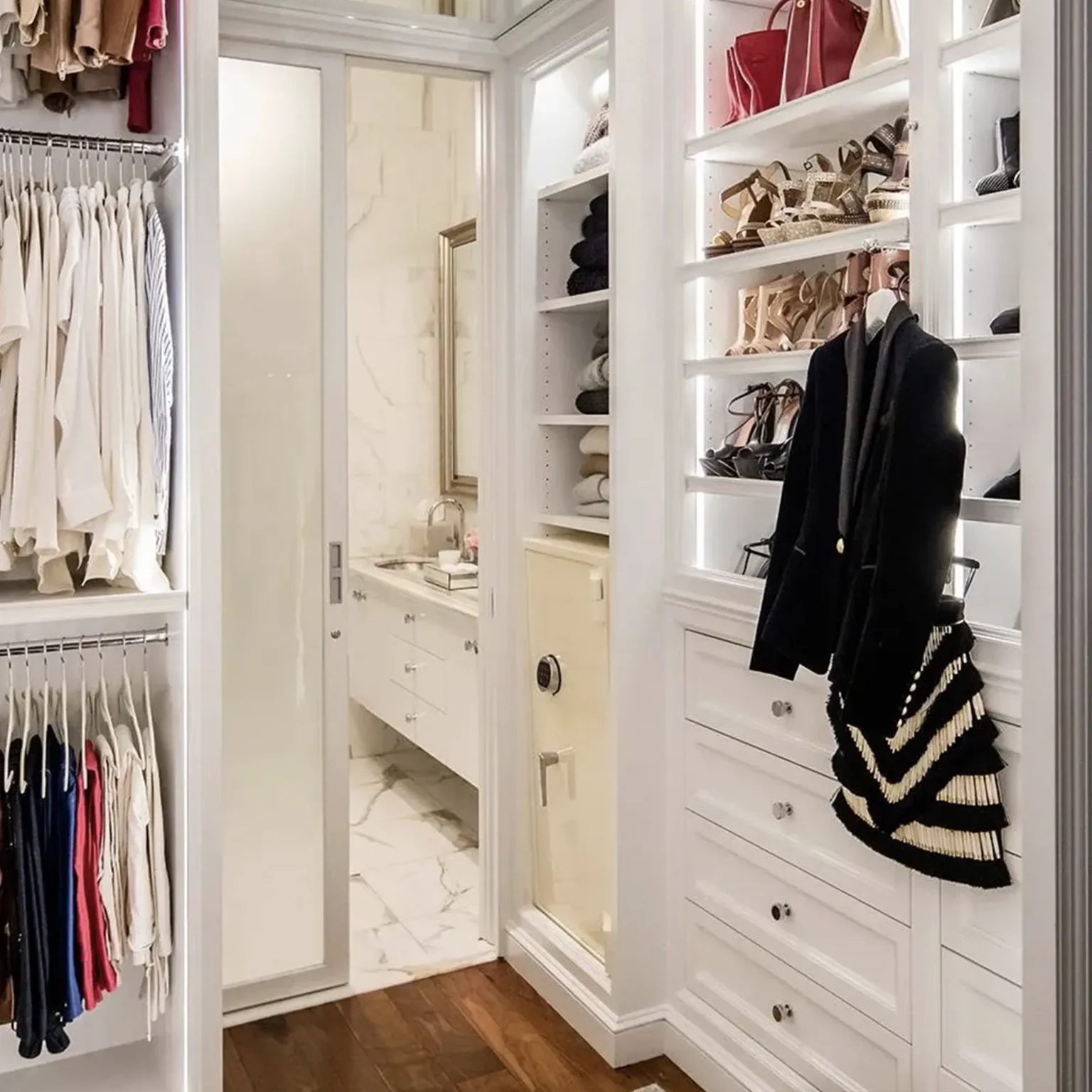
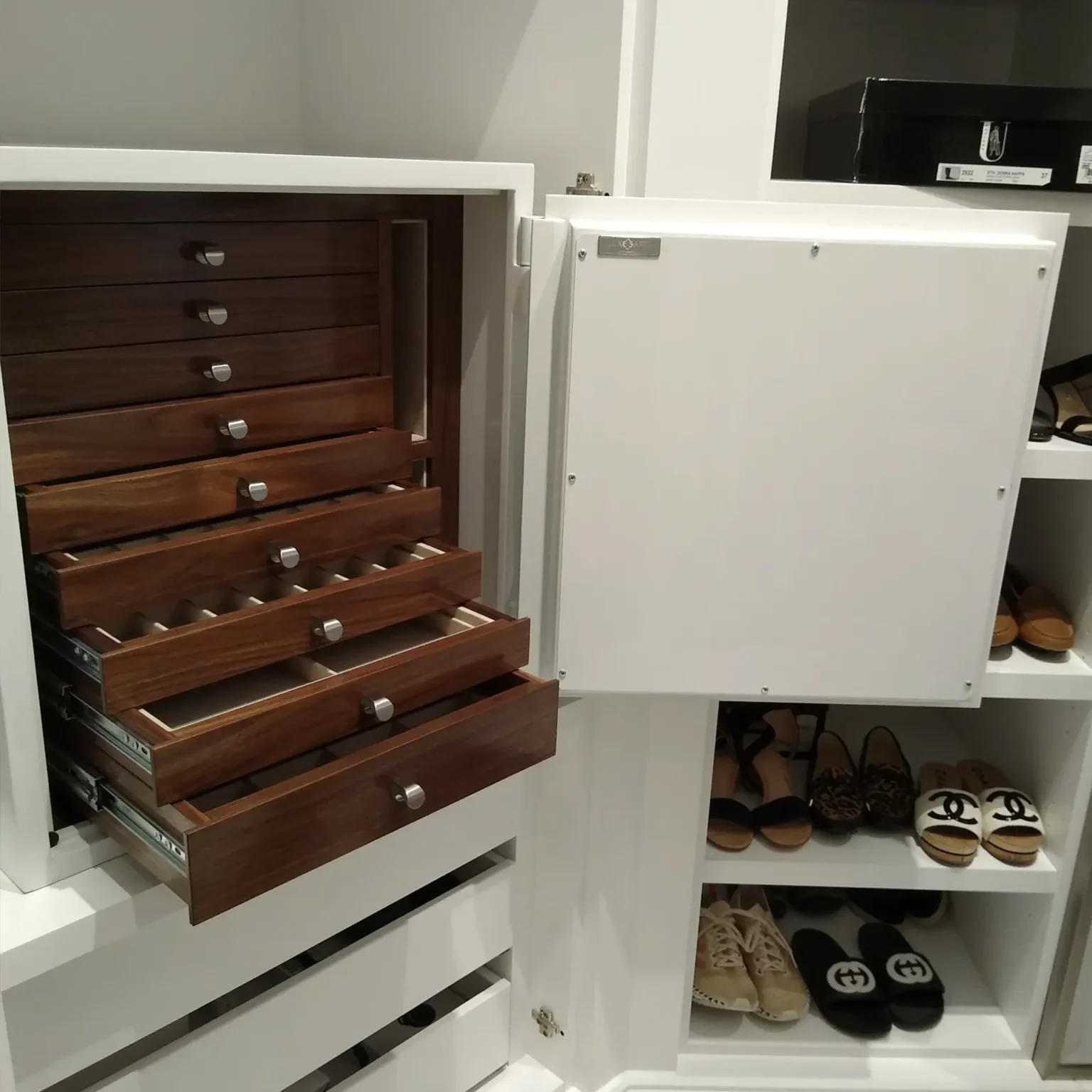
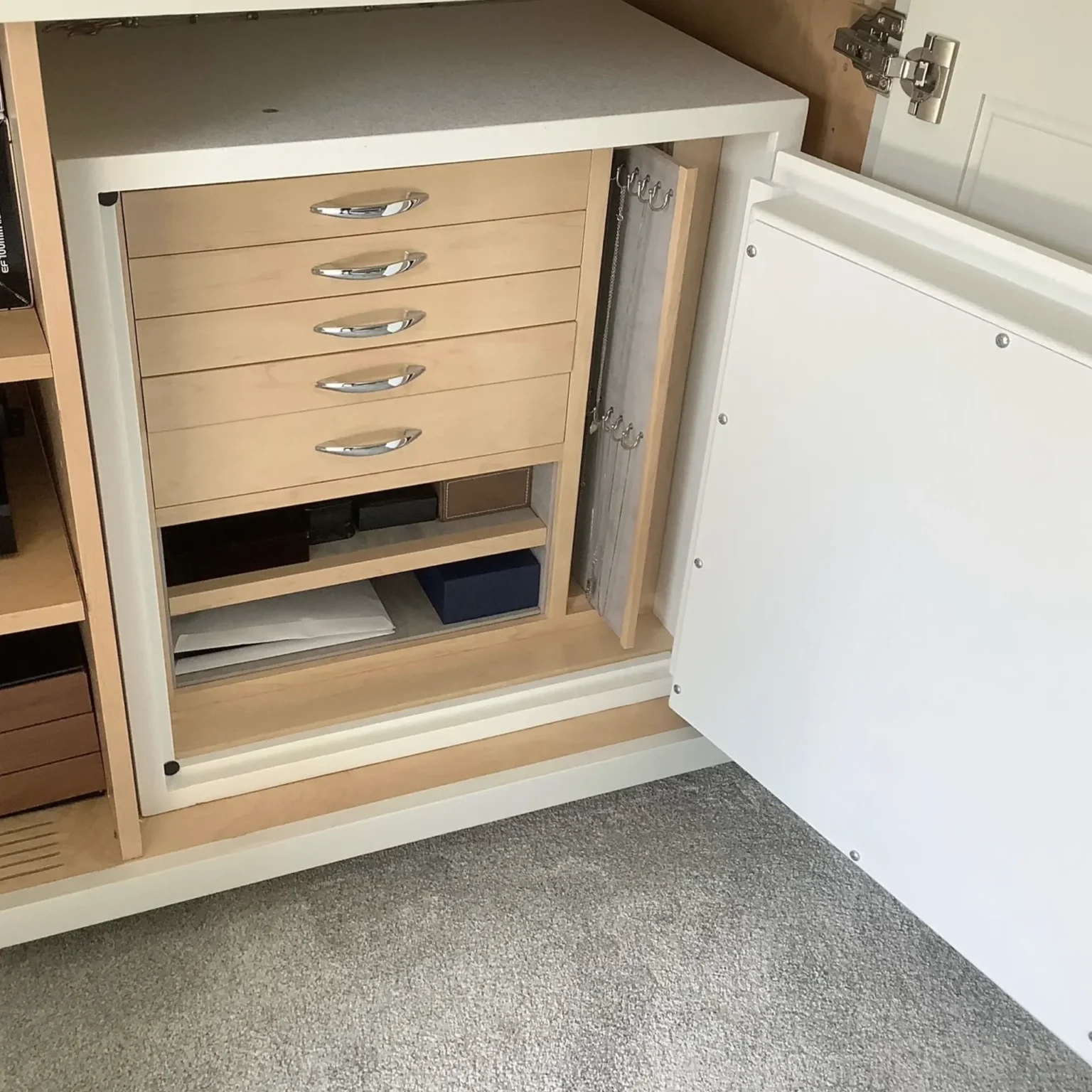
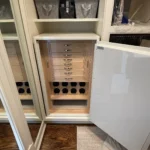
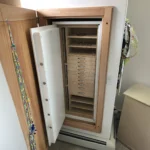
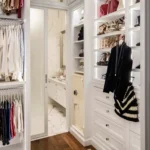
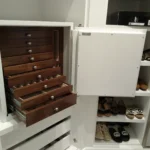
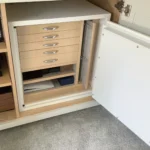
Fully Custom Jewelry Safes: Any size. Any color. Any interior. Configure drawers for rings, watches, necklaces, and more. Designed to seamlessly fit your home’s style and space. From bold, high-gloss finishes to hidden-in-plain-sight installations, your jewelry safe will be one of a kind—crafted by our expert team to reflect your taste and meet your specific security goals.
get a quoteKey Differences: Fireproof vs Waterproof Jewelry Safes
| Feature | Fireproof | Waterproof |
|---|---|---|
| Purpose | Protect against heat and flame | Prevent water intrusion |
| Common Risk | House fires, heat damage | Flooding, fire suppression, leaks |
| Testing Standard | UL Class 350 or similar | ETL or manufacturer-specific |
| Protection Duration | 1–2 hours typical | 24–72 hours submersion |
| Interior Threats | High temp, smoke | Water, humidity, mold |
Do You Really Need Both?
That depends entirely on your location, storage location, and collection value.
Scenarios Where Fireproof Is Critical:
- Jewelry stored in a closet, office, or upper floor
- High-value heirlooms or investment pieces
- Estate planning or insurance-backed collections
- Concerned with structural fires or wildfires
Scenarios Where Waterproofing Is Smart:
- Safe is located in a basement or ground floor
- Home is in a flood zone or coastal area
- Plumbing lines run near or above the safe
- HOA or building risk assessments require it
If your primary concern is a house fire, fireproofing comes first. If you live in a flood-prone region or store your safe below grade, waterproofing becomes equally critical.
Can a Safe Be Both Fireproof and Waterproof?
Yes—but it’s less common than you might think.
- Typically more expensive
- Heavier due to insulation and sealing materials
- Must be carefully rated to ensure neither function is compromised
- Often sold as document safes, but select models support jewelry storage
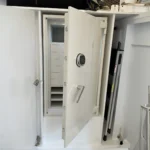
For higher-end jewelry collections, you may want to consider a custom safe with both fire and water protection—especially if you’re storing in a vulnerable area or need to meet specific insurance requirements.
Jewelry-Specific Considerations
Unlike paper or electronics, jewelry has unique vulnerabilities:
- Temperature-sensitive materials: Pearls, opals, and glue-based settings can deteriorate at lower heat thresholds
- Corrosion risk: Water exposure can tarnish metals or damage finishes
- Humidity sensitivity: Long-term dampness can affect certain gemstones or interior lining materials
That means the safe you choose should do more than just “survive” a fire or flood. It should maintain an internal environment that keeps the contents in pristine condition, even during extreme conditions.
Best Practices: What to Look for When Buying
- Third-party certification: Prioritize safes with UL (fire) or ETL (water) certifications—not just brand claims.
- Interior design built for jewelry: Look for lined drawers, ring trays, and soft compartments—especially if you’ll be accessing the safe regularly.
- Sealed doors and gaskets: Fire and water both penetrate through seams. Look for compression seals or expandable fire gaskets.
- Desiccant or humidity control: Even in waterproof safes, consider using silica gel packs or humidity control systems.
- Installation location: Place your safe in a low-fire-risk zone (like a closet, not a garage) and elevate it off the floor in flood-prone areas if possible.
FAQs
Is a fireproof safe automatically waterproof?
No. Fireproofing and waterproofing are separate features. A safe can have one, both, or neither. Always check for separate certifications.
Will a waterproof safe protect against mold?
Not indefinitely. While water may be kept out, trapped humidity can still cause damage. Use desiccants and avoid storing damp items.
How do I know if I need both features?
If you’re storing irreplaceable jewelry and live in a region with fire or water risk (including from plumbing), both are worth considering. If the collection is high-value, dual protection is a smart investment.