
Fireproof Jewelry Safe: Secure Your Valuables with Confidence
Fire Protection Isn’t Optional—It’s Essential
When most people think about storing their jewelry securely, they focus on preventing theft. But fire is an equally critical—and often overlooked—risk.
From electrical issues to kitchen accidents, fires in residential homes happen more frequently than most realize. And when they do, jewelry—especially pieces made from precious metals and delicate gemstones—can be damaged beyond repair if not properly protected.
That’s where fireproof jewelry safes come in. This guide explores what makes a safe truly fireproof, what types of protection jewelry actually needs, and how to select the right fire-rated safe for your home.
What Does “Fireproof” Really Mean?
The term “fireproof” gets used loosely, but in safes, it has a specific definition. Fireproof jewelry safes are tested under extreme conditions to determine how well they protect contents from heat and flame.
In the U.S., the most recognized testing body is Underwriters Laboratories (UL). Their ratings are standardized, repeatable, and widely respected.
Key Ratings to Know
- UL Class 350 1-Hour: Keeps the internal temperature under 350°F for one hour, even when external temperatures reach 1,700°F.
- UL Class 125 or 150: Lower temperature tolerances, typically used for digital storage devices (not usually necessary for jewelry).
- TL-15 or TL-30 + Fire Rating: Combines fire resistance with burglary resistance for dual protection.
Look for safes that are independently UL-rated—not just “fire-resistant” by manufacturer claims.
Tailor Designed to Match Your Requirements
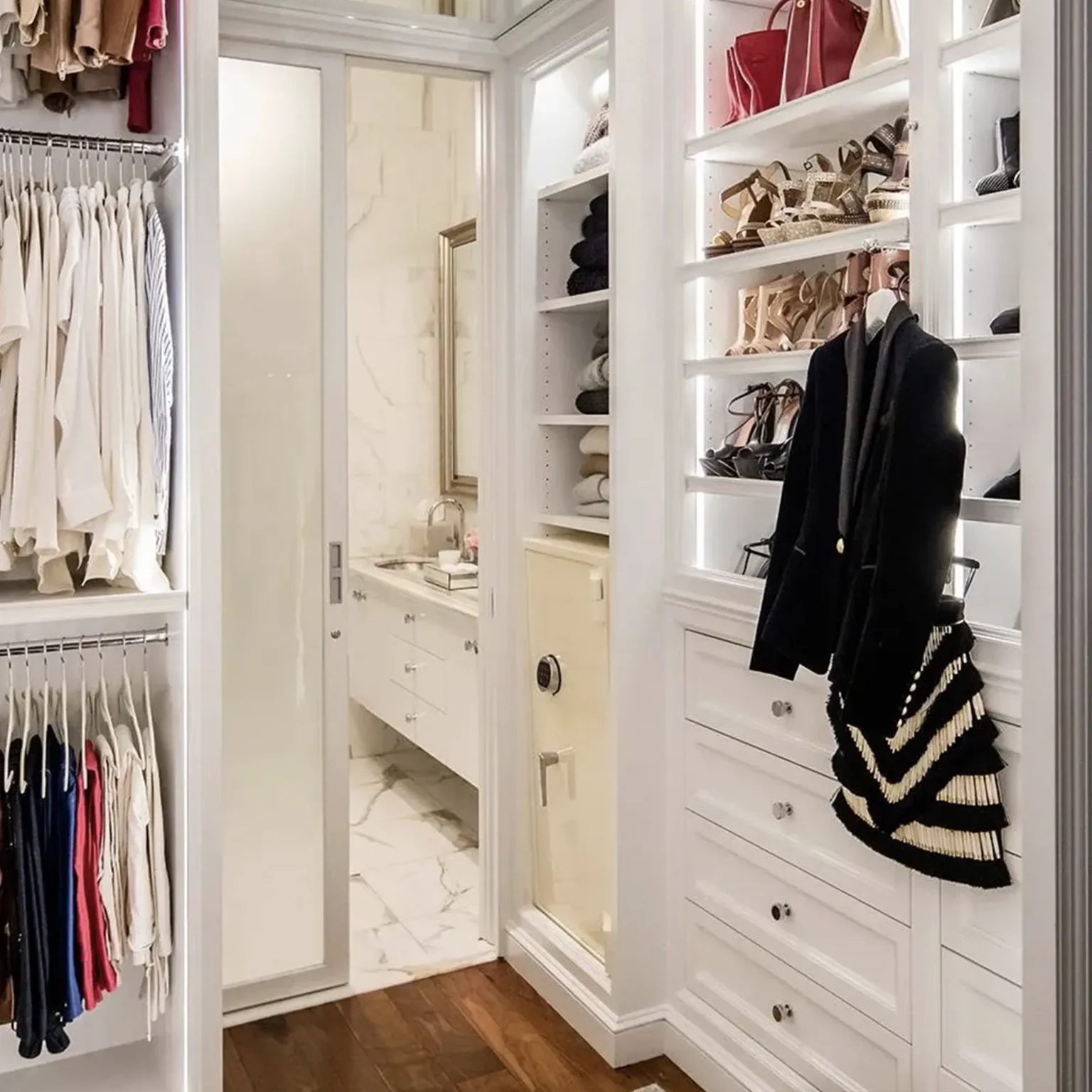
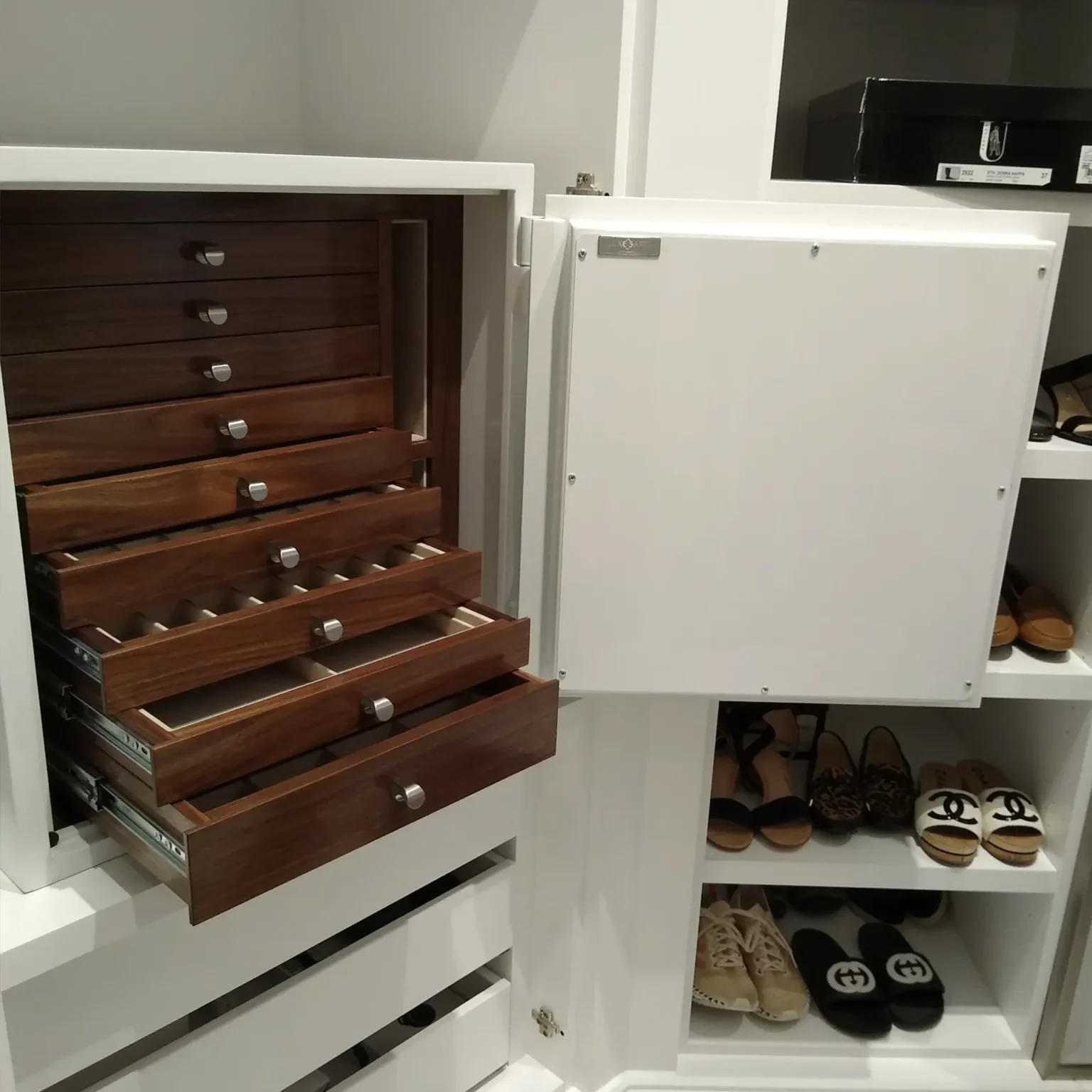
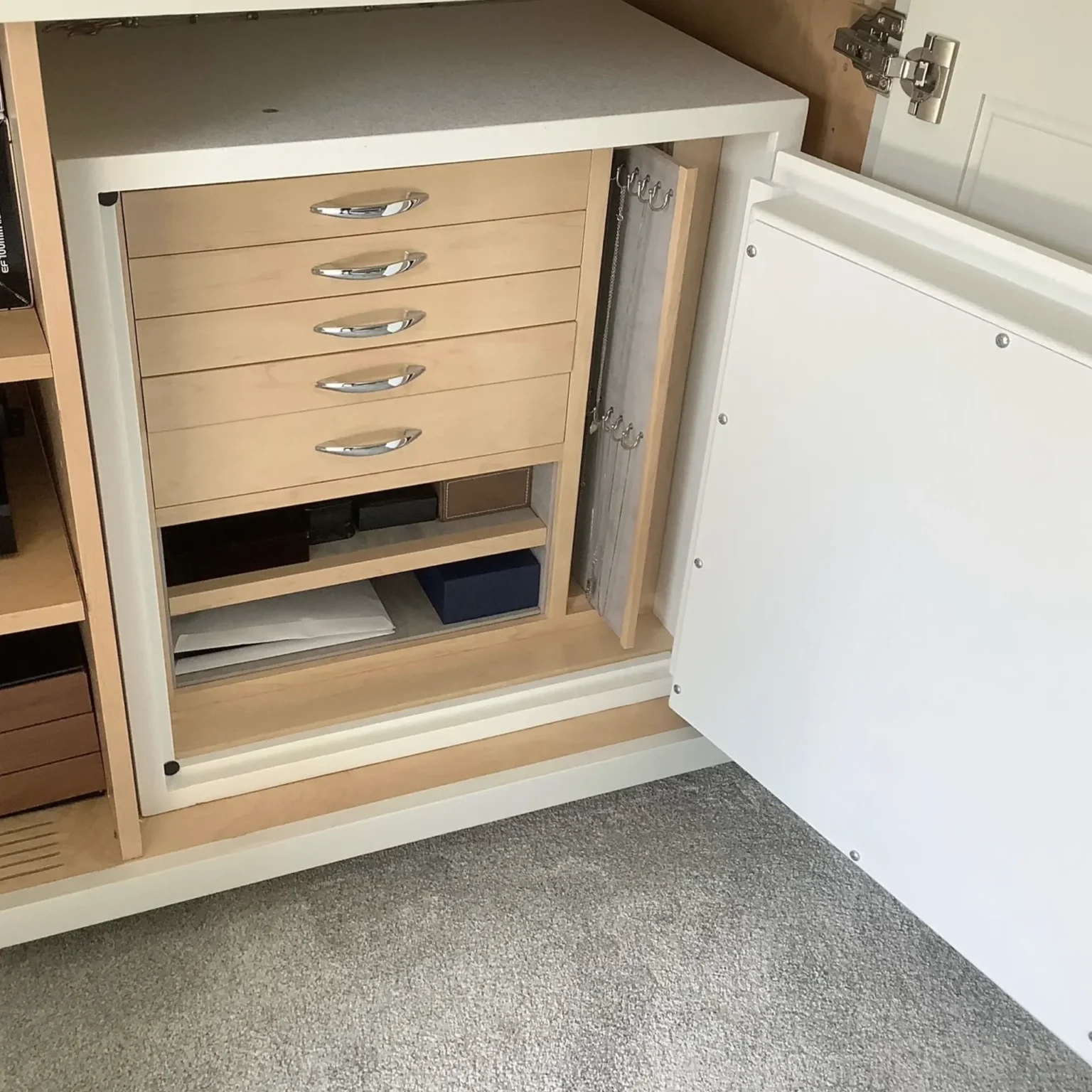
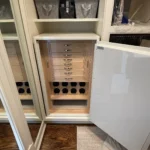
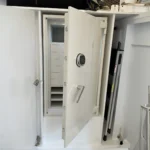
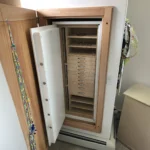
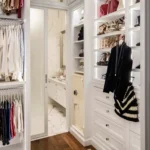
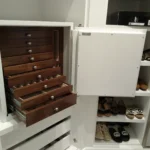
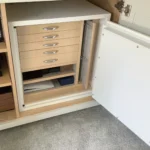
Fully Custom Jewelry Safes: Any size. Any color. Any interior. Configure drawers for rings, watches, necklaces, and more. Designed to seamlessly fit your home’s style and space. From bold, high-gloss finishes to hidden-in-plain-sight installations, your jewelry safe will be one of a kind—crafted by our expert team to reflect your taste and meet your specific security goals.
get a quoteWhy Jewelry Needs Fire-Specific Protection
Many safes protect against theft but fail to adequately shield against heat. Here’s why that matters:
- Gold melts at ~1,948°F, but many safes will exceed 350°F internally during a fire if not properly insulated.
- Gemstones like opals, pearls, and emeralds are particularly heat-sensitive. Even brief exposure to high temperatures can cause cracking or clouding.
- Enamel, glue, and adhesives used in jewelry construction may fail at lower heat thresholds.
- Moisture damage is also common during fire events, particularly when safes lack a vapor or smoke seal.
A good fireproof jewelry safe isn’t just about withstanding flames—it’s about maintaining a stable, dry interior temperature throughout the duration of the event.
Construction: What Makes a Safe Fire-Resistant?
Fireproof safes use a combination of insulated panels, seals, and fire-rated materials in both the body and door to create a heat barrier.
Key Elements
- Fireboard Insulation: Typically made of gypsum or other heat-resistant compounds, layered within the safe walls.
- Seamless Welds: Prevent hot gases from entering through weak points in the structure.
- Expandable Seals: Intumescent seals expand when heated, closing off airflow to the interior.
- Double-Walled Doors and Frames: Further limit heat transfer and enhance structural integrity.
These features work together to slow heat penetration, giving firefighters more time to contain a blaze before the internal temperature rises to damaging levels.
Fireproof vs Fire-Resistant: Know the Difference
- Fireproof: Implies the safe has passed formal UL testing and maintains internal temperatures below damage thresholds for a set period.
- Fire-Resistant: Often just a marketing term with no third-party verification.
When protecting fine jewelry, heirlooms, or investment-grade pieces, go with tested, certified fireproof construction.
Best Practices: How to Use a Fireproof Jewelry Safe Effectively
Install in a Low-Risk Zone
Avoid placing the safe in high-risk fire areas like:
- Garages
- Kitchens
- Laundry rooms
Better locations include:
- Bedroom closets
- Built-in cabinetry
- Office spaces with low fire load
Avoid Stacking Jewelry in Containers
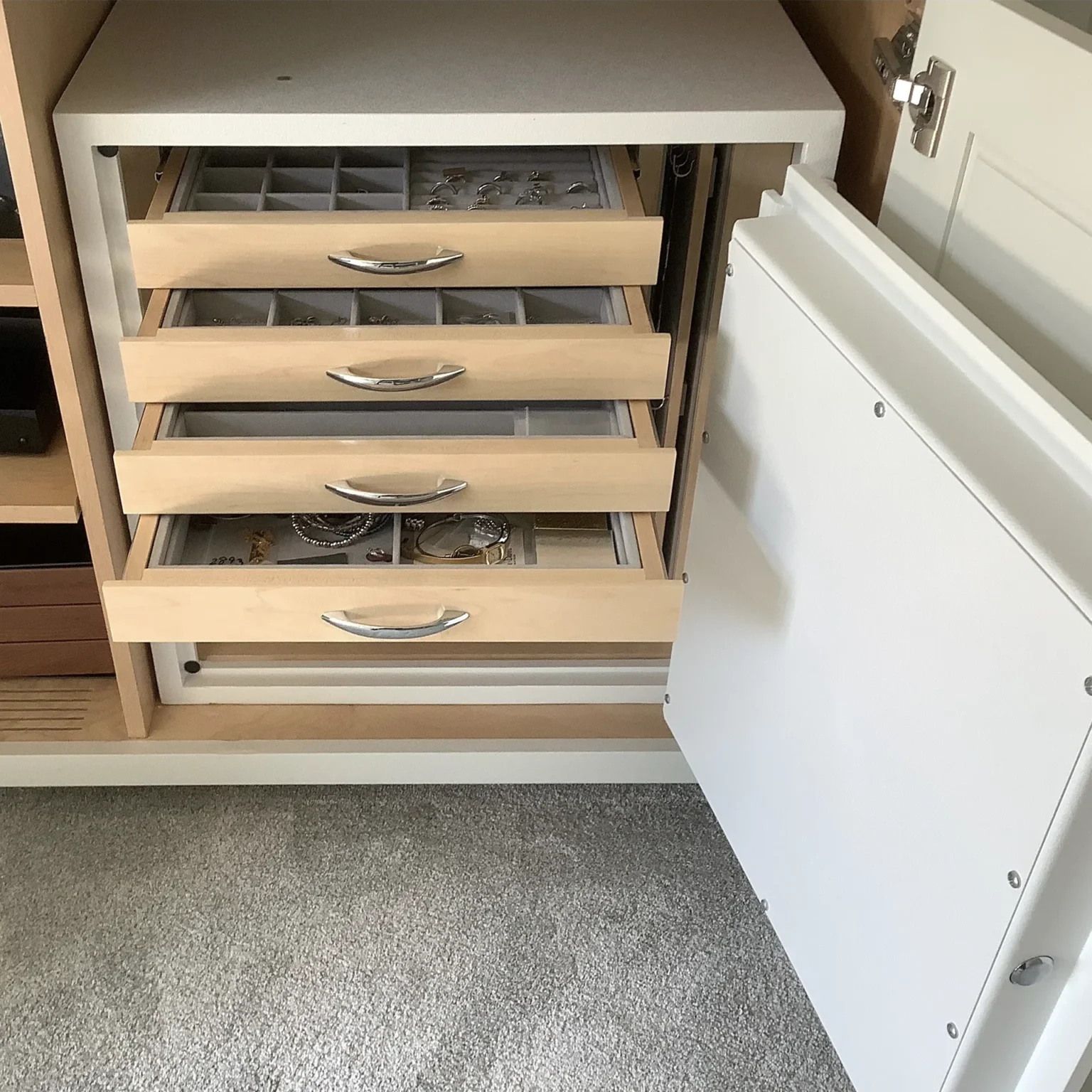
When jewelry pieces are stored too closely, heat transfer can be uneven. Use felt-lined drawers and dividers to keep items spaced and secure.
Document Your Collection
Keep a written and photo inventory of your jewelry stored in the safe. This is crucial for insurance and recovery purposes if a disaster does occur.
Combining Fire and Theft Protection
If fire protection is your primary concern, you still want to consider dual-rated safes that also deter theft.
- UL RSC or TL-15 burglary rating
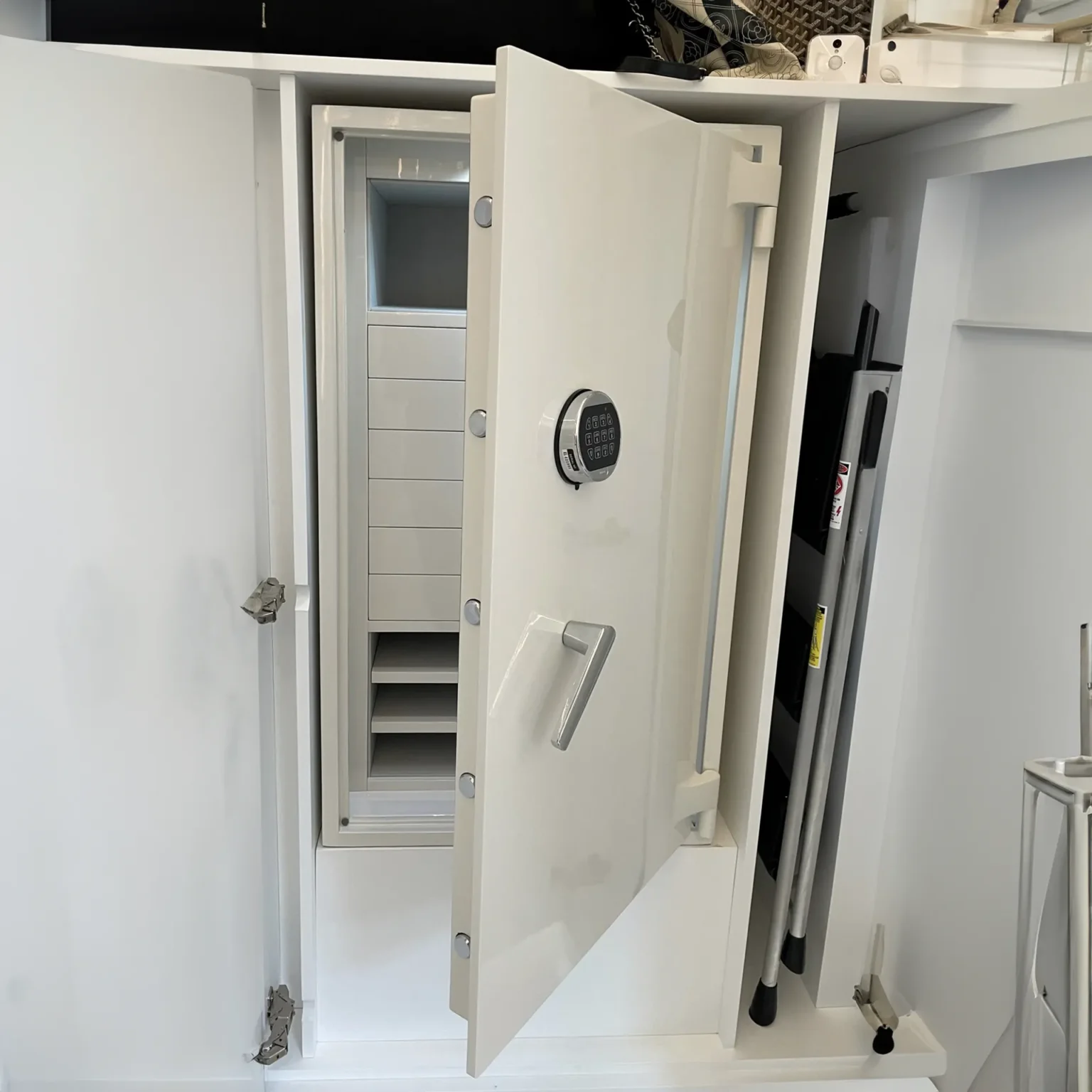
- Heavy construction with multiple locking bolts
- Bolt-down capabilities
- Minimal branding or visible location in the home
A high-quality fireproof jewelry safe should offer both forms of protection without compromise.
Typical Fire Ratings by Safe Type
| Safe Type | Fire Rating | Security Rating | Best Use Case |
|---|---|---|---|
| Basic Home Safe | 30 mins | Low | Paper, small valuables |
| Mid-Tier Fire Safe | 60 mins (UL 350) | Moderate | Jewelry, small collections |
| TL-15/Fire Combo | 60–120 mins | High | Large collections, high-value homes |
| Custom Luxury Safe | 90–120 mins | Customizable | Integrated into closets, furniture |
Is a Fireproof Safe Enough?
Fireproof safes are a critical layer of protection—but they shouldn’t be your only one.
Additional considerations:
- Home insurance riders for valuables
- Alarm systems or monitored smoke detection
- Inventory documentation
- Consulting a professional for placement and installation
Safes are only as secure as their location and the plan around them. Fire is unpredictable—preparation is what ensures your valuables survive it.
When to Consider a Custom Fireproof Safe
Off-the-shelf safes often sacrifice fire rating for cost or appearance. A custom fireproof jewelry safe allows you to:
- Choose your fire rating (1–2 hour UL-rated)
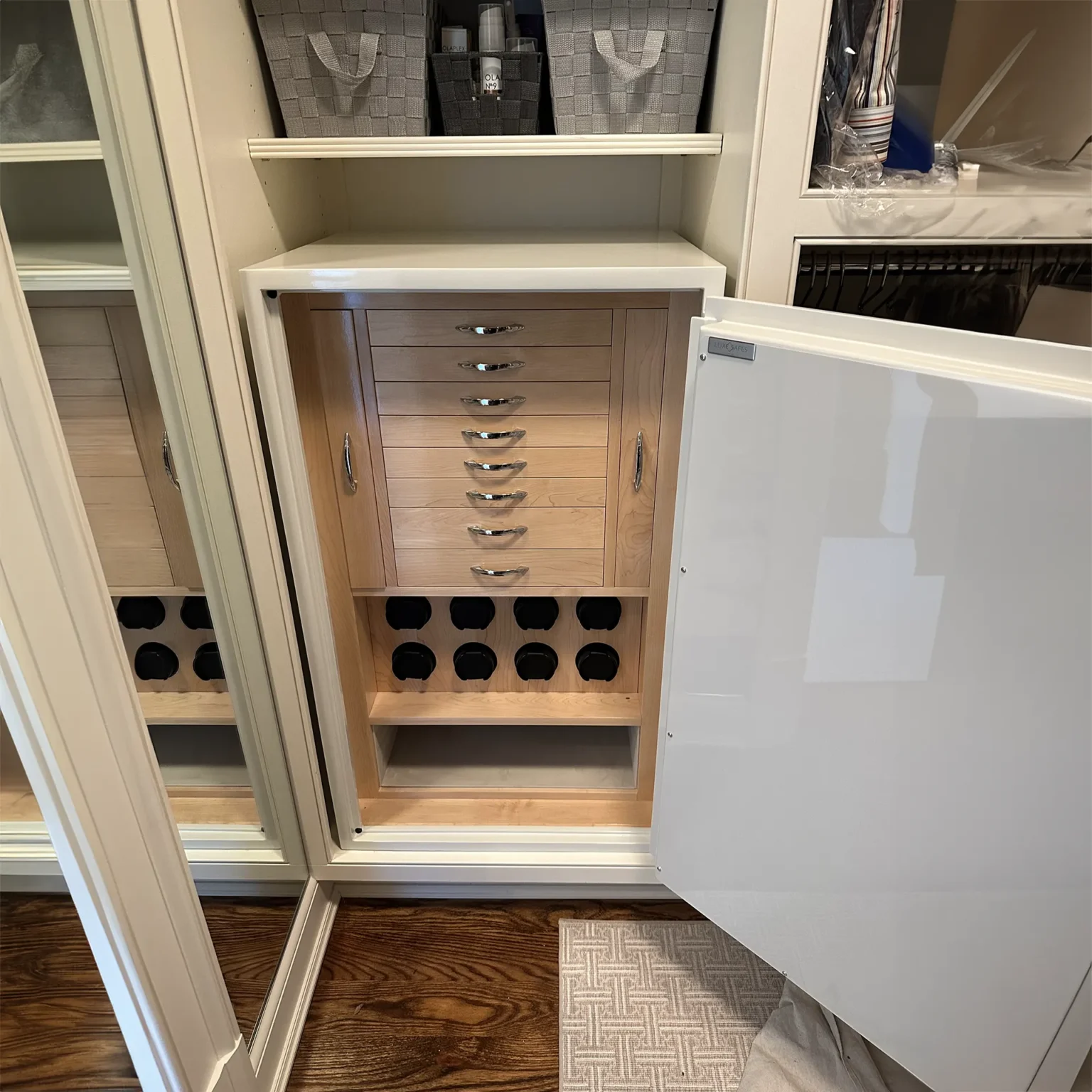
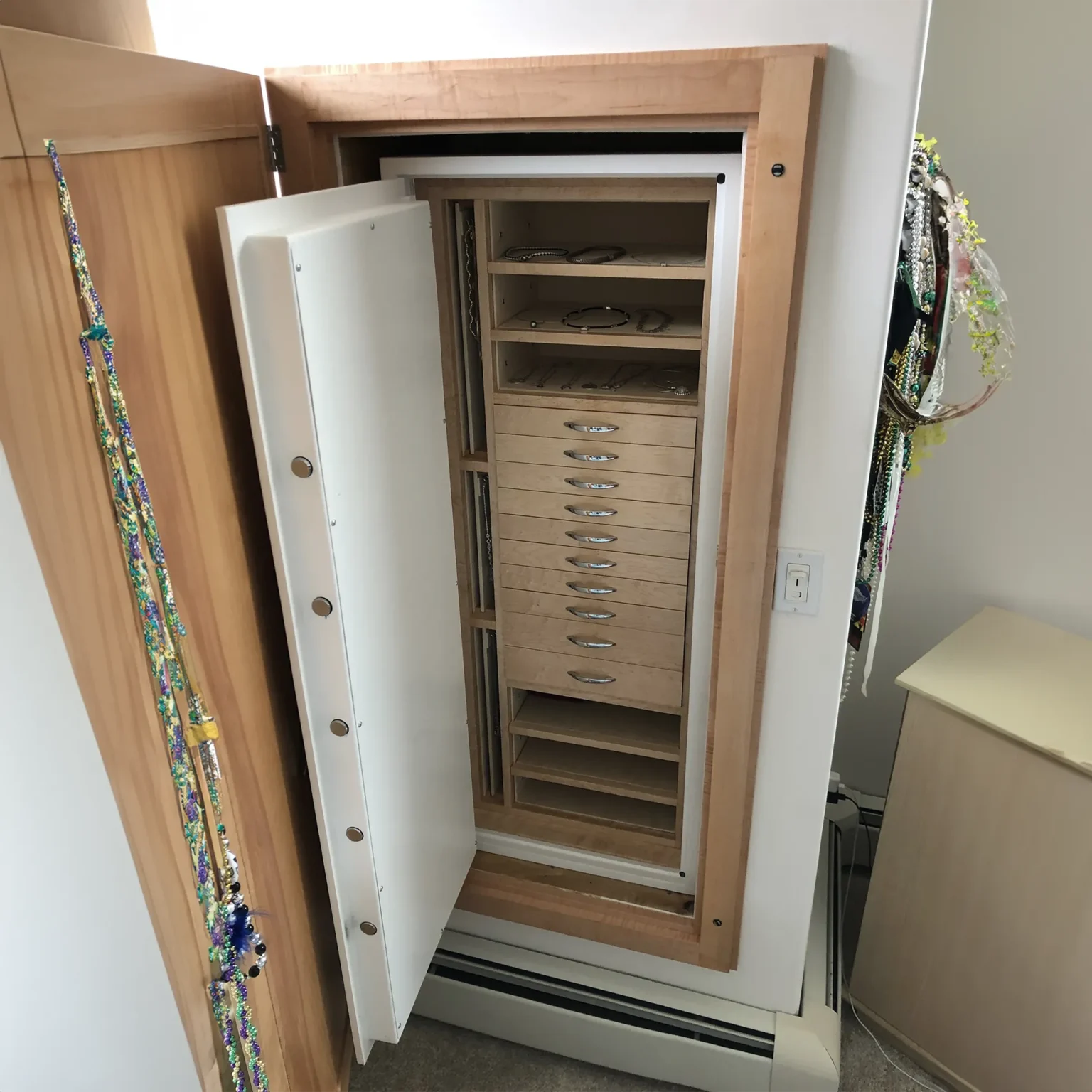
- Customize the drawer layout and interior
- Match the safe’s exterior to your home design
- Work with a specialist on discreet placement
- Combine burglary and fire protection without aesthetic compromise
This is especially important if you’re protecting a large or sentimental collection—or if you simply want to avoid replacing a safe every few years.
Related Resources
- High-Security Jewelry Safes
- Best Jewelry Safe for Home
- Jewelry Safe with Drawers
FAQs
- What is the ideal fire rating for a jewelry safe? A minimum UL Class 350 1-hour fire rating is recommended. For larger collections or high-value pieces, consider 90- or 120-minute ratings.
- Will fireproof safes protect against moisture and smoke? Only safes with proper sealing can protect against moisture and smoke. Look for intumescent or heat-activated door seals.
- Can I get both fire and burglary protection in one safe? Yes. Many high-end safes are dual-rated, offering UL fire certification alongside burglary resistance like TL-15 or TL-30.